
What 500 free spins with no deposit actually delivers in the UK in 2026
Five hundred free spins with no deposit sounds like a free ride. It isn’t — it never has been — and in the UK in 2026 the terms around that headline number matter more than the number itself. The Gambling Commission has capped wagering at 10x since 19 December 2025, mixed-product bonuses are out, and credit cards are not an option for funding. Every operator taking British customers has to be on the public register, integrate GAMSTOP self-exclusion and verify identity before the first spin lands. So the comparison worth running is not which site shouts the loudest about “500 free spins” — it’s which licensed brand’s terms leave a player with something they can actually withdraw, and which swallow the winnings behind a max-cashout cap. That is what this page works through, shelf by shelf, ending with a side-by-side of ten licensed brands and the arithmetic that shows what the wagering cap costs in real time.

Data current as of 7 November 2026 and verified against the Gambling Commission’s public register of gambling businesses.
Table of Contents
- The shape of a no-deposit free-spins offer in the UK
- The UK licence that has to be in place before any of this runs
- What the safer-gambling tools actually do to a “500 free spins” offer
- How winnings from 500 free spins get paid out in the UK
- What 500 free spins actually costs in time and money
- Ten licensed UK operators side by side
- What each of the ten licensed brands actually looks like
- What the page cannot tell the reader
- Frequently asked questions
The shape of a no-deposit free-spins offer in the UK
A “500 free spins no deposit” offer is what it says on the tin: the player registers an account, completes the identity check the Commission requires, and receives five hundred spins on a named slot without paying in. Anything won from those spins sits in a bonus balance, not in cash, until the player meets the wagering requirement attached to the offer. Until that requirement is cleared, the bonus balance cannot be withdrawn — and in the UK in 2026 the requirement that an operator can attach is capped.

The cap was set at 10x on 19 December 2025 and applies to every bonus on every GB-licensed site. A £20 bonus, in other words, can carry no more than £200 of required turnover; a £50 bonus no more than £500. The Commission did not pick 10x out of the air — it picked it because the previous average sat well above that, and because the evidence on bonus terms and player harm ran in one direction. Whatever the headline number of spins, the figure that decides whether a player keeps anything is the multiplier underneath it, and that multiplier now has a ceiling.
A second Commission change came in the same reform: mixed-product bonuses were banned. The “bet £10 on the football, get 200 free spins on a slot” shape, common before 2026, is no longer permitted on a GB-licensed site. A bonus must be one product, end to end. That removes a route operators once used to dress up casino spins with a sportsbook loss leader, and it changes the comparison this page is making: the offer is what it is, not a hybrid.
The third lever is the slot itself. The maximum stake per game cycle on an online slot in Great Britain is £5 for players aged 25 and over, in force from 9 April 2025, and £2 for 18-24-year-olds, in force from 21 May 2025. A free-spin offer that pays out at, say, £0.10 per spin costs a player £50 of stake across the full 500; one at £1 per spin costs £500. Both numbers fall inside the stake cap. What sits outside the cap is the value of the spin itself — which is set by the operator and by the chosen slot, and which has a direct bearing on what the wagering requirement looks like once it has to be cleared.
So the three things that decide what a “500 free spins no deposit” offer is actually worth, in order, are: the value per spin, the wagering multiplier (capped at 10x), and any maximum-win or max-cashout cap the operator still attaches on top. The number 500 is the headline. The arithmetic underneath it is the offer.
The UK licence that has to be in place before any of this runs
Every GB-facing online casino needs a remote operating licence from the Gambling Commission under the Gambling Act 2005. The Gambling (Licensing and Advertising) Act 2014 closed the previous loophole: an operator based in Malta, Curaçao or Gibraltar cannot take British customers on a non-Commission licence. There is no substitute for the Commission’s licence — a Curaçao master licence, an MGA approval, a Gibraltar remote bookmaker’s permit: none of these counts in Great Britain. Section 33 of the Gambling Act 2005 makes providing gambling to people in Great Britain without a Commission licence a criminal offence, aimed at the operator, not the player. The Commission itself pursues illegal sites through cease-and-desist notices, payment and hosting referrals, and search-engine delisting, but it has no power to block at ISP level. The Commission also has no power to recover money a player loses on an unlicensed site. What a player loses by going offshore is the entire protection layer: no GAMSTOP, no Commission complaints route, no approved ADR.
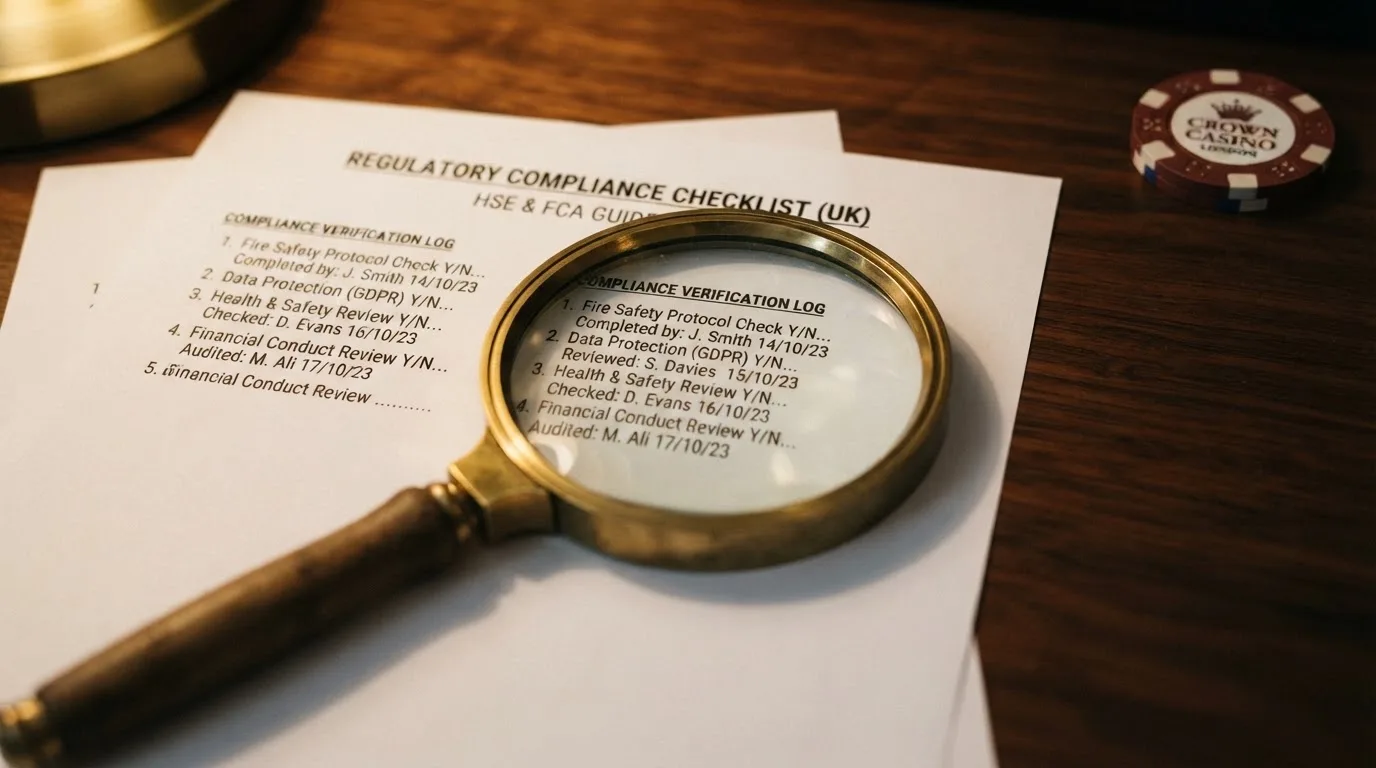
The proof that a brand holds a GB licence sits on the Commission’s public register. The register is searchable online, downloadable in CSV or Excel, and lists every business holding an active operating licence. On 18 September 2026 it listed 139 businesses holding an active remote casino operating licence. The register’s domain list goes further: it records each website against the licence account that runs it, with one of three statuses — Active, Inactive, or White Label. A white-label site trades under another company’s licence; on 18 September 2026 the domain list held 1065 active and 361 white-label entries. A licence number on the register takes the form account-R-number-suffix, where the leading six digits repeat the licence holder’s account number and the R marks a remote (online) licence. So 045322-R-324275-019 is the remote licence held by Platinum Gaming Limited, account 45322, with 32Red and Unibet both listed as active domains under it — one licence holder, two brands.
The minimum age is 18. Identity, address and date of birth are verified before the first deposit or any play, since 7 May 2019. Anonymous play is not an option at a licensed site. The player’s first deposit — and, on most platforms, the player’s first interaction at all — sits behind that check. A “no deposit” promotion is therefore not anonymous; the player has to be identified before the spins are credited. The spins are free of charge, not free of paperwork.
What the safer-gambling tools actually do to a “500 free spins” offer
A free-spins offer with no deposit still counts as gambling for the purposes of every player-protection rule the Commission enforces. GAMSTOP, the national online self-exclusion scheme, is a mandatory condition of every online licence, in force since 31 March 2020. A player who has registered with GAMSTOP for six months, one year or five years cannot receive these spins, cannot register a new account to receive them, and cannot bypass the scheme by trying a different brand — every GB-licensed operator is integrated. The exclusion cannot be cancelled mid-period. The point of GAMSTOP is precisely that it cuts off the offer, not just the deposit; a player trying to shop around for a no-deposit trial during a self-exclusion term will find the door shut.
Financial vulnerability checks sit at a lower trigger. From 28 February 2025 the Commission has required operators to run a vulnerability check on any customer whose net deposits reach £150 in a rolling 30-day period, using publicly available data only. The check does not block play — it surfaces information to the operator and prompts a conversation. The wider financial risk assessments the Commission has signalled are not yet in force, so the £150 threshold is the line that triggers an interaction at present. No-deposit spins do not on their own trigger the check, because the check fires on net deposits; but they can run alongside other play that does, and a player who has hit £150 in deposits in the last month and is now claiming a fresh no-deposit batch is in the population the check is built for.
The slots themselves have been re-engineered around player protection. Auto-play has been banned since 31 October 2021. A slot spin may not complete faster than 2.5 seconds. Losses disguised as wins — slot screens that celebrate a payout smaller than the spin’s stake — are banned. The maximum stake per game cycle is £5 (age 25+) or £2 (age 18-24), and the game cycle itself is the technical unit a slot is built around. None of this changes the headline number of free spins, but it changes what the offer feels like in practice: 500 spins at one spin every 2.5 seconds is over twenty minutes of play at the bare minimum, and that is before wagering is layered on top.
Self-set limits are the third layer. The Commission requires operators to prompt a customer to set a financial limit before the first deposit, in force from 31 October 2025 — so by the time a “500 free spins” offer is claimed, a limit has already been set. There is no state-set deposit or loss ceiling; the limit is the player’s own choice. The reality check prompt, a pop-up that surfaces after a fixed period of continuous play, applies to free-spin play as it does to paid play.
Help is available outside the operator. The National Gambling Helpline, run by GamCare, and GambleAware, the charity that funds treatment and education, are the two routes a player in distress tends to reach first. Neither is the operator’s customer service. A “500 free spins” offer that feels too good to walk away from is exactly the offer these services exist for — and the safer-gambling architecture on a GB-licensed site is what routes a player to them, not the bonus terms.
How winnings from 500 free spins get paid out in the UK
Winnings from a no-deposit free-spins offer sit in a bonus balance until the wagering requirement attached to the offer is cleared. They cannot be withdrawn during that period; the balance is bonus money, not cash. Once cleared, they move to the real-money balance and can be withdrawn through whatever payment methods the operator supports.
The credit-card ban is the first filter. From 14 April 2020 the Commission banned the use of credit cards to fund gambling across all online and offline products in Great Britain, except face-to-face non-remote lotteries. Debit cards and bank transfers were untouched by the ban. E-wallets that route a credit card through them — a deposit funded by a credit card via PayPal or a similar intermediary — were also caught. So the funding side of a withdrawal is narrower than it used to be: debit card, bank transfer, or an e-wallet pre-loaded from a debit source. The Commission’s reasoning sat on a 2018 estimate: around 800,000 UK consumers used credit cards to gamble, and 22% of online gamblers who used credit cards to gamble were classed as problem gamblers. The ban was aimed at that overlap. Apple Pay, AstroPay, bank transfer and similar methods are all on the table to the extent they settle on a debit-funded balance.
Bank transfer within the UK typically runs through the Faster Payments Service, launched in 2008 and operated by Pay.UK. It runs 24 hours a day, seven days a week. Most payments arrive instantly or within a couple of minutes; transfers can occasionally take up to two hours. The Faster Payments scheme sets a £1,000,000 per-transaction limit, though individual banks can and do impose lower limits on their customers. The Bank of England is not a direct participant in Faster Payments but is responsible for overseeing the system’s safety and stability and providing final settlement. So the rails a UK-facing operator uses for a withdrawal, for the bulk of customers, are the same rails a UK high-street bank uses: Faster Payments, typically arriving in seconds, subject to the bank’s own per-transaction cap. Debit card withdrawals sit on a different rail — Visa Direct or Mastercard Send — and the time depends on the issuing bank. Apple Pay is a tokenised front end on a debit card; the underlying rail is whatever the card runs on. AstroPay, an e-wallet founded in 2009 and headquartered in Uruguay, with a UK entity (Larstal Limited) authorised by the Financial Conduct Authority under the Electronic Money Regulations 2011, an Isle of Man entity licensed by the Isle of Man FSA, a Brazilian entity authorised by the Brazilian Central Bank, and a Danish entity authorised by the Danish FSA, sits in the e-wallet bracket alongside PayPal and Skrill for UK players who prefer to keep the casino balance on a separate instrument.
The withdrawal speed on the operator side sits behind two gates: the operator’s own internal processing time, and the payment method’s settlement time. A withdrawal queued at midnight on a debit card can take a few hours once Visa Direct or Mastercard Send clears; on Faster Payments it can be seconds once the operator releases it. The Commission’s view is that operators must surface those times before the deposit, not after — and the bonus terms, where they affect withdrawals, must be readable at the same point.
The maximum-win cap is the third gate, and the one most likely to swallow the winnings from a 500-spin batch. The Commission caps the wagering multiplier at 10x; it does not cap the maximum-win ceiling an operator sets on the bonus itself. A “500 free spins” offer that carries, say, a £50 max-cashout cap will return £50 of real money whatever the spin outcomes produced, even if a single spin landed a £200 line. The cap is the operator’s, not the regulator’s, and it is the single specification most worth checking before a player claims.
What 500 free spins actually costs in time and money
The Commission’s 10x wagering cap, in force since 19 December 2025, allows players to calculate the total turnover required before a bonus becomes withdrawable. The arithmetic reveals the true cost of a bonus: it allows a player to estimate the total turnover required against the spin value.
A £20 bonus with the maximum 10x wagering requirement requires £200 of turnover before the bonus balance becomes withdrawable. If the player wagers at the £5-per-spin stake cap (age 25+), that £200 of turnover is 40 spins, which at a minimum 2.5-second spin interval is one minute forty seconds of play at the bare floor — far less than the 500 free spins themselves would take. If the player wagers at £0.10 per spin — a stake more typical of a low-value free-spin batch — the £200 of turnover is 2,000 spins, at 2.5 seconds each roughly 1 hour 23 minutes of play. The two figures are not in the same league, and the value of the spin is what sits between them. A £50 bonus at 10x is £500 of turnover: 100 spins at £5, or 5,000 spins at £0.10 — the latter close to four and a half hours at the minimum spin interval.
The 500 free spins themselves take a fixed amount of play; at a 2.5-second spin interval, they take 20 minutes and 50 seconds, while at a 5-second spin interval, they take 41 minutes and 40 seconds. Add wagering and the time required increases, depending on the chosen stake.
The condition on the band is therefore twofold: the value per spin on the offer, and the stake the player wagers at when clearing the bonus. A “500 free spins” offer at £0.10 per spin, with a £50 max-cashout cap, requires 5,000 wagering spins at £0.10 (£500 of turnover) — about 3 hours 28 minutes of play at the minimum spin interval — and yields at most £50 of withdrawable cash. A “500 free spins” offer at £0.10 per spin with no max-cashout cap and the same wagering math can yield whatever the slot produced within those 5,000 spins, modulo the wagering condition. The point is that the Commission has capped the wagering multiple, which is the regulator’s lever; the max-cashout cap is the operator’s lever, and it sits next to the regulator’s without being touched by it.
The expected loss over those 5,000 wagering spins, assuming a slot RTP in the 96% range typical of modern UK-facing slots, is in the order of £20 (5,000 × £0.10 × 4%). The exact figure is statistical — an average over many spins under the stated assumptions, not a guaranteed outcome for any single player. The bonus’s real cost to the player is the difference between the expected loss and any winnings the slot returns during wagering. A slot that returns £80 over the 5,000 wagering spins leaves a player £60 net of the £20 expected loss; a slot that returns £30 leaves a player £10 net. The promised headline of “500 free spins” sits above all of this. The 10x cap means the wagering requirement itself no longer eats the offer; the max-cashout cap is what does.
What the calculation shows, then, is that a “500 free spins no deposit” offer in the UK in 2026 is bounded on three sides: the 10x wagering cap from the regulator, the slot’s RTP from the game studio, and the max-cashout cap from the operator. None of those three is the headline number, and all three decide what a player walks away with.
Ten licensed UK operators side by side
The comparison below is of ten GB-licensed online casino brands, drawn from the Gambling Commission’s public register of gambling businesses as it stood on 18 September 2026. Each entry carries the licence holder and the remote casino operating licence number from the register, the domain’s status on the register, and the operator’s own record on the page’s subject. The page’s subject is 500 free spins no deposit; the operator cards the research carries on that subject are listed as no-data, which means the comparison is built on the licence and the register status alone, and the brand-level terms that would decide the comparison are absent. That absence is itself information — the comparison cannot be made on the terms because the terms were not in the consulted material — and it is reflected in the table below with a dash rather than a fabrication.
| Brand | Licence holder and GB remote casino licence | Domain status on the register | Subject support |
|---|---|---|---|
| 32Red (32red) | Platinum Gaming Limited · 045322-R-324275-019 | Active | — |
| Midnite (Midnite.com) | Dribble Media Limited · 042647-R-321653-022 | Active | — |
| Sky Vegas | Bonne Terre Gaming Limited · 065519-R-339675-002 | Active | — |
| Jackpotjoy (Jackpotjoy.com) | Gamesys Operations Limited · 038905-R-319430-022 | Active | — |
| BetVictor (Betvictor.com) | BV Gaming Limited · 039576-R-319370-028 | Active | — |
| Casumo (Casumo.com) | Recro Limited · 061549-R-336718-002 | Active | — |
| Coral (coral.co.uk) | LC International Limited · 054743-R-330863-014 | Active | — |
| Unibet (unibet.co.uk) | Platinum Gaming Limited · 045322-R-324275-019 | Active | — |
| Paddy Power | PPB Games Limited · 039411-R-319335-010 | Active | — |
| bet365 (Bet365.com) | Hillside (UK Gaming) ENC · 055149-R-331499-004 | Active | — |
The first thing the table shows is the licence. Every one of the ten brands sits on the Commission’s register with an active remote casino operating licence; every one of them, by virtue of that licence, is integrated with GAMSTOP, is bound by the 10x wagering cap and the no-mixed-product bonus rule, is subject to the credit-card funding ban, and has identity verification in place before the first spin lands. There is no offshore brand in the table. There is no white-label entry on the table either — every brand is listed as Active, not White Label, which means the brand domain sits against the licence account that runs it directly. A white-label site, by contrast, would trade under another company’s licence, and the comparison would have to note that the licence-holder behind the brand is not the brand itself.
The second thing the table shows is the licence-holder concentration. 32Red and Unibet sit under the same licence — Platinum Gaming Limited, account 45322. They are not the same operator, but they share a parent and a Commission licence. The rest of the table is single-brand-per-licence-holder, with the partial exception of LC International Limited, which on the register carries Coral among other brands. Ladbrokes and Gala Bingo, for instance, are also LC International brands — and a player who already holds a GAMSTOP exclusion covering one of them is covered across the whole LC International account, not just one brand. The point of flagging this is not that LC International is unique; the point is that “the licence behind a brand” is not always a one-to-one match.
The third thing the table shows is what is missing. The subject is 500 free spins no deposit. The research did not carry any brand-specific term for that subject — not a per-spin value, not a wagering multiple, not a max-cashout cap, not a spin validity window. The subject support column reads as a dash, ten times over. A reader comparing brands on the page’s actual subject is therefore comparing licence and register status only, and the comparison they want — which brand’s terms leave a player with something they can withdraw — has to be made on the operator’s own page once a brand has been picked. The Commission’s register is the floor. It is not the offer.
That is the page’s honest position: the ten brands are equivalent on every metric the Commission enforces, and not equivalent on the one metric the player cares about, because that metric was not in the consulted material. The register answers “is this brand allowed to take my money in the UK”. It does not answer “which brand’s 500 free spins offer is worth claiming”.
See also Crypto .
What each of the ten licensed brands actually looks like
The next ten sections go through the brands in the order the register gives them. Each section opens on the licence — the one fact the register fixes — and reads it through the lens of what that licence means for the page’s subject. Where the brand’s profile contradicts the page’s subject, that is named; where it does not, the brand is described on the terms the register provides.
32Red — long-running casino brand on a shared Platinum Gaming licence
32Red has held its GB licence under Platinum Gaming Limited (account 45322) for years, and 32red sits on the register as an active domain of that account. The licence is 045322-R-324275-019, the same licence Unibet sits under. 32Red’s profile as a casino-first brand — slots, table games, live casino — fits the page’s subject, in that a no-deposit free-spins offer would be a casino product. The page’s subject cuts against one detail of the brand: 32Red’s marketing historically leans on its sportsbook and casino cross-sell, and the Commission’s December 2025 ban on mixed-product bonuses means any future cross-sell promotion is no longer available on a GB-licensed site. The brand still serves the player who wants the casino-only offer.
Midnite — newer licensee, niche positioning
Midnite sits under Dribble Media Limited (account 42647), with the remote casino licence 042647-R-321653-022 and Midnite.com listed as an active domain. Midnite is one of the newer licensees on the register, and the brand’s profile skews towards sports and esports, with a casino product sitting alongside. The page’s subject — a casino free-spins offer — fits the casino arm of the brand; the brand’s overall weight on sport means a player coming specifically for a free-spins offer is using the smaller half of the platform. A licence held since the brand’s 2022 launch is recent enough that the safer-gambling integration has always been in place from day one.
Sky Vegas — broadcast-tied casino brand
Sky Vegas sits under Bonne Terre Gaming Limited (account 65519), with the remote casino licence 065519-R-339675-002. The licence holder is not Sky plc; the brand uses the Sky name under licence, and the casino licence is held by Bonne Terre Gaming Limited on its own Commission account. Sky Vegas’s positioning as a slots-led brand fits the page’s subject cleanly. A no-deposit free-spins offer sits inside the brand’s product surface; the broadcast-tied marketing does not change the licence position.
Jackpotjoy — bingo-rooted brand with a casino arm
Jackpotjoy (Jackpotjoy.com) sits under Gamesys Operations Limited (account 38905), with the remote casino licence 038905-R-319430-022. Gamesys is the bingo-rooted operator — Jackpotjoy, Rainbow Riches, Virgin Games all sit under the same parent. The casino arm carries slots and table games; a no-deposit free-spins offer would run on that arm. The bingo roots do not disqualify the offer. The brand fits the player who wants casino play but values the bingo operator’s house style.
BetVictor — sportsbook brand with a casino product
BetVictor (Betvictor.com) sits under BV Gaming Limited (account 39576), with the remote casino licence 039576-R-319370-028. The brand’s centre of gravity is the sportsbook; the casino product is a meaningful but secondary line. The page’s subject — a no-deposit free-spins offer — is a casino offer, which fits, but the brand is best known for what surrounds it. The mixed-product bonus ban means BetVictor can no longer dress a casino offer in a sportsbook loss leader; the offer is what it is.
Casumo — casino-first brand with a long-adventure structure
Casumo (Casumo.com) sits under Recro Limited (account 61549), with the remote casino licence 061549-R-336718-002. The brand’s “adventure” structure — a long-running loyalty programme where players progress through “worlds” — is built around slots play. The page’s subject fits Casumo’s product surface cleanly, and the brand’s long-running identity means the licence is not a recent event. The mixed-product bonus ban is again relevant; Casumo’s bonus shape going forward is single-product.
Coral — high-street name on LC International’s licence
Coral (coral.co.uk) sits under LC International Limited (account 54743), with the remote casino licence 054743-R-330863-014. LC International also carries Ladbrokes and Gala Bingo under the same Commission account. A player with a GAMSTOP exclusion covering any of those three brands is covered across the rest. The page’s subject fits Coral’s casino product, and the high-street name carries trust that an unknown brand does not — but the trust is the brand’s, not the Commission’s, and the Commission’s protection sits underneath it.
Unibet — Kindred brand on the Platinum Gaming licence
Unibet (unibet.co.uk) sits under Platinum Gaming Limited (account 45322), with the remote casino licence 045322-R-324275-019 — the same licence as 32Red. The Kindred Group owns the Unibet brand internationally; in Great Britain the GB-facing operation runs through Platinum Gaming’s licence. The page’s subject fits Unibet’s casino product. The shared licence with 32Red is the relevant detail: the two brands are not the same operator, but they are the same Commission account.
Paddy Power — Flutter brand on a single-licence structure
Paddy Power sits under PPB Games Limited (account 39411), with the remote casino licence 039411-R-319335-010. PPB Games is part of Flutter Entertainment’s UK-facing structure; sister brands Sky Betting and Betfair sit elsewhere in Flutter’s Commission accounts. The page’s subject fits Paddy Power’s casino product. The Flutter structure means a player with a GAMSTOP exclusion covering any Flutter GB-licensed brand is covered across the whole Flutter GB-facing estate — the same protection logic that applies to LC International.
bet365 — large GB-licensed operator with a single brand
bet365 (Bet365.com) sits under Hillside (UK Gaming) ENC (account 55149), with the remote casino licence 055149-R-331499-004. The brand is large, single-licence, and the casino product is one of several lines (sports, poker, bingo). The page’s subject fits the casino product. bet365’s scale does not change the Commission’s protection: every GB-licensed site, regardless of size, is bound by the same rules.
What the page cannot tell the reader
A page that names ten licensed brands and reads “no-data” against every one on the page’s own subject has done its job on the licence and not on the offer. The licence is the floor the Commission enforces; the offer is what the operator sets on top. The operator’s terms — per-spin value, wagering multiple, max-cashout cap, spin validity window — were not in the consulted material for any of the ten brands, and so the comparison the page can make is structural, not commercial.
The structural comparison is not nothing. It tells the reader that every brand is licensed, every brand is integrated with GAMSTOP, every brand has identity verification in place, every brand has the 10x wagering cap and the no-mixed-product rule binding it, every brand has the credit-card funding ban in force, and every brand is on a Faster Payments rail for any withdrawal the player ultimately makes. That is the floor under the comparison. The page cannot, however, tell the reader which brand’s specific “500 free spins no deposit” offer leaves the most cash in the player’s pocket after wagering — because the consulted material does not carry those brand-specific terms. A reader who has picked a brand from this page has to read the offer’s terms on the brand’s own site before claiming.
The register is the right place to start. It is not the place to finish. The Commission provides the floor; the operator sets the ceiling; the player chooses between them. This page has named the floor. The ceiling is the operator’s own page, and the player has to read it. What 500 free spins with no deposit actually delivers in the UK in 2026 — More on this topic at casino payments uk .
Frequently asked questions
What does 500 free spins with no deposit actually mean?
A 500 free spins no deposit offer credits 500 spins on a named slot to a player’s account once the player has registered and passed the Gambling Commission’s identity check, with no deposit required. Anything won from those spins sits as bonus money until the wagering requirement attached to the offer is cleared. On a GB-licensed site that wagering requirement is capped at 10x as of 19 December 2025.
Are there wagering requirements on winnings from 500 free spins?
Yes. Winnings from no-deposit free spins are bonus money on a GB-licensed site, and bonus money carries a wagering requirement before it can be withdrawn. The Commission’s 10x cap, in force since 19 December 2025, is the maximum a GB-licensed operator can attach. The exact multiple on a given offer is set by the operator and shown in the offer terms.
Is there a maximum win cap on 500 no-deposit free spins?
Often yes. The Commission caps the wagering multiplier at 10x; it does not cap the maximum-win or max-cashout ceiling an operator attaches to the bonus itself. A £50 max-cashout cap will return £50 of real money regardless of what the spins produced. That cap is the operator’s, not the regulator’s, and is the single specification most worth checking before claiming.
Does GAMSTOP self-exclusion cover a 500 free spins offer?
Yes. GAMSTOP, the national online self-exclusion scheme, is a mandatory condition of every GB-licensed online operator’s licence since 31 March 2020. A player who has registered with GAMSTOP for six months, one year or five years cannot receive the spins, cannot register a new account to claim them, and cannot bypass the exclusion by switching brands. The exclusion covers the offer the same way it covers any other bet.
How long do 500 no-deposit free spins stay valid once credited?
The validity window is set by the operator, not by the Commission, and typically ranges from 24 hours to 7 days for a no-deposit free-spins batch. Spins unused within the window are forfeited, and any winnings from them go with them. The exact window is in the offer terms and is worth reading before claiming, because the Commission’s 2.5-second minimum spin interval does not extend it.
Must a casino be licensed by the Gambling Commission to offer 500 free spins with no deposit to UK players?
Yes. Every operator taking customers in Great Britain needs a remote operating licence from the Gambling Commission under the Gambling Act 2005, regardless of where the operator is based. A Curaçao, Maltese or Gibraltar licence does not count in Great Britain; the Commission’s public register is the test. The 139 businesses holding an active remote casino operating licence on 18 September 2026 are the universe of brands that can legally run such an offer to UK players.