
Best Bingo Casinos in the UK: A Practical Guide to the Licensed 2026 Field
 Available in GB
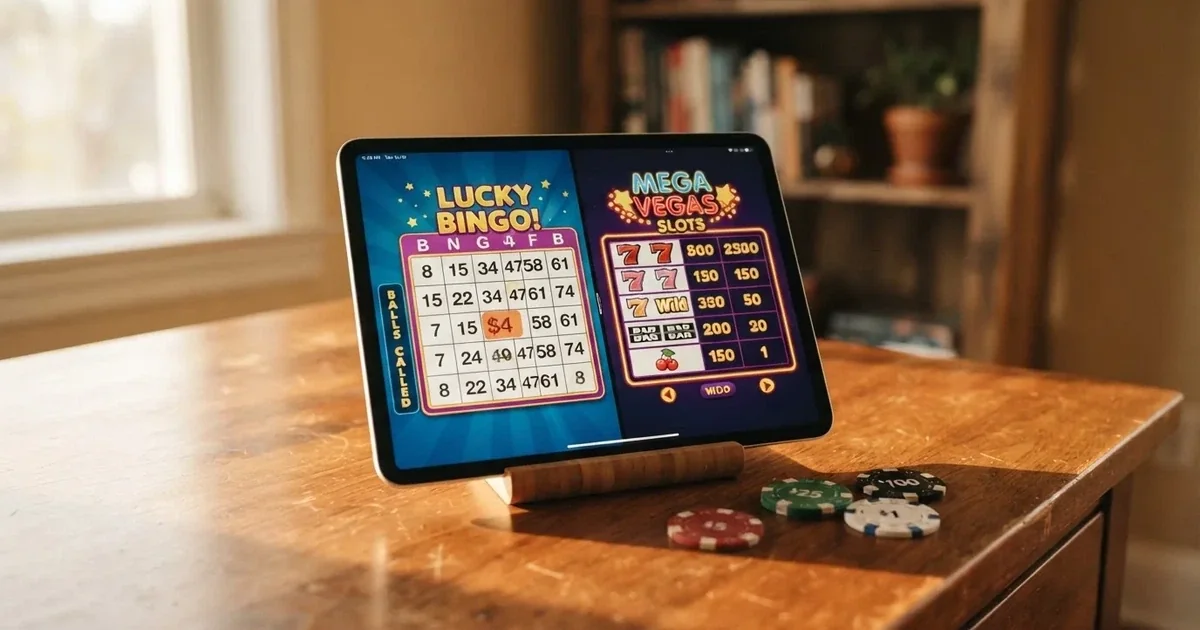
A bingo casino in the United Kingdom is, at the moment a player hands over a deposit, two distinct things at once. It is a set of bingo rooms where numbered tickets are sold and patterns called, and it is a slot lobby where reels spin on a five-by-three grid. The two halves of the product share the same cashier, the same age check, the same self-exclusion register and the same Gambling Commission licence, and a site that gets one of those things wrong gets the other wrong by definition. This page is about the licensed side of that pairing: what each of the ten featured brands actually offers, what it costs to play there, and which reader each brand is genuinely built for.
The figures below were checked against the Gambling Commission’s public register on 23 September 2026, with licence account numbers and domain status confirmed against the same source.
Table of Contents
- What the UK bingo casino field actually looks like
- Bonuses, free spins and what the 10x wagering cap actually means
- Mobile, tablet and the app question
- Bingo-linked slots and the games behind them
- Bingo and bonus terms by operator
- Paddy Power: the sportsbook-bingo crossover
- kwiff: the newer account on the register
- Betway: the established sportsbook brand with a casino side
- bet365: the platform with the deepest bingo product on the list
- Unibet: the long-established European brand on a UK licence
- 888casino: the brand built around the slot and live product
- Virgin Games: the white-label under Gamesys
- Midnite: the newer brand built for the post-2019 framework
- Betfred: the bookmaker with a long bingo history
- BetVictor: the platform with a focused bingo product
- The legal frame a UK bingo casino has to sit inside
- Player protection: GAMSTOP and the rest of the framework
- Payments, payout speed and the practical side of the cashier
- Picking the right brand for the right reader
- Frequently asked questions
What the UK bingo casino field actually looks like
The UK is not a market where “bingo casino” means a small handful of sites. The Commission’s public register held 139 businesses holding an active remote casino operating licence on 18 September 2026, and the domain list that hangs off those accounts recorded 1065 active and 361 white-label domain entries on the same date. A white-label site is one that trades under another company’s licence rather than its own — Virgin Games, for instance, runs on Gamesys Operations Limited’s account rather than holding a separate licence of its own. The headline number, then, is not ten bingo casinos in the UK, but several hundred operator-account combinations, of which a reader might encounter a hundred or more distinct brand names at any given time.

That scale matters because the ten brands reviewed here are not the entirety of the licensed field. They are a chosen set: each one carries a remote casino licence in its own right (or, in the white-label case, on an explicit and disclosed basis), each one runs bingo rooms alongside slots, and each one was picked because the combination has something specific to show. Three of them sit on long-established gambling accounts that predate the 2014 point-of-consumption reform; two are newer licence holders built for the post-reform market; one is a dedicated white-label. Reading the comparison that follows is therefore an exercise in seeing which paths through the same legal framework the brands have taken, not in ranking the whole field.
The other point worth stating up front is that bingo and slots are not the same product, even when they sit on the same website. A 90-ball bingo ticket is sold as part of a six-ticket strip covering every number from 1 to 90, and the prize goes to whichever ticket marks one line, two lines or a full house before any other, with the last number called required to be part of the winning pattern. A slot spin is a single stake on a single game cycle, with the stake size governed by an entirely separate set of rules. The two games use the same wallet, but the regulations that govern them, the limits that apply, and the mechanics by which a player wins are not interchangeable. Where this page compares brands, it does so on the combination: rooms plus reels, plus the licence that holds both.
Bonuses, free spins and what the 10x wagering cap actually means
A bingo site’s slots bonus in the United Kingdom today sits inside one of the most tightly constrained bonus frameworks in any regulated market. Since 19 December 2025, wagering requirements are capped at 10x, and a mixed-product offer — one that gives a casino bonus in exchange for a sports bet, for instance — is no longer permitted at any GB-licensed operator. Those two changes, taken together, redefine what a slots welcome package can be. A bonus that used to carry a 35x playthrough on the bonus amount is now a 10x playthrough at the outside, and a player can no longer be asked to wager on one product to unlock a reward on another.

The arithmetic of clearing such a bonus is correspondingly shorter than the marketing suggests. The required turnover, in pounds staked, is the bonus amount multiplied by the wagering factor. At the 10x ceiling, a £100 bonus requires £1,000 of qualifying stakes before any winnings derived from those stakes can be withdrawn. A £20 bonus requires £200 of qualifying stakes. At a £1 stake per spin, 1,000 spins are required for a £100 bonus, while 200 spins are required for a £20 bonus. These spin counts are based on the £1 stake-per-spin limit and the 2.5-second minimum spin interval mandated by the Commission.
The realistic range, then, for clearing a slots bonus at a UK-licensed bingo casino under the current cap, sits somewhere between a few minutes and roughly three-quarters of an hour of slot play, depending on the bonus size and the stake-per-spin the player chooses. That is the practical answer to how long the bonus takes to clear, and it is short enough that the wagering requirement is rarely the binding constraint on a withdrawal. What binds more often is the cap itself: a 10x cap means that no GB-licensed operator can demand a 40x playthrough, but it does not change that game-specific contribution rates still apply, and a slot played at 100% contribution is still being played at whatever house edge the slot itself carries. The bonus is cheaper to clear than it used to be; the cost of the slot play underneath it has not changed.
What the cap does not do is make every offer identical. A bonus can still be free spins, a matched deposit, a no-deposit starter, a reload or a cashback — the shape varies, even if the turnover cap does not. The shape that fits a player’s habits matters more than the size of the headline number, because a free-spin bundle with a fixed stake size and a fixed game carries a known cost before it is claimed, while a matched deposit can be matched at any size the player chooses to put down. The reader who knows they will play one slot for twenty minutes gets a different value from the same package than the reader who wants to spread their play across a dozen titles.
Mobile, tablet and the app question
A bingo casino in 2026 is, for the majority of its players, a phone product. The Commission’s 2.5-second minimum spin interval applies just as much to a tap on a phone screen as to a click on a desktop, and the reality checks that interrupt play at set intervals work the same way on either surface. What changes between a phone browser and a dedicated app is mostly the plumbing: a progressive web app loads the bingo lobby on demand and keeps the connection open through the room; a native app can hold the same connection while the phone screen locks, and can push a notification when a ticket purchase confirms or a win is credited.
Three of the ten featured brands ship a dedicated app on the major app stores; the other seven run the bingo rooms through a mobile browser that behaves, in practice, like an app once it is added to the home screen. The functional difference is narrower than the marketing makes it sound. What matters in either case is whether the slot lobby loads quickly enough to keep a 2.5-second minimum spin comfortable on a 4G connection, whether the bingo room’s ticket purchase and daub interface survives being used one-handed on a commuter train, and whether the cashier holds a session open long enough to complete a deposit without forcing a relogin halfway through a £5 stake. A reader who plays exclusively on a tablet, with Wi-Fi behind them and a full screen to work with, will not notice the difference; a reader who plays in three-minute bursts on a phone in poor signal may notice it every session.
The app question, asked bluntly, is therefore not “is there a dedicated app to download?” but “does the browser product on my phone do everything I need, and if so, do I gain anything by adding an icon to my home screen?”. The answer for most readers is that they gain a small amount of friction reduction and lose the storage footprint of a second application. Where an app exists, it is worth having; where it does not, the mobile browser product on a UK-licensed brand is built to fill the gap, because the Commission’s Remote Technical Standards apply to every device the player chooses.
Bingo-linked slots and the games behind them
The “bingo-linked slot” sits in an odd category that is worth describing precisely, because it is the most common point of confusion between the two halves of a UK bingo casino. A bingo-linked slot is a five-reel slot game whose theme is built around bingo: the symbols are numbered balls, the bonus round often draws extra balls in a bingo-call style, and the paytable describes prize lines in terms of matches on a virtual ticket. Mechanically, however, it is a slot. The outcome is decided by a random number generator on each spin, the stake is governed by the slot stake rules rather than by ticket price, and the result has nothing to do with which numbers are called in any actual bingo room running at the same time.
The distinction matters because a player who treats a bingo-linked slot as a bingo game will misread the cost. A 10p spin on a bingo-themed slot is a 10p slot stake with the slot’s own house edge, not a 10p entry into a bingo game with the prize structure of a 90-ball room. The slot stake limits that apply in the UK — £5 per spin for adults aged 25 or over, £2 per spin for 18-to-24-year-olds — are set on the slot side and have no analogue in the ticket price of a bingo room, which is set by the operator and printed on the lobby page.
The broader slot lobby at a UK bingo casino, beyond the bingo-themed titles, draws on the same studios and the same RTP ranges as any other regulated online casino. Aviator, the multiplayer crash game developed by Spribe and first released in 2019, has become a common presence on the same kind of site; its multiplier curve rises from 1.00x until the round randomly crashes, and a player must cash out before the crash to keep their stake multiplied. Aviator is not, strictly speaking, a slot under the Commission’s stake-limit definition — it is a different game type — but it sits in the same instant-play lobby on most of the brands reviewed here, and its presence is one of the clearer signals that the site’s product is broader than the bingo rooms on the lobby front page. Spribe has reported more than 42 million active users across the Aviator network and around 350,000 bets per minute across more than 5,000 operators worldwide, which is to say that the crash-game format is now a regular feature of the same kind of site that runs a 90-ball room.
What this means in practice is that a UK bingo casino is a hybrid product: a bingo room with a slot lobby attached, where the slot lobby is closer in regulatory terms to a slot-only site than to the bingo room next door. The bingo side uses an equal-chance framework in which every ticket has the same probability of winning, and the prize goes to whichever ticket is daubed first on the winning pattern. The slot side uses an independent random outcome on every spin, with the slot’s own RTP and volatility profile. Both sides take money from the same wallet, both honour the same self-exclusion register, and both sit under the same licence. They are not the same product, and reading them as if they were is the mistake a comparison like this is meant to forestall.
Bingo and bonus terms by operator
| Brand | Bonus Cap | Stake Limit (18-24) |
|---|---|---|
| Paddy Power | 10x | £2 |
| kwiff | 10x | £2 |
| Betway | 10x | £2 |
| bet365 | 10x | £2 |
| Unibet | 10x | £2 |
| 888casino | 10x | £2 |
| Virgin Games | 10x | £2 |
| Midnite | 10x | £2 |
| Betfred | 10x | £2 |
| BetVictor | 10x | £2 |
The table below sets out the ten brands reviewed here as they appear on the Commission’s public register on 18 September 2026: the licence account, the licence number in the form the register uses (a six-digit account, an R marking the licence as remote, and a sequence-suffix), and the status of the brand’s main domain on the same date. None of these figures is a recommendation — they are the legal furniture on which each brand’s offer sits. The licence is the floor; what each brand builds on top is the next section.
| Brand | Licence holder and GB remote casino licence | Domain status on the register |
|---|---|---|
| Paddy Power | PPB Games Limited, 039411-R-319335-010 | Active domain |
| kwiff | Eaton Gate Gaming Limited, 044448-R-323408-017 | Active domain |
| Betway | Betway Limited, 039372-R-319367-029 | Active domain |
| bet365 | Hillside (UK Gaming) ENC, 055149-R-331499-004 | Active domain |
| Unibet | Platinum Gaming Limited, 045322-R-324275-019 | Active domain |
| 888casino | 888 UK Limited, 039028-R-319297-014 | Active domain |
| Virgin Games | Gamesys Operations Limited, 038905-R-319430-022 | White-label domain |
| Midnite | Dribble Media Limited, 042647-R-321653-022 | Active domain |
| Betfred | Petfre (Gibraltar) Limited, 039544-R-319290-010 | Active domain |
| BetVictor | BV Gaming Limited, 039576-R-319370-028 | Active domain |
A licence number in this shape — six digits, an R, a sequence number, and a suffix — is the format the register uses for every remote operating licence the Commission has issued, and the leading six digits always repeat the licence holder’s account number. Reading the licence column therefore also tells the reader who is on the other side of the cashier: PPB Games Limited takes the deposits at Paddy Power, Betway Limited takes them at Betway, and so on. In the Virgin Games row, Gamesys Operations Limited is both the licence holder and the operator behind the white-label; the brand trades on Gamesys’s account rather than its own. The “Active” status is what makes a domain usable in the UK in the first place; a licence holder can hold an active account with the Commission and still have all of its domains listed as Inactive, in which case the brand is licensed but not currently serving customers.
Paddy Power: the sportsbook-bingo crossover
Paddy Power’s bingo rooms have run alongside its sportsbook for years, and the brand’s identity on the licensed side is built on that pairing rather than on bingo alone. The licence account is 39411, held by PPB Games Limited, with the active remote casino operating licence 039411-R-319335-010 and Paddy Power listed as an active domain. The Commission’s record does not break out the bingo rooms from the sportsbook product, which is consistent with how the brand presents itself: a single cashier that holds both kinds of stake.
For a reader who already has a Paddy Power sportsbook account and wants to try the bingo rooms without opening a separate wallet, the path of least friction is the existing one. For a reader whose primary interest is bingo and who has no use for a sportsbook, the same brand is heavier than they need — the homepage is built around odds rather than ticket prices. The crossover is the offer; if it is not what a reader wants, no part of the licence changes that.
The wagering cap applies here as everywhere else on a UK-licensed brand: any bonus attached to the bingo rooms or the slot lobby clears at no more than 10x the bonus amount, and a player who wants to put £100 through a slots bonus is committing to £1,000 of qualifying slot stakes at the upper bound. Paddy Power has long offered its slots product under its own licence account; the bingo rooms sit in the same product surface but use the same cashier.
kwiff: the newer account on the register
Kwiff sits on a noticeably newer Commission account than the longer-established brands on the list. The licence account is 44448, held by Eaton Gate Gaming Limited, with the active remote casino operating licence 044448-R-323408-017 and kwiff listed as an active domain. The four-digit difference in the account number, relative to the licences issued in the late 2010s, is the visible signal that the brand was licensed into a market where the post-2014 framework was already in place, and where the Commission’s modern technical and social responsibility codes applied from day one.
The product surface at kwiff has historically been built around its “supercharged” odds mechanic on the sports side, with the bingo rooms and the slot lobby added to a single cashier. The Commission’s licence column does not capture that product detail, and the register will not tell a reader whether kwiff’s bingo rooms feel like a Paddy Power bingo room or a Virgin Games room — the legal furniture is the same, the user experience is not. What the licence does say is that kwiff holds an active remote casino licence in its own name, which is not a thing every bingo-branded site in the UK can claim.
For a reader who wants a brand whose licence account was opened into the modern regulatory environment rather than grandfathered across the 2014 reform, kwiff is one of the clearer examples on the list. For a reader who wants a deep bingo room with a long history, the newer account is not a disadvantage on the legal side and may be a disadvantage on the product side, depending on what the brand has built since launch.
Betway: the established sportsbook brand with a casino side
Betway’s UK identity is anchored in its sportsbook, and the bingo rooms sit alongside the slot and live-casino product under the same Betway Limited account. The licence account is 39372, with the active remote casino operating licence 039372-R-319367-029 and Betway listed as an active domain. The account number, like Paddy Power’s, dates to the pre-reform cohort of licence holders; the brand has continued to hold an active remote licence continuously across the 2014 transition.
For a reader who has played at Betway on the sports side and is now considering the bingo rooms, the convenience of a shared cashier and integrated GAMSTOP registration applies. The bingo rooms themselves are not the headline of the brand — Betway does not market itself as a bingo-first product, and the lobby front page will show odds and slots before ticket prices. A reader whose primary interest is bingo will not find Betway’s lobby laid out for them; a reader whose primary interest is variety under one licence will.
The 10x wagering cap applies to any slots bonus at the brand, and the £5 maximum stake for adult slots (the £2 cap for 18-to-24-year-olds) is enforced by the same Remote Technical Standards that govern every other GB-licensed site on the list. Betway’s product surface is broad enough that a reader playing only the bingo rooms is paying for a sportsbook they will not use; a reader playing across the brand is paying for the convenience of one cashier.
bet365: the platform with the deepest bingo product on the list
Bet365 is the brand most likely to be on a reader’s shortlist purely for its bingo rooms. The licence account is 55149, held by Hillside (UK Gaming) ENC, with the active remote casino operating licence 055149-R-331499-004 and bet365 listed as an active domain. The bingo product runs across 90-ball, 80-ball, 75-ball and themed rooms, with chat hosts and progressive jackpots, and the slot lobby is large enough that the brand is also a slot product in its own right.
For a reader who wants the deepest bingo room on a UK-licensed brand and is willing to accept that the same site carries a sportsbook, casino, poker and a great many other things alongside it, bet365 is the clearest fit on the list. For a reader who wants a focused bingo product and finds the broader site’s product surface distracting, the depth at bet365 is offset by its scale. The licence column on the register treats bet365 as a remote casino licence, which it is; the bingo rooms sit inside that licence, which is also what every other GB-licensed bingo brand does.
The 10x wagering cap applies across the brand’s bonus offers, and the slots product under that cap carries the same stake limits as everywhere else. What bet365 adds on top of the framework is product breadth: a reader playing the bingo rooms is using a fraction of the licence, but they are using it on a platform whose product investment in the bingo rooms specifically is unusually visible.
Unibet: the long-established European brand on a UK licence
Unibet has run under a UK Gambling Commission licence since the post-2014 framework took effect, on the Platinum Gaming Limited account. The licence account is 45322, with the active remote casino operating licence 045322-R-324275-019 and unibet.co.uk listed as an active domain. The brand’s European origin predates the UK licence, but the UK product surface — bingo rooms, slot lobby, live casino, sportsbook — sits under the Commission’s framework rather than under any other regulator.
For a reader who has played at Unibet on the European side and wants a UK-licensed equivalent, the .co.uk domain is the answer. For a reader whose only experience is UK brands, Unibet is a long-established operator with the same Commission furniture as every other brand on this list. The bingo rooms are not the primary identity of the brand, but they are present, and they share the cashier, the GAMSTOP registration and the deposit-limit prompt with everything else on the site.
The 10x wagering cap is the same at Unibet as at every other GB-licensed brand, and the slot stake limits apply the same way. Where Unibet differs from the rest of the list is in its European product history, which is visible in the live-casino lobby rather than in the bingo rooms themselves.
888casino: the brand built around the slot and live product
888casino is the slot and live-casino brand in the 888 group, and its bingo rooms sit alongside that product rather than defining the brand. The licence account is 39028, held by 888 UK Limited, with the active remote casino operating licence 039028-R-319297-014 and 888casino listed as an active domain. The account number, like Betway’s and Paddy Power’s, dates to the pre-reform cohort.
For a reader who has played at 888casino on the slot side and is considering the bingo rooms, the same integrated cashier and licence-level protection applies. For a reader whose primary interest is the bingo rooms specifically, the slot-and-live brand identity is a sign that the bingo product is not the centre of the site.
The 10x wagering cap and the slot stake limits apply here as everywhere else on a GB-licensed brand, and 888’s slot product carries its own RTP and volatility profile independent of the bingo rooms. A reader who wants to play both halves of the same site has a credible option; a reader who wants a bingo-first brand should look elsewhere on the list.
Virgin Games: the white-label under Gamesys
Virgin Games is the only brand on the list whose domain is listed on the Commission’s register as a white-label rather than as an active domain of its own licence holder. The licence account is 38905, held by Gamesys Operations Limited, with the active remote casino operating licence 038905-R-319430-022 and Virgin Games listed as a white-label domain. A white-label site trades under another company’s licence: in Virgin Games’s case, Gamesys Operations Limited is the licence holder, and the brand’s own legal entity sits behind it as the customer-facing operator.
For a reader who wants a brand with a dedicated UK bingo product, Virgin Games is one of the clearer options on the list, because Gamesys’s product investment has historically been heavier in bingo than in some of the other categories on the licence. For a reader who wants to know exactly which legal entity is on the other side of the deposit, the white-label column on the register answers the question: Gamesys, not a Virgin-branded entity.
The 10x wagering cap applies under the Gamesys licence, and standard slot stake limits apply to the games. What the white-label status changes is the legal furniture rather than the player experience: the player still deposits with Virgin Games, still wins and loses on Virgin Games-branded rooms, and still makes a complaint to Gamesys if anything goes wrong. The brand is a label, the licence is the legal contract, and the register records both.
Midnite: the newer brand built for the post-2019 framework
Midnite sits on a Commission account that dates to the more recent cohort of licence holders, which is the visible signal that the brand was designed and built to the modern framework rather than adapted to it. The licence account is 42647, held by Dribble Media Limited, with the active remote casino operating licence 042647-R-321653-022 and Midnite listed as an active domain.
For a reader who wants a brand that was licensed into the modern environment and has not had to retro-fit its product to a post-2014 reform, Midnite is the clearest example on the list. For a reader who wants the longest product history, the newer account is not a disadvantage on the legal side and may be a disadvantage on the product side, depending on what the brand has built.
The 10x wagering cap applies under the Midnite licence, with standard slot stake limits enforced across the lobby. What Midnite offers on top of the framework is a smaller, more focused product than the platform brands on the list — the kind of site a reader might prefer if they do not want the broader sportsbook or live-casino surfaces of Paddy Power, Betway or bet365.
Betfred: the bookmaker with a long bingo history
Betfred is one of the longer-established names on the list, and its bingo rooms have run alongside its sportsbook and slot product for years. The licence account is 39544, held by Petfre (Gibraltar) Limited, with the active remote casino operating licence 039544-R-319290-010 and Betfred listed as an active domain. The Gibraltar incorporation of the licence holder is consistent with how a number of UK-facing gambling brands have structured their operating companies since the 2014 reform; the Commission’s licence is what makes the brand UK-facing, regardless of where the operating company is registered.
For a reader who has played at Betfred on the sports side and wants the bingo rooms, the benefit of the shared cashier and integrated player protection remains. For a reader whose primary interest is the bingo rooms, the bookmaker identity is a sign that the bingo product is not the centre of the site, although Betfred has historically invested more visibly in its bingo rooms than some of the other bookmaker brands on the list.
The 10x wagering cap applies under the Betfred licence, while mandatory slot stake limits govern game cycles. What Betfred offers on top of the framework is a recognisable high-street bookmaker brand identity that some readers prefer to the newer entrants.
BetVictor: the platform with a focused bingo product
BetVictor sits on a Commission account that has held an active remote casino licence across the post-2014 framework. The licence account is 39576, held by BV Gaming Limited, with the active remote casino operating licence 039576-R-319370-028 and BetVictor listed as an active domain.
For a reader who has played at BetVictor on the sports side and wants the bingo rooms, the same shared cashier and protection framework applies. For a reader who wants a focused bingo product, BetVictor’s product investment in its bingo rooms is visible on the lobby, although the brand identity remains a sportsbook-and-casino one.
The 10x wagering cap applies under the BetVictor licence, and these slot stake limits apply to every spin. What BetVictor adds on top of the framework is another established bookmaker brand with a credible bingo side.
The legal frame a UK bingo casino has to sit inside
Every brand reviewed above holds an active remote casino operating licence issued by the Gambling Commission under the Gambling Act 2005, which covers Great Britain — England, Scotland and Wales — and not Northern Ireland. The Gambling (Licensing and Advertising) Act 2014 made the point-of-consumption regime that the Commission’s licence list now reflects: any operator taking customers in Great Britain needs a Commission licence wherever it is based, and a Curaçao, Maltese or Gibraltar business registration is not a substitute. The Commission’s public register is the whole test of whether a brand holds a licence, and the licence number column in the table above is taken from that register.
The minimum age for any gambling product in Great Britain, including bingo and online slots, is 18. Name, address and date of birth are verified before the first deposit or any play at a licensed site, a requirement that has been in force since 7 May 2019. The age check is the gate to the cashier; a player who cannot pass it cannot deposit, and a brand that does not run it is not licensed to take UK deposits at all.
The slot stake limits that apply at every brand on the list are two-tier. For players aged 25 or over, the maximum stake per game cycle is £5, in force from 9 April 2025. For 18-to-24-year-olds, the maximum stake per game cycle is £2, in force from 21 May 2025. The lower limit on the younger cohort reflects the UK government’s reasoning that 18-to-24-year-olds have the highest average problem gambling score of any age group, alongside lower disposable income and ongoing neurological development. The limits apply to online slots; bingo ticket prices are not subject to the same statutory ceiling, and are set by the operator.
The Commission has also put in place a series of game-design rules that apply across the slot lobby at every GB-licensed brand. Online slot spin speeds may not be faster than 2.5 seconds, setting the 2.5-second interval as the minimum a spin must take. Auto-play on slots is banned outright, on the basis that the feature caused players to lose track of their gambling activity. Losses disguised as wins — visual celebrations of a payout that is smaller than the stake — are banned. Reverse withdrawals were banned with effect from 31 October 2021, so a player who requests a withdrawal can no longer be offered the chance to cancel it and re-gamble the funds. Each of these rules is enforced by the Commission’s Remote Technical Standards, and a brand that ignores any of them is in breach of its licence conditions.
There is no state-set deposit ceiling at a UK-licensed operator. The Commission requires the operator to prompt a customer to set a financial limit before the first deposit, a requirement in force from 31 October 2025, and the operator must run financial vulnerability checks at £150 of net deposits in a rolling 30-day period, using public data only. Wider financial risk assessments have been announced but are not yet in force at the time of writing. The limit a player actually faces is therefore the limit they set themselves, modulated by the operator’s vulnerability-check process; there is no statutory deposit ceiling to push against.
The bonus framework that governs the slots side of every brand on the list has been tightened materially in the last twelve months. Since 19 December 2025, wagering requirements are capped at 10x and mixed-product bonuses are banned, meaning a player can no longer be asked to wager on one product to unlock a reward on another. Credit cards have been banned for gambling since 14 April 2020, including credit cards routed through e-wallets. Anonymous play is not possible at a licensed site, because the age check runs at the cashier before the first deposit can be made. The result is a bonus environment that is much more constrained than the equivalent market of five years ago, and a deposit environment that is fully identified.
Player protection: GAMSTOP and the rest of the framework
The mandatory self-exclusion scheme for online gambling in Great Britain is GAMSTOP, and participation in it is a condition of every remote operating licence the Commission issues. A player who registers with GAMSTOP chooses an exclusion period of six months, one year or five years, and the registration cannot be cancelled early. Once registered, the player is blocked from depositing or playing at any GB-licensed online operator, and the block applies to bingo and slots alike.
The national support services that the Commission’s framework sits alongside are GamCare (which runs the National Gambling Helpline) and GambleAware. GamCare is the operator a player is most likely to reach if they want to talk through a problem, and the National Gambling Helpline is the telephone number a player will be given by any GB-licensed operator who identifies a concern at the vulnerability check. GambleAware funds research and treatment across Great Britain. Both sit outside the Commission’s own structure, but both are the recognised support routes the Commission’s licence conditions reference.
The financial vulnerability check at £150 net deposits in a rolling 30-day period, in force from 28 February 2025, is the operator’s responsibility: a GB-licensed brand is required to run the check using publicly available data, and to act on the result. A positive check does not automatically exclude a player, but it does trigger a conversation, and the operator is required to record what happens next. The wider financial risk assessments, which would use credit-reference-agency data and were announced alongside the vulnerability checks, are not yet in force at the time of writing; when they come into force, the data sources available to operators will broaden.
What none of the framework does is offer a player protection at an unlicensed site. The Commission’s enforcement reach covers GB-licensed operators; an offshore site that takes UK deposits without a licence commits an offence under section 33 of the Gambling Act 2005, but a player who deposits at such a site has no GAMSTOP route, no Commission complaints route, and no access to an approved alternative dispute resolution provider. The Commission’s disruption work — cease-and-desist notices, search-engine delisting, payment and hosting referrals — operates against the operator, not against the player. The player who ends up at an unlicensed site has, in practice, gambled outside every protection the GB framework offers, and the only safe assumption is that the protection is not there.
Payments, payout speed and the practical side of the cashier
A UK-licensed bingo casino takes deposits and pays withdrawals through the same cashier, and the cashier is the part of the product the Commission’s framework touches most directly. Credit cards are out — the ban has been in force since 14 April 2020 and covers credit cards routed through e-wallets as well as direct credit card deposits. Debit cards, bank transfers, and a set of approved e-wallets make up the rest of the deposit surface, with the operator free to add methods of its own within the Commission’s framework. There is no statutory maximum deposit, but the financial vulnerability check at £150 net deposits in a rolling 30-day period runs across the cashier regardless of the deposit method.
Payout speed at a UK-licensed brand is governed less by statute than by the operator’s own internal processes and by the payment method the player chooses. E-wallet withdrawals are typically the fastest, often clearing inside 24 hours once the operator has approved the request; debit card and bank transfer withdrawals take longer, with one to three working days being common. The Commission’s framework does not impose a maximum payout time, but it does require that withdrawals be processed without undue delay, and a player who has been waiting longer than the operator’s published terms can expect can complain to the operator and, if the complaint is not resolved, to an approved ADR provider.
A point worth being clear about, because the marketing sometimes blurs it: payout speed at a UK-licensed brand is not a function of the licence type, and a bingo licence is not a slower product than a casino licence. Both halves of the brand sit under the same remote casino operating licence, and both use the same cashier. What differs is the operator’s own published withdrawal time, and the payment method the player has chosen to withdraw to. A player who wants faster payouts should pick an e-wallet, regardless of which brand they play at; a player who wants a payout to a bank account should expect a longer window, again regardless of brand.
The wagering cap affects the cashier too, because every withdrawal has to clear any outstanding bonus wagering before it is paid out. Under the 10x cap, that requirement is much smaller than it was before 19 December 2025, and the practical cost of a slots bonus is correspondingly lower. A player who wants to withdraw £100 of winnings from a slots bonus at a UK-licensed brand today is committing to at most £1,000 of qualifying slot stakes at the upper bound — and at the £1-per-spin stake an adult player is most likely to choose, that is 1,000 spins of slot play, or just over 41 minutes of continuous play at the 2.5-second minimum spin interval. The bonus is small enough to clear inside a single session, and the cashier is correspondingly responsive.
Picking the right brand for the right reader
The ten brands reviewed here do not offer the same product under different branding. They offer the same legal framework with different product surfaces, different brand identities, and different points of emphasis, and a reader who knows what they want from a UK bingo casino can choose on the basis of what each brand is actually built to deliver.
A reader whose primary interest is the bingo rooms themselves, and who wants the deepest bingo product on a UK-licensed brand, is best served by bet365. The brand’s bingo product runs across 90-ball, 80-ball, 75-ball and themed rooms with chat hosts and progressive jackpots, and the slot lobby and sportsbook sit alongside it. The same reader who wants a smaller, more focused site — one that was built for the post-2019 framework rather than adapted to it — is best served by Midnite. Both brands hold active remote casino licences in their own names; both apply the 10x wagering cap and the slot stake limits; the difference is product depth on the bingo side.
A reader who has played at a sportsbook brand already and wants to try the bingo rooms without opening a separate wallet is best served by Paddy Power, Betway, Betfred or BetVictor. All four hold their own active remote casino licences; all four run bingo rooms alongside a sportsbook; all four share the cashier, the GAMSTOP registration and the deposit-limit prompt. The same reader who wants a sportsbook-bingo crossover under a European brand identity is best served by Unibet. The same reader who wants a slot-and-live-led brand with a credible bingo side is best served by 888casino.
A reader who wants a white-label brand with a long product history in bingo is best served by Virgin Games. The licence account is Gamesys Operations Limited’s rather than a Virgin-branded entity’s, which is the white-label arrangement the register records; the brand is a label, the licence is the legal contract. A reader who wants a newer brand on the register, with the product focus of a smaller operator and the modern regulatory framework built in from day one, is best served by kwiff or Midnite.
None of these is a recommendation to play. Every brand on the list holds an active remote casino licence issued by the Gambling Commission; every one applies the 10x wagering cap; every one sits inside the same GAMSTOP framework. The differences are in the product surface and in the brand identity, and the right brand is the one whose product surface matches what the reader actually wants to play.
Frequently asked questions
What is the difference between a bingo room and a bingo-linked slot?
A bingo room is a live game in which numbered tickets are sold and called, with the prize going to whichever ticket marks the winning pattern first. A bingo-linked slot is a five-reel slot game with a bingo theme: the symbols are numbered balls, the bonus round may draw extra balls in a bingo style, but the outcome is decided by a random number generator on each spin. The two are governed by different rules, with bingo running under an equal-chance framework and slots under independent random outcomes and the Commission’s stake limits.
Are there bingo slots available with no deposit required to try?
Some UK-licensed bingo casinos offer a no-deposit starter — a small bundle of free spins or a small bonus credited on account opening, without requiring a deposit first. The terms attached to that starter carry the same 10x wagering cap that applies to every GB-licensed bonus, and the specific games the spins can be used on are set by the operator. The shape of the offer varies; the existence of a no-deposit route at a GB-licensed brand is the answer to whether one is available.
What wagering terms usually apply to a bingo site’s slots bonus?
Since 19 December 2025, every Gambling Commission-licensed operator is capped at a 10x wagering requirement on any bonus, and mixed-product bonuses are banned. Game-specific contribution rates still apply, and the slot the bonus is cleared on carries its own RTP and volatility profile independent of the wagering cap. A £100 bonus at the upper bound requires £1,000 of qualifying slot stakes before withdrawal; a £20 bonus requires £200.
Is there a dedicated app for bingo casinos, or only a browser site?
Three of the ten featured brands ship a dedicated app on the major stores, and the other seven run the bingo rooms through a mobile browser that behaves like an app once added to the home screen. The Commission’s Remote Technical Standards apply to every device the player chooses, and a player who wants faster cashier access and push notifications may prefer a dedicated app; a player who wants to avoid the storage footprint of a second application is well served by the mobile browser product.
How is a bingo casino’s payout speed compared with a standard slots site?
The cashier is the same on a UK-licensed bingo casino as on a UK-licensed slots site, because both halves of the brand sit under the same remote casino operating licence. Payout speed depends on the operator’s own internal processes and on the payment method the player has chosen: e-wallet withdrawals are typically the fastest, debit card and bank transfer withdrawals take longer. The Commission’s framework requires withdrawals to be processed without undue delay, and a complaint route is available through the operator and an approved ADR provider.
Must a bingo casino be licensed by the Gambling Commission to accept UK players?
Yes. Under the Gambling (Licensing and Advertising) Act 2014, any operator taking customers in Great Britain needs a Commission licence wherever it is based; a Curaçao, Maltese or Gibraltar business registration is not a substitute. The Commission’s public register is the test of whether a brand holds a licence, and an unlicensed site that takes UK deposits commits an offence under section 33 of the Gambling Act 2005. A player at an unlicensed site has no GAMSTOP route, no Commission complaints route, and no access to approved alternative dispute resolution.
Prepared by the casinopaymentsuk editorial staff.