
What a first deposit bonus really costs at a UK-licensed casino
Verified against the Gambling Commission’s public register on 7 November 2026.
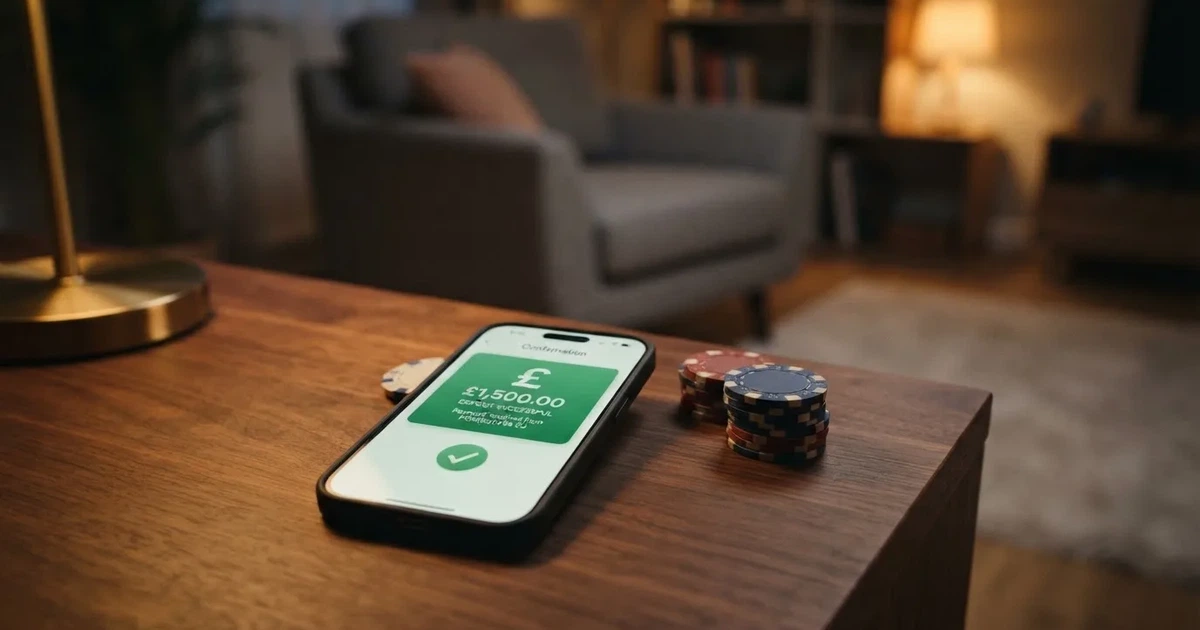
A first deposit bonus looks like free money and almost never is. The marketing plants a number — match the deposit, double the bankroll, “100% up to £X” — and the small print quietly specifies how that number has to be turned over before any of it is withdrawable. On a UK-licensed site, that small print now has a ceiling: since 19 December 2025 wagering requirements are capped at 10x the bonus amount, and mixed-product offers (a sports bet bundled with casino spins) are out. The shape of the offer is unchanged. The cost of clearing it is bounded.
This page compares ten Gambling Commission-licensed casinos on what their first deposit bonus actually requires. It does not recommend one. The point is to lay out, side by side, the terms the licence lets them publish — and what those terms do to a deposit.
Table of Contents
- How a first deposit bonus works on a UK-licensed site
- The 10x wagering cap, in practice
- What identity verification costs before the first deposit
- Crypto funding, and why anonymity does not survive the licence
- Safer-gambling protections around the bonus
- Withdrawal timing at a GB-licensed operator
- The ten brands the Commission’s register shows for this market
- What the bonus really costs the player
- What the page leaves out
- Frequently asked questions
How a first deposit bonus works on a UK-licensed site
A first deposit bonus is a credit the operator adds to a player’s account on top of an initial deposit. The credit is not cash until the player has met the wagering requirement — the number of times the bonus (and sometimes the bonus plus deposit) has to be staked before any winnings become withdrawable. Until that requirement is cleared, the bonus sits in a separate balance that cannot be withdrawn and is usually forfeit if a withdrawal is requested early.

The mechanism is older than the regulator. What changed in the last decade is the perimeter around it. A Gambling Commission licensee must verify name, address and date of birth before the first deposit goes in (since 7 May 2019). The deposit itself cannot come from a credit card — that route was closed for online gambling on 14 April 2020. The wagering requirement on the bonus, if any, is capped at 10x since 19 December 2025. Mixed-product bonuses, where a sportsbook free bet arrives bundled with casino spins, are banned from the same date.
What falls out of those rules is a narrower, blunter offer than the one the offer implies. There is no anonymity, no credit card funding, no upper-end wagering multiple. There is a credit balance, a multiplier, a stake cap on the slot itself, and a clock.
The stake cap deserves a separate sentence because it sits on the same screen as the bonus. Since 9 April 2025, online slots at GB-licensed casinos carry a maximum stake per game cycle of £5 for players aged 25 and over, and £2 for 18-24s (since 21 May 2025). A “game cycle” is one full spin of the reels; the cap applies to the stake entered for that cycle, not to cumulative bets across a session. For a player working through a bonus, the cap does two things. It limits how fast the wagering requirement can be turned over — at the £5 ceiling and a 2.5-second minimum spin interval, a £500 bonus requires a long evening rather than an afternoon. And it makes the casino’s headline offer and the slot’s own maximum stake two numbers that have to be reconciled before any deposit goes in.
The bonus’s own clock is shorter than the licence requires. Operators set an expiry window — commonly seven to thirty days from credit — inside which the wagering requirement has to be cleared. After that, the bonus and any winnings tied to it are removed. A reader who treats the bonus as a longer-term bankroll finds it gone before the bankroll is.
The 10x wagering cap, in practice
The 19 December 2025 cap on wagering requirements applies to bonuses offered by GB-licensed operators. The number sits on top of a marketing landscape that, before the cap, ranged from 20x to 60x on casino bonuses at some offshore brands. The cap does not abolish wagering; it bounds it.

What the cap changes is the worst case. A £100 bonus at 10x requires £1,000 of qualifying stakes before the bonus funds — and any winnings earned from them — become withdrawable. The qualifying stake is the one placed on games that count toward the requirement; slots almost always count 100%, table games often less or not at all. At the £5 maximum slot stake for a player aged 25 or over, that £1,000 turnover takes 200 spins at the cap. At the regulator’s 2.5-second minimum spin interval, 200 spins run about eight and a half minutes of slot time. At 18-24 the same turnover takes 500 spins at the £2 stake — twenty-one minutes of minimum-interval play.
Those are the fastest numbers the rules permit. They assume every spin lands at the maximum stake, every spin counts in full, and the player never varies the bet. In practice a session runs longer — a player drops stakes to chase features, plays lower-volatility games, takes breaks — and the time to clear stretches. What the cap delivers is not speed. It is a hard ceiling on the multiplier, which is the one number that, before December 2025, had no upper bound on a licensed site.
The cap also removes a category of offer that the offer suggests should exist: the high-multiplier, headline-grabbing welcome package. A licensed site can still publish a “100% up to £X” headline, but the £X is no longer paired with a 35x or 50x multiplier. The marketing word has shrunk.
What identity verification costs before the first deposit
A Gambling Commission licensee must run identity and age checks before a player makes a first deposit or places a first bet. The check has been mandatory since 7 May 2019. It runs against name, address and date of birth; the operator matches what the player has entered against commercial and public records and, where the match is weak, against the player’s uploaded documents.
The cost of this check is paid in time, not money. A clean match at sign-up usually completes in minutes and the deposit proceeds. A weak match — a flat share, a recent address move, a name that does not hit the records cleanly — pushes the operator to request documents. Passport or driving licence, a recent utility bill, sometimes proof of the payment method. The deposit sits pending until the documents are reviewed. A reader who treats the first deposit as instant can find it held for a working day or two while the operator works through the file.
Source-of-funds checks sit one layer further on. They run at a higher deposit threshold than the identity check and use the operator’s own records plus, for a subset of cases, public data only (from 28 February 2025, at £150 net deposits in a rolling 30 days). They are not a barrier to the first deposit. They are a barrier to a pattern of deposits the operator is meant to notice.
For the bonus specifically, the identity check matters because it runs before any bonus is credited. A player who signs up, makes a first deposit, and waits to verify cannot retroactively unlock a “first deposit” offer that was promoted at sign-up. The licence requires the check before play; the bonus requires the deposit; the order is fixed.
Crypto funding, and why anonymity does not survive the licence
The cluster of search terms around this offer — bitcoin casino first deposit bonus, crypto casino first deposit bonus — implies a payment that does not have to clear a bank. On a GB-licensed site, that implication is wrong. The Gambling Commission’s identity checks run before the first deposit regardless of the funding source, and a cryptocurrency deposit is a first deposit for those purposes. The wallet address does not exempt the player.
What the licence does permit, on the payment side, is that a licensed operator may accept cryptocurrency funding through payment processors that route the crypto-to-fiat conversion. The operator remains the licensed entity; the player is still identified. The “anonymity” implied by the offer is the property of the wallet, not of the licensed casino sitting on the other side of it.
For a player holding bitcoin and considering a first deposit bonus, the practical chain is: the wallet pays into a payment processor, the processor credits the player’s account in sterling, the account is verified, the deposit is eligible for the bonus. The crypto is a funding rail, not an identity rail. The bonus terms — the wagering cap, the stake cap, the game weighting, the expiry — apply identically whether the deposit came from a debit card or a converted crypto balance.
Offshore brands that market themselves as anonymous crypto casinos sit outside the Commission’s register. They cannot lawfully take customers in Great Britain under section 33 of the Gambling Act 2005. A player at such a brand loses the protections this page goes on to describe — no GAMSTOP, no Commission complaints route, no approved ADR — and gains nothing the licence forbids.
Safer-gambling protections around the bonus
The Gambling Commission’s safer-gambling regime wraps the bonus rather than competing with it. Three of the conditions matter for someone choosing a first deposit bonus.
Mandatory GAMSTOP enrolment. Every GB-licensed online operator must check the player against GAMSTOP, the national online self-exclusion register, before allowing play. GAMSTOP periods are six months, one year or five years; they cannot be cancelled early. A self-excluded player cannot deposit, claim a bonus, or play at any GB-licensed site. The check is automatic and runs at sign-up.
Deposit-limit prompt before first deposit. Since 31 October 2025, an operator must prompt the player to set a financial limit before the first deposit goes through. The limit can be a daily, weekly or monthly ceiling, or a combination; the operator cannot proceed without recording one. The prompt is not an offer of advice; it is a regulatory condition of the deposit. There is no state-set ceiling — the player sets the number.
Financial vulnerability checks. At £150 net deposits in a rolling 30-day window, the operator runs a check using public data only (live from 28 February 2025). A check that flags the player does not freeze the account automatically; it prompts a conversation the operator is required to have. The wider financial risk assessments, with broader data sources, have been announced but are not yet in force.
The bonus sits inside this frame. A first deposit bonus is, mechanically, an encouragement to deposit. The licence mitigates that encouragement by requiring the limit prompt and the vulnerability check before any second deposit. The two systems — the marketing one and the protection one — operate in the same account.
A note on the stake cap: the same regulatory package that introduced the 10x wagering cap also narrowed game-cycle stakes. The £5 / £2 ceiling applies to every spin, including those funded by bonus credit. A player cannot bypass the stake cap by playing through bonus funds.
Withdrawal timing at a GB-licensed operator
A withdrawal at a GB-licensed casino runs through the operator’s own pending period, then through the payment rail. The pending period is the time the operator holds the request before paying it out — typically 0 to 24 hours for automated approval, longer if the operator wants to re-run affordability or source-of-funds checks. The payment rail is whatever method the player used to deposit, with the operator’s published minimum and maximum withdrawal windows.
The Faster Payments Service, which handles most UK bank transfers, runs 24 hours a day and credits most payments instantly or within a couple of minutes; transfers can occasionally take up to two hours. The scheme’s per-transaction limit is £1,000,000, though the player’s own bank may impose a lower limit. Withdrawals back to a debit card run through the card scheme and typically clear in one to three working days; the operator cannot speed this up.
For the bonus, the relevant window is the gap between requesting a withdrawal and the bonus clearing its wagering requirement. A withdrawal request before the requirement is met usually forfeits the bonus. A request after it is met triggers the pending period, then the rail. A player who has cleared the bonus on Tuesday evening and requests a withdrawal at the same time will usually see the funds Wednesday morning — instant if the operator has no manual hold, delayed by a day if it does.
The Commission’s identity and source-of-funds checks apply on the way out as well as in. A player who passes the deposit-side check but triggers a withdrawal-side review — a large first withdrawal, a change of payment method, an address change — may find the request held while the operator re-runs the file. The same documents can be requested twice. The delay is the protection, not a friction tax on it.
The ten brands the Commission’s register shows for this market
The following ten brands are listed as active domains on the Gambling Commission’s public register, each tied to a remote casino operating licence. The list is taken from the register; it is not a ranking and not a recommendation. Several brands share a licensee — Ladbrokes and Coral both sit under LC International Limited, for example — and they should not be read as independent operators for that reason.
Every GB-licensed online operator must take part in GAMSTOP and run the identity and source-of-funds checks described above. None of these brands is anonymous; none accepts credit card deposits. Each carries a first deposit bonus of some shape; the terms of that bonus vary and are not on the register.
| Brand | Licence holder and GB remote casino licence | Domain status on the register | Subject support |
|---|---|---|---|
| Unibet | Platinum Gaming Limited, 045322-R-324275-019 | Active | — |
| Betfair | PPB Games Limited, 039411-R-319335-010 | Active | — |
| Sky Vegas | Bonne Terre Gaming Limited, 065519-R-339675-002 | Active | — |
| MrQ | Tek Fox Ltd, 060629-R-337532-004 | Active | — |
| Betway | Betway Limited, 039372-R-319367-029 | Active | — |
| PokerStars | Stars Interactive Limited, 039108-R-319334-026 | Active | — |
| Paddy Power | PPB Games Limited, 039411-R-319335-010 | Active | — |
| Ladbrokes | LC International Limited, 054743-R-330863-014 | Active | — |
| BetVictor | BV Gaming Limited, 039576-R-319370-028 | Active | — |
| Betfred | Petfre (Gibraltar) Limited, 039544-R-319290-010 | Active | — |
The “Subject support” column is empty across the set because no research finding attaches a first deposit bonus offer — its terms, its expiry, its wagering multiple — to a specific brand within this list. The licence and the domain are public register data; the offer is marketing material the register does not carry. The honest read is that the brands are licensed, the offer sits behind a login, and a player who wants the terms sees them at the cashier rather than at the comparison table.
Unibet
Platinum Gaming Limited holds Unibet’s GB licence (045322-R-324275-019); unibet.co.uk is an active domain on the register. Unibet operates a sportsbook and casino under the same account and runs the GAMSTOP and identity checks the licence requires. Its first deposit bonus sits behind the login, and the page does not carry its terms.
What the licence tells the reader is that the operator has passed the Commission’s checks, can lawfully take customers in Great Britain, and is bound by the 10x wagering cap and the £5 / £2 stake ceiling on slots. What it does not tell is whether Unibet’s bonus is more or less generous than the next brand on this list. The comparison the page makes is on register status, not on offer.
Betfair
PPB Games Limited holds Betfair’s GB licence (039411-R-319335-010); Betfair is listed as an active domain. Paddy Power sits on the same licence — both brands share one operating account — and a player who moves between the two is moving within one regulated entity rather than between two. The Commission register lists both as active domains of account 39411.
For the bonus specifically, sharing a licence means the two brands inherit the same 10x cap, the same £5 / £2 stake ceiling, the same GAMSTOP check. They may publish different offers at the cashier; the regulatory frame around them is one frame.
Sky Vegas
Bonne Terre Gaming Limited holds Sky Vegas’s GB licence (065519-R-339675-002); Sky Vegas is an active domain. Sky Vegas runs as a casino-only brand under Bonne Terre, which holds no sportsbook licence. The 10x cap and the stake ceiling apply as they do elsewhere.
A casino-only structure changes the practical shape of the bonus. There is no mixed-product welcome package to read down through — sportsbook free bets have been excluded from licensed bonuses since 19 December 2025 anyway, so the change matters less now than it did. What it does change is the temptation to mix: a player at Sky Vegas cannot accidentally redeem a sportsbook free bet because the product is not there.
MrQ
Tek Fox Ltd holds MrQ’s GB licence (060629-R-337532-004); MrQ is listed as an active domain. MrQ operates as a casino-led brand without a sportsbook. The Commission has Tek Fox on the register and MrQ as an active domain.
The brand is worth a separate mention because the licence account is newer than most on this list — Tek Fox was a late entrant to the GB remote casino register. The Commission’s checks do not vary by account age once a licence is granted, but the recency of the account is a marker a reader can pick up from the register’s licence number alone.
Betway
Betway Limited holds Betway’s GB licence (039372-R-319367-029); Betway is listed as an active domain. Betway runs a casino and a sportsbook under the same account. The brand carries a long-established GB presence; the licence number on the register predates many of the newer entrants.
For the bonus, what the licence length signals is familiarity with the Commission’s compliance regime rather than a different offer. The 10x cap is the 10x cap regardless of when the operator was first licensed.
PokerStars
Stars Interactive Limited holds PokerStars’ GB licence (039108-R-319334-026); PokerStars is listed as an active domain. The Stars Interactive account carries a poker product alongside the casino. For the first deposit bonus, the casino bonus terms apply; a player signing up through the poker client is still bound by the same 10x cap on any casino bonus credited to the account.
The presence of poker does not change the casino offer’s mechanics. It does change where the player meets the bonus — the cashier sits across two product surfaces, and the wagering requirement contributes only from casino games.
Paddy Power
PPB Games Limited holds Paddy Power’s GB licence (039411-R-319335-010); Paddy Power is an active domain. The licence is the one Betfair also carries; the two brands share one operating account. A player who opens either is opening an account at PPB Games Limited, and the Commission’s complaints route and ADR sit at the licensee level, not the brand level.
For the comparison on this page, Paddy Power and Betfair are best read as one entity on two skins. The first deposit bonus at one may differ from the first deposit bonus at the other; the regulator behind them is one.
Ladbrokes
LC International Limited holds Ladbrokes’ GB licence (054743-R-330863-014); Ladbrokes is listed as an active domain. LC International also runs Coral and Gala Bingo under the same account — the three brands sit as domains of one licensee on the Commission’s register. A player who opens any of the three is opening an LC International account, and the GAMSTOP check and the vulnerability check run at that account level.
The headline brand sits in a long-established GB retail and digital operation. The licence number is well-aged. The 10x cap and the stake ceiling apply as they do everywhere else on the register.
BetVictor
BV Gaming Limited holds BetVictor’s GB licence (039576-R-319370-028); BetVictor is listed as an active domain. BetVictor runs a sportsbook and casino under BV Gaming. The licence has been live long enough that the operator’s own compliance record is on the Commission’s public file; the Commission’s regulatory action history, where it exists, is searchable by account number.
For the bonus comparison, BetVictor is one of ten brands on this list. The Commission’s frame applies identically; the offer at the cashier is what the reader sees, and the page does not carry it.
Betfred
Petfre (Gibraltar) Limited holds Betfred’s GB licence (039544-R-319290-010); Betfred is listed as an active domain. Betfred runs a sportsbook and casino under the Gibraltar-domiciled parent. The Commission’s check on the licence covers the operator’s GB-facing activity regardless of where the parent is incorporated; the Gambling (Licensing and Advertising) Act 2014 removed the offshore-only carve-out that had previously let Gibraltar- and Malta-based operators serve GB customers without a Commission licence.
For the bonus, the Petfre parentage is irrelevant to the offer’s mechanics. What matters is the GB licence, the 10x cap, and the stake ceiling — the same numbers as everywhere else on this list.
What the bonus really costs the player
The arithmetic the licence permits is bounded. A bonus at 10x, played at the maximum slot stake of £5 for an over-25 player, runs through its wagering requirement at a calculable rate. The calculation the page makes is on a band rather than a single figure, because the inputs the player actually faces vary.
The fastest case: a £100 bonus at 10x requires £1,000 of qualifying stakes. At £5 per spin, that is 200 spins. At the regulator’s 2.5-second minimum spin interval, 200 spins take about 500 seconds — eight minutes and twenty seconds of continuous slot play. The fastest case assumes every spin is at the maximum stake, every spin counts in full toward wagering, and the player does not pause.
The slowest plausible case: the same £100 bonus at 10x, played at the £2 stake ceiling for an 18-24 player, requires the same £1,000 turnover at half the stake. That is 500 spins — twenty-one minutes of minimum-interval play. In practice the player varies stake and game, takes breaks, and plays lower-volatility slots; the same £1,000 turnover runs to an hour or two rather than minutes.
A third band sits between these and is the one most readers will actually meet. A player mixing stakes, switching games, and playing for half an hour at a time will take a £100 bonus from credit to cleared in a session or two. The point of the calculation is not the precise number — it is the shape. The cap bounds the multiplier; the stake ceiling bounds the speed. A £100 bonus is a few hours of play, not a few minutes and not a few days.
For the player on a small bankroll the same shape holds at a smaller scale. A £20 bonus at 10x is £200 of qualifying stakes — 40 spins at £5 or 100 spins at £2. The cap compresses small bonuses into a few minutes of maximum-rate play, which is part of why the smallest offers are often the most efficient to clear.
For a player chasing a larger bonus — a “100% up to £200” headline, say — the multiplier scales with the bonus, not the deposit. A £200 bonus at 10x is £2,000 of qualifying stakes. At £5 a spin that is 400 spins; at £2 a spin, 1,000. The arithmetic is the same in shape, scaled up.
The calculation is a statistical estimate of how long the requirement takes to clear under the stated assumptions. It does not promise a win, a payout or a return. The bonus is paid out as credit, not cash, and the player can lose the credit and any winnings tied to it during the wagering period if the variance runs against them.
What the page leaves out
This comparison does not name the bonus amount, the percentage match, the expiry window, the game weighting or the maximum cashout for any of the ten brands. Those numbers live at the cashier, behind a login, and the Commission’s public register does not carry them. A page that printed them would either be inventing or stale within a marketing cycle. The honest read is that the register confirms the operator’s licence; the operator’s own terms page confirms the offer; the gap between the two is where a player reads the small print before the first deposit.
What the page does carry is the frame around the offer: the 10x cap on wagering, the £5 / £2 stake ceiling, the mandatory identity check before first deposit, the GAMSTOP check at sign-up, the deposit-limit prompt, the financial vulnerability check at £150 net deposits in a rolling 30 days. Each of these is a Commission condition of the licence. Each sits on the same account as the bonus. A player who reads only the bonus terms misses the licence; a player who reads only the licence misses the offer. The two together are what a first deposit bonus at a UK-licensed casino actually costs.
Frequently asked questions
How is a first deposit bonus usually calculated?
A first deposit bonus is a percentage match of the player’s first deposit — most commonly 100% — up to a cap. A “100% up to £100” offer doubles a £100 deposit, with the bonus credited as separate funds subject to a wagering requirement. The bonus amount itself is not withdrawable until the requirement is met.
Can a first deposit bonus be funded with cryptocurrency?
Yes — a Gambling Commission-licensed operator may accept cryptocurrency deposits via a payment processor that handles the crypto-to-fiat conversion. The Commission’s identity and age checks run before the first deposit regardless of the funding source, so the deposit is not anonymous. Offshore brands that market themselves as anonymous crypto casinos cannot lawfully take customers in Great Britain.
Does a first deposit bonus require identity verification before it pays out?
Yes. Since 7 May 2019 a Commission licensee must verify name, address and date of birth before any first deposit or first bet. The verification is not a withdrawal-side condition; it is a deposit-side one. A player who signs up and waits to verify cannot retroactively unlock a “first deposit” offer.
What wagering usually applies to a first deposit bonus in the UK?
Since 19 December 2025 wagering requirements at GB-licensed casinos are capped at 10x the bonus amount. Mixed-product bonuses — for example, a sportsbook free bet bundled with casino spins — are banned from the same date. Operators are free to set lower multipliers; they cannot set higher ones.
Is a first deposit bonus separate from a no-deposit bonus?
Yes. A first deposit bonus requires a deposit and is calculated against it. A no-deposit bonus is credited on sign-up or after verification, with no deposit required, and is usually smaller and shorter-windowed. A no-deposit bonus at a GB-licensed site is also subject to the 10x wagering cap where it carries a wagering requirement.
How long is a first deposit bonus usually valid for once credited?
Operators set the expiry window; the Commission’s licence does not prescribe one. The common range is seven to thirty days from credit. After expiry the bonus and any winnings tied to it are removed. A player who treats the bonus as a longer-term bankroll finds it gone before the bankroll is.