
Binance Coin (BNB) casinos in the UK — a comparison that runs into the licence line
 Available in GB
A search for a “Binance Coin casino UK” reveals a market reality different from what the term implies. There is no shortlist of British-licensed online casinos taking BNB, because every brand on the Gambling Commission’s public register — 139 licence holders running 1,065 active and 361 white-label casino domains as of 18 September 2026 — accepts pounds through bank rails, cards and a tightly bounded set of e-wallets, not crypto tokens. A site that advertises BNB deposits almost always sits outside that register, and that placement, not the coin itself, is what the comparison has to be about.
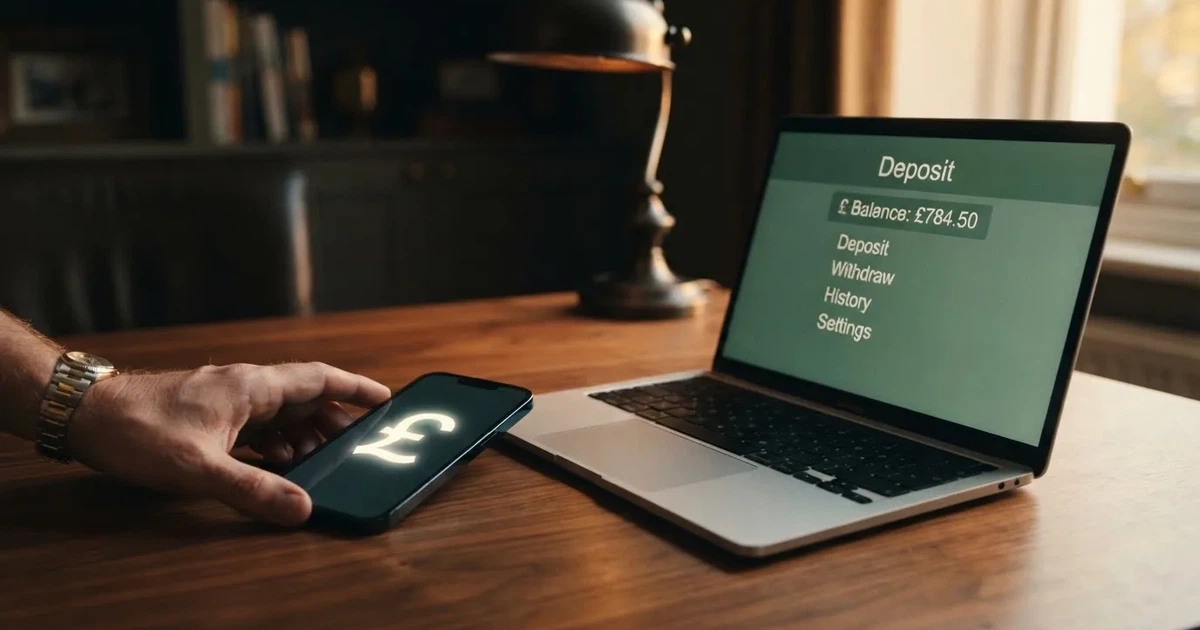
This guide explores the comparison British players need. It starts with the practical cost of stepping off-licence, because that is where most of the value in this article sits, then sets out how Binance Coin works as a payment rail, then ranks the ten established GB-licensed brands by the angle a reader comparing them cares about, then lays down the legal frame that determines which of the two arrangements — licensed and sterling, or unlicensed and crypto — is open to a player in Great Britain.
Current as of 23 September 2026 against the Gambling Commission’s public register of gambling businesses (CSV download, 18 September 2026).
Table of Contents
- What a player gives up the moment a casino sits outside the UK licence
- How Binance Coin actually works at a casino cashier
- The ten GB-licensed brands the comparison has to set against the unlicensed shelf
- The legal frame a UK player has to read before depositing anywhere
- Frequently asked questions about Binance Coin casinos in the UK
What a player gives up the moment a casino sits outside the UK licence
The first question is not whether Binance Coin is fast or cheap to send — it is — but what falls away when the site accepting it has no Gambling Commission licence. A GB-licensed online casino is, among other things, a place where three protections are wired in by law: the GAMSTOP self-exclusion scheme, mandatory financial vulnerability checks, and a Commission complaints route that an alternative dispute resolution provider can act on. None of that travels with the player when funds leave the sterling banking system and arrive at a Curaçao- or Costa Rica-licensed site running on USDT, BNB or BTC.

For someone who has signed up to GAMSTOP during a hard patch, this is the line that matters most. Self-exclusion there is a mandatory condition of every GB-licensed online licence since 31 March 2020, with periods of six months, one year or five years, and it cannot be lifted early. Walk into an unlicensed crypto casino and the exclusion does not follow, because the new site is not part of the scheme. The protection that felt cast in concrete a week ago turns out to be a perimeter fence, and the perimeter is not the British one.
Then there is the affordability side. Since 28 February 2025, GB-licensed operators run a financial vulnerability check at £150 of net deposits inside a rolling 30 days, using public data only — a soft friction that becomes a hard conversation once a customer crosses the threshold. Wider financial risk assessments, using bought-in datasets, have been announced but are not yet in force. The point is the trajectory: as of 18 September 2026 the live rule is a public-data trigger; a fuller picture of a customer’s borrowing is the direction the regulator is moving. An unlicensed site does none of it, because none of it is required of it.
Complaints and dispute resolution go the same way. A licensed casino is signed up to an approved ADR provider; an unresolved complaint can be referred by the customer, and the Commission can act on the licence if the pattern warrants. An offshore site answers to its own jurisdiction, if it has one a player can reach in practice. The Commission disrupts illegal sites — cease-and-desist notices, search-engine delisting, payment and hosting referrals — but does not have the power to block them at the ISP level. None of that is aimed at the player. What the player loses is the route, not the protection of an empty one.
The cost of the convenience BNB actually buys
Crypto deposits at unlicensed casinos get sold on three things: speed, looser verification, and the absence of a card on file. All three are real, and that is what makes the trade-off honest rather than one-sided. A BNB transfer on BNB Smart Chain settles in seconds at a network fee measured in cents; a same-day bank deposit at a British site clears in minutes too, but the comparison gets harder when the bank declines gambling transactions on the first attempt, which several still do. A BNB casino asks for an email and a wallet address; a GB-licensed casino asks for photo ID, a proof of address and the source-of-funds paperwork above set thresholds. The friction saved is real.

What the marketing never quite says is what the friction was doing. The ID step exists because the operator has to know who is on the other side of the bet under the Money Laundering Regulations and the Commission’s social responsibility code. The deposit-limit prompt, required before the first deposit since 31 October 2025, exists because the operator has to ask. The GAMSTOP check exists because the operator must not let an excluded player open an account. Take these one by one and each is a small intrusion. Take them away and the operator is also free of the duty behind them, which is what a British player loses.
That is the comparison at its core. Speed and privacy against the regulator-mandated safeguards a player only notices when one of them would have stopped a bad night from becoming a worse one. The rest of this page is mostly a way of seeing both sides before a deposit is made.
How Binance Coin actually works at a casino cashier
Binance Coin launched in July 2017 as an ERC-20 token on Ethereum, issued by the Binance exchange the same year its founders — Changpeng Zhao and Yi He — set up. The exchange raised about $15 million through the initial coin offering that produced BNB. By 2021 the coin had reached the third-largest cryptocurrency by market capitalisation, and the original Ethereum-based token had long since migrated to its own chain. The Binance Smart Chain launched in September 2020 and was rebranded BNB Smart Chain in 2022; it now runs on a proof-of-stake consensus mechanism. The maximum supply is capped at 200,000,000 BNB tokens.
What a player meets at the cashier is the modern form of all that: a BEP-20 token on BNB Smart Chain, paid to a deposit address the casino generates for the session, on a network that settles in blocks of roughly three seconds. The wallet on the player’s side may be the exchange account the coins were bought on, a browser-extension wallet such as MetaMask configured for BNB Smart Chain, or a hardware wallet used through a software front-end. Either way, the transfer is a single on-chain transaction from the player’s address to the casino’s, with a small fee paid in BNB.
That is where the technical picture stops helping the comparison and the regulatory one takes over. BNB is a cryptoasset under UK law. Firms carrying out cryptoasset activities in the UK — exchanges, brokers, custodians — must register with the Financial Conduct Authority under the Money Laundering Regulations, with the FCA’s new authorisation regime under the Financial Services and Markets Act opening for applications on 30 September 2026. HMRC does not treat cryptoassets as currency; it treats them as property, so an individual owes Capital Gains Tax when they sell, swap or spend them and Income Tax on receipts such as staking rewards. None of this stops a British player sending BNB from a registered exchange to an unlicensed casino. What it does mean is that the same coins, on the same network, are a regulated asset on the way out and an unregulated payment at the point of use.
Why a GB-licensed operator cannot just add a BNB button
The Commission’s own position is that cryptoassets are a high-risk payment method, and licensed operators are expected to treat crypto-funded play as a high-risk indicator requiring enhanced customer due diligence. A Commission-licensed operator that wanted to start accepting BNB would have to notify the Commission of the change in payment methods and review its anti-money-laundering risk assessment first — neither of which is a checkbox. The on-chain reality behind a BNB deposit is pseudonymous by design, and the GB social responsibility framework assumes the operator knows who is on the other end of a transaction before the first pound moves.
The two regimes meet and do not quite match. KYC at the casino, and a wallet address published on a public blockchain; affordability checks against the customer, and coins that can move between any number of wallets before they reach the cashier; source-of-funds paperwork on the player, and a payment that has cleared no bank. The Commission has not closed the door on crypto at licensed sites — the rules say “high-risk”, not “prohibited” — but the door is narrow enough that no major British brand has walked through it. That is the structural reason a Binance Coin casino comparison in the UK, run honestly, looks the way this page does.
The ten GB-licensed brands the comparison has to set against the unlicensed shelf
None of the ten brands below accepts Binance Coin. Every one of them sits on the Gambling Commission’s public register, runs under a remote casino operating licence, and is part of GAMSTOP. That is the comparison a player actually finds once the “BNB” part is stripped away: not a list of BNB casinos, but a list of what a licensed alternative to one looks like. The table below is the working answer.
| Brand | Licence holder and GB remote casino licence | Domain status on the register | Subject support |
|---|---|---|---|
| Grosvenor Casinos | Rank Interactive (Gibraltar) Limited · 057924-R-334666-005 | Active | — |
| Virgin Games | Gamesys Operations Limited · 038905-R-319430-022 | White-label | — |
| Betway | Betway Limited · 039372-R-319367-029 | Active | — |
| PokerStars | Stars Interactive Limited · 039108-R-319334-026 | Active | — |
| Betfair | PPB Games Limited · 039411-R-319335-010 | Active | — |
| Paddy Power | PPB Games Limited · 039411-R-319335-010 | Active | — |
| 32Red | Platinum Gaming Limited · 045322-R-324275-019 | Active | — |
| Betfred | Petfre (Gibraltar) Limited · 039544-R-319290-010 | Active | — |
| Casumo | Recro Limited · 061549-R-336718-002 | Active | — |
| bet365 | Hillside (UK Gaming) ENC · 055149-R-331499-004 | Active | — |
Two of the ten sit under the same licence account. Betfair and Paddy Power both belong to PPB Games Limited, account 39411, and run under the same remote licence 039411-R-319335-010. They are not independent operators in the regulatory sense, even if they feel like separate brands in the market — and a player comparing complaints or ADR outcomes can land on the same body for both. Virgin Games is a white-label domain on the register, which means it trades under Gamesys Operations Limited’s licence rather than holding its own. That is a structural note, not a quality one; many reputable names run white-label. The other seven hold their own licences and run their own domains.
Subject support for Binance Coin is the column the table is built around, and the honest reading is that none of these brands supports BNB deposits in any form a player can use. Every cell carries the no-data marker — em dash — and every cell carries it for the same reason: a Commission-licensed brand that wanted to add crypto would have to clear the hurdles described earlier, and none of these ten has. The reader who arrives expecting a row that says “yes” or “no” is being shown, row after row, the structural answer instead.
Grosvenor Casinos — the High Street name with a crypto-free till
Grosvenor Casinos operates on the public register as an active domain of account 57924, Rank Interactive (Gibraltar) Limited, under the remote casino operating licence 057924-R-334666-005. It is the digital arm of a chain most British players will have walked past at some point, and that heritage shows in a heavier table-game and live-dealer lobby than several of its peers. The cashier is the same one the wider GB-licensed market runs on — debit cards, bank transfer, a closed list of e-wallets — and the GAMSTOP and affordability framework is in place the same way it is everywhere on the register.
For a reader weighing this brand against an unlicensed BNB site, the relevant fact is what it does not have: not a specific missing coin, but the absence of the off-licence trade-off entirely. The exchange-rate exposure that comes with paying in BNB, the on-chain record of every stake, the lack of a Commission route if a withdrawal stalls — none of those apply here, because the deposit is in pounds from a UK bank. The brand suits a player who has decided that the structural protections matter more than the speed gain of a crypto rail. It is also the most obvious fit for someone who already self-excluded at a different site and now wants the GAMSTOP perimeter back.
Virgin Games — the white-label digital brand under Gamesys
Virgin Games runs as a white-label domain of account 38905, Gamesys Operations Limited, on the same Commission’s register, with the licence number 038905-R-319430-022. The white-label status on the register is the one thing to read carefully: the brand is a front, the licence holder is Gamesys, and any Commission complaint runs to Gamesys as the licensed entity. The trade is access to Gamesys’s platform and games catalogue with the Virgin brand on top of it, which is a common and legitimate arrangement in this market.
Subject support for BNB is the same em dash as everywhere else on the register. A player choosing this brand is choosing it for the catalogue and the licence framework, not for any payment-method flexibility it does not have. The Gameys-operated bingo rooms sit closer to the brand’s centre of gravity than the slot lobby does, which is worth knowing if the comparison was about the shape of the site rather than the size of its welcome.
Betway — the multi-product sportsbook with a casino attached
Betway is listed as an active domain of account 39372, Betway Limited, on the Gambling Commission’s public register, under remote licence 039372-R-319367-029. The licence holder is a Betway entity rather than a third-party platform, which means the Commission complaints route and ADR both run against Betway Limited directly. The brand is best known for its sportsbook, and the casino sits as one of several products behind the same login — a structural point for a player who wants a single account across sports betting, slots and live casino rather than three separate ones.
The Binance Coin position is the same em dash. Players who came to the comparison from a sportsbook-and-casino combination will not get the crypto angle here either, and the same trade-off applies — pounds and bank rails in, Commission protection all the way through. The relevant verdict is that this brand is a strong fit for a player who values the multi-product account and the licence holder being the same legal entity as the brand, and the wrong fit for someone whose comparison started with the payment method and only then narrowed to the brand.
PokerStars — the poker heritage with a casino bolted on
PokerStars runs as an active domain of account 39108, Stars Interactive Limited, on the public register, under the remote licence 039108-R-319334-026. The .uk domain is the one the register lists, and the licence holder is the Stars Group entity rather than a wider conglomerate. The brand’s centre of gravity is still poker — tournaments, cash game traffic, the international player pool — and the casino is the product a poker account unlocks rather than a destination in its own right.
The subject support column is the same em dash; PokerStars does not take BNB. The relevant reader for this brand in a comparison that started with crypto is someone whose primary product is the table game the brand is known for, and who is using the casino as the side product — with the GB-licensed framework as a feature, not a compromise. For a reader whose comparison began with the payment method, this is the wrong stop.
Betfair — the exchange-led operator with a casino wing
Betfair sits as an active domain of account 39411, PPB Games Limited, on the Commission’s public register, under remote licence 039411-R-319335-010. The same licence covers Paddy Power — both domains belong to PPB — so the comparison between these two is closer to a comparison between two brand presentations on one platform than between two independent operators. Betfair’s identity is the betting exchange, and the casino is one of the products that share the wallet.
BNB is not on the cashier here either. For a reader whose comparison started with crypto and arrived at a UK-licensed alternative through the back of a sports exchange, this is the brand to know about. For a reader who never used the exchange and only saw the casino tab, there is no feature here that Paddy Power does not also carry, and the choice between them comes down to brand familiarity rather than product.
Paddy Power — the same licence, a different shopfront
Paddy Power is listed as an active domain of the same account, 39411, PPB Games Limited, under the same remote licence 039411-R-319335-010 as Betfair. The brand is the Irish heritage, the novelty markets, the high-street betting-shop feel carried onto a digital site — a noticeably different presentation of the same regulated product. The casino tab sits alongside sports and the wider Paddy Power product set; the loyalty mechanics, the payment methods and the regulatory framework are the platform’s rather than the brand’s.
Subject support is again the em dash. The honest read is that a player choosing between Betfair and Paddy Power is choosing a brand presentation, not a different operating model or a different payment set, and either is a serviceable licensed alternative to an unlicensed BNB site. The case for Paddy Power specifically is the brand fit, not a structural edge.
32Red — the long-running digital casino brand
32Red is listed as an active domain of account 45322, Platinum Gaming Limited, on the public register, under remote licence 045322-R-324275-019. The brand has been online since the early 2000s — one of the longer-running pure-play digital casino names in the British market — and the Microgaming heritage that gave the early site its identity still shapes a chunk of the catalogue. The licence holder is Platinum Gaming, the same 32Red Ltd that owns the brand; the operator and the brand are the same legal entity.
BNB does not appear on the cashier here, and the same em dash applies. The relevant verdict is that this brand suits a player who values a long-running casino-only operation with its own licence, in contrast to a multi-product sportsbook-and-casino brand where the casino is one tab among several. It is the cleaner licensed alternative for someone whose frame of reference for online gambling is the casino lobby, not the betting slip.
Betfred — the bookmaker’s casino, on a Gibraltar licence
Betfred is listed as an active domain of account 39544, Petfre (Gibraltar) Limited, under remote licence 039544-R-319290-010. The licence holder is the Gibraltar arm of the Petfre group, which is the long-standing Betfred corporate structure rather than a third-party platform. The brand is best known as a bookmaker with deep roots in British retail betting, and the casino sits as the second product behind the same login.
The Binance Coin position is unchanged — em dash, not supported, not on the register as a payment method at any licensed brand. A player arriving at Betfred through a sportsbook-shaped comparison will find the casino product and the GB-licensed framework in place, with the same structural protections every other brand on this list offers. The case for it is the bookmaker heritage, not a different payment angle.
Casumo — the design-led casino on a Recro licence
Casumo is listed as an active domain of account 61549, Recro Limited, on the public register, under remote licence 061549-R-336718-002. The licence holder is a relatively recent account number — the licence was issued in the last few years — and the brand’s identity is the adventure-game presentation layered over a standard slot and live-dealer lobby. The catalogue leans on the bigger studio names rather than a single supplier’s heritage.
BNB support is the same em dash. The relevant fit for this brand in a comparison that began with crypto is a player who values the design-led presentation and the relatively recent licence, and who has decided the licensed framework outweighs the payment flexibility an unlicensed site would offer. For someone whose comparison is the payment method first, this is the wrong destination.
bet365 — the multi-product giant, on its own licence
bet365 is listed as an active domain of account 55149, Hillside (UK Gaming) ENC, on the public register, under remote licence 055149-R-331499-004. The licence holder is the bet365 parent, which means the brand, the platform and the licensed entity are all the same corporate group — about as close to a single-name operator as the GB market gets. The casino is one of several products behind the bet365 login, alongside the sportsbook that built the brand.
The BNB position is again the em dash. A player arriving at bet365 from a comparison that started with crypto will find the largest multi-product operator in the British market, with the same Commission framework every other brand on the list offers, and no crypto on the cashier. The verdict for a reader weighing this brand against an unlicensed BNB site is that this is the licensed alternative to default to when the rest of the package matters more than the payment method — and the honest trade is the same one the whole list carries.
The legal frame a UK player has to read before depositing anywhere
Every brand in the previous section sits under a single regulatory umbrella. The Gambling Commission, sponsored by the Department for Culture, Media and Sport, regulates commercial gambling in Great Britain under the Gambling Act 2005. Northern Ireland runs a separate regime and is not covered here. Since the Gambling (Licensing and Advertising) Act 2014, any operator taking customers in Great Britain needs a Commission licence wherever the operator itself is based — a Curaçao, Maltese or Gibraltar corporate licence is not a substitute. Online casino is a licensable activity, and the public register is the whole test of whether a brand holds one.
Three rules from the current framework bear directly on the comparison this page is built around. The first is the age and identity threshold: minimum age 18, with name, address and date of birth verified before the first deposit or any play, in force since 7 May 2019. The second is the game-cycle stake cap on online slots — £5 per spin for players aged 25 and over, from 9 April 2025, and £2 per spin for 18-24-year-olds, from 21 May 2025. The third is the deposit-limit prompt, required of operators before the first deposit since 31 October 2025: there is no state-set deposit or loss ceiling, but the operator has to ask the customer to set one. Two earlier rules close off the options the BNB angle tries to reopen — credit cards have been banned for gambling since 14 April 2020, including credit cards routed through e-wallets, and wagering requirements have been capped at 10x with mixed-product bonuses banned since 19 December 2025.
The GAMSTOP and affordability layers sit on top. GAMSTOP self-exclusion is a mandatory condition of every online licence, with exclusion periods of six months, one year or five years and no early cancellation. Financial vulnerability checks run at £150 net deposits in a rolling 30 days, using public data only, since 28 February 2025; the wider financial risk assessments using bought-in datasets have been announced but are not yet in force. Auto-play has been banned since 31 October 2021, a slot spin may not be faster than 2.5 seconds, and losses disguised as wins are banned.
How the wagering cap changes the cost of any welcome offer
The 10x cap on wagering requirements that took effect on 19 December 2025 is the rule that most directly shapes what a welcome offer is worth to a player. A bonus of, say, £100 now requires £1,000 of qualifying turnover to clear — a tenth of what a 100x bonus would have demanded, and a fraction of the dozens-of-times turnover that was common in the offshore casino market a few years ago. The cap is the single biggest reason the comparison above does not need to spend paragraphs on bonus-cost arithmetic: the figure is bounded by the rule, not negotiated between operator and player.
The range that follows from the cap is the more useful framing. The cheapest offers clear at one or two times playthrough, with the bonus paid out as cash or withdrawable balance; the most aggressive legal offers hit the cap at ten times, on bonus funds that may also carry a maximum-cashout rule. Anywhere inside that band, the calculation reads the same way: bonus multiplied by the wagering multiple gives the required turnover, and the time to clear depends on the stake-per-spin and the spin length. With the slot stake cap at £5 for adults, a £100 bonus at 10x wagering means £1,000 of turnover, which at £5 a spin is 200 spins, which at the minimum 2.5-second cycle is 500 seconds, or just over eight minutes of continuous play. That is not how long the bonus takes to clear — that is the mechanical floor, and a player who runs a normal session clears a £100-at-10x bonus inside an evening rather than across a week.
The calculation above is a statistical estimate: an average over many spins at the stated stake and cycle length, and not a prediction of what any single session will return. The point of running it is the band it produces, not the single figure — eight minutes of mechanical spin is the floor, an evening of play is the realistic outcome, and both sit well inside the player budget that a 100x bonus would have pushed past.
What an unlicensed site owes the player it does not owe a regulator
Section 33 of the Gambling Act 2005 makes it an offence to provide gambling to people in Great Britain without a Commission licence. The Commission disrupts illegal sites — cease-and-desist notices, search-engine delisting, payment and hosting referrals — and there is talk of broader enforcement tools, but it does not have the power to block unlicensed sites at the ISP level. None of that reaches the player; the penalty is on the operator, not the customer. What the player loses on an unlicensed site is not legal exposure, it is protection: no GAMSTOP, no Commission complaints route, no approved ADR, no source-of-funds review the operator is required to do.
Two fiscal notes sit alongside this. Players pay no tax on gambling winnings in the UK, licensed or not. Operators pay Remote Gaming Duty, raised from 21% to 40% from 1 April 2026 — a figure that applies to licensed operators only and not to the comparison being made here. The model is “this is how it would land if you were licensed”; for an unlicensed site, the duty regime is the licensing jurisdiction’s, not Britain’s.
What the comparison leaves out — and why
A list of BNB casinos in the UK does not exist in the way a search might imply, and the closest legitimate answer is the table of GB-licensed alternatives above. The ten names on that table do not accept BNB. The 1,065 active and 361 white-label domains on the Commission’s register do not accept BNB. The 139 licensed businesses behind those domains do not accept BNB. A search for one that does will land on a site licensed outside the Commission’s reach, and that placement is the answer the comparison has to give.
What the page leaves out, deliberately, is the ranking of off-licence sites that do accept BNB. There is no verified list to draw from — the register is a British one and these brands are not on it — and a ranking built from marketing copy or affiliate disclosures would be a comparison that names sites without the licensing evidence to back up any claim about them. The honest position is that the list the term implies is not deliverable as a list, and the more useful comparison is the one between the licensed shelf and the unlicensed trade-off the rest of this page has laid out.
Frequently asked questions about Binance Coin casinos in the UK
Can a licensed British casino accept Binance Coin as a deposit method?
No major GB-licensed online casino accepts BNB. The Gambling Commission classes cryptoassets as a high-risk payment method, and a licensed operator adding BNB would have to notify the Commission and revise its anti-money-laundering risk assessment first. None of the ten brands in the licensed comparison above clears that hurdle, and no peer on the wider 139-licence register appears to have done so either.
What identity checks apply at a BNB casino outside UK licensing?
In practice, far less than at a GB-licensed site. A typical BNB casino asks for an email and a wallet address and may run source-of-funds checks only at withdrawal or above internal thresholds. There is no Commission requirement to verify name, address and date of birth before the first deposit, no GAMSTOP cross-check and no financial vulnerability trigger. The friction saved is real; the duty behind it is what falls away with it.
Is a casino that accepts Binance Coin automatically unlicensed in Britain?
Not automatically, but in practice, yes. A Commission licence covers sterling payment rails the operator has registered; BNB is not on that list at any of the 1,065 active casino domains on the register as of 18 September 2026. A site advertising BNB deposits is almost always licensed outside Great Britain — Curaçao, Costa Rica, Anjouan — and is therefore outside the Commission’s reach for player complaints and responsible-gambling enforcement.
What self-exclusion protection does a player lose by using a BNB-only casino?
GAMSTOP self-exclusion is a mandatory condition of every GB-licensed online licence; an off-licence crypto casino is not part of the scheme, so a six-month, one-year or five-year exclusion does not carry over. The affordability checks that licensed operators run — including the £150-in-30-days vulnerability trigger since 28 February 2025 — do not apply either, and there is no Commission complaints route to fall back on if a withdrawal stalls.
How does a Binance Coin deposit differ from a standard bank transfer at a UK casino?
A BNB transfer on BNB Smart Chain settles in seconds at a network fee measured in cents, and the cashier asks only for a wallet address. A Faster Payments bank deposit at a GB-licensed site also clears in minutes but is processed through a verified UK bank account in the customer’s name, with the operator’s KYC and affordability framework sitting on top of it. The crypto path is faster at the edge and less regulated at the core; the bank path is the other way around.
Why do most Gambling Commission-licensed casinos not accept cryptocurrency such as BNB?
Because the regulatory framework around crypto at licensed sites is the high-risk treatment in the Commission’s own guidance: enhanced due diligence, notification of payment-method changes, and an anti-money-laundering risk assessment the operator has to revise before turning the rail on. The on-chain reality behind a BNB deposit — pseudonymous wallets, no bank in the loop — does not square easily with the KYC and source-of-funds duties the GB framework imposes, and the result is that no major British brand has taken the step.
Prepared by the casinopaymentsuk editorial staff.