Bitcoin Cash casinos in the UK — what a Gambling Commission search turns up, and what falls outside it
 Available in GB
A British player typing “Bitcoin Cash casino” into a comparison is not asking the same question as one in a market without a regulator. The question here is narrow: does any operator holding an active Gambling Commission licence actually accept BCH, and if not, what sits on the other side of that door. The register is the answer, and on 23 September 2026 it is the answer in a particular shape: ten licensed brands, none of them listed as supporting Bitcoin Cash. The page below reads that register, follows the Bitcoin Cash coin out to where it is actually used, and asks the question that follows — what a player keeps, and what they trade away, when they step outside the licensed set.
Data current as of 23 September 2026 and cross-checked against the Gambling Commission’s public register of gambling businesses and the Commission’s own guidance on blockchain technology and cryptoassets.
Table of Contents
- The first question: where the responsibility framing sits before anything else
- Crypto, anonymity and the boundary the regulator draws
- Ten licensed brands, one register, one shared answer on Bitcoin Cash
- The shape of the licensed British market — and where Bitcoin Cash sits in the wider crypto picture
- The responsibility layer the unlicensed route removes
- The legal frame around unlicensed play
- Bonuses and the wagering cap that took effect on 19 December 2025
- What a Bitcoin Cash comparison actually compares
- The narrow window where a licensed brand might list BCH
- What the unlicensed route looks like in practice
- What a reader does with this page
- Frequently asked questions
The first question: where the responsibility framing sits before anything else
Bitcoin Cash is pitched as frictionless: no bank, no card, no name on the form. For British players that pitch cuts against a rulebook that demands exactly those things. The shape of the choice is best seen up front, before any list of brands, because the choice is what the list illustrates.

Every Great Britain-licensed online casino must build three protections into the moment a player arrives. Name, address and date of birth are verified before the first deposit or any play, since 7 May 2019. GAMSTOP, the national online self-exclusion scheme, has been a mandatory condition of every online licence since 31 March 2020, in periods of six months, one year or five years, with no early cancellation. From 31 October 2025 the operator must prompt a customer to set a financial limit before the first deposit. Each of those is a thing a BCH-only site, sitting outside the licence, does not have to do.
That is not a complaint about the technology. Bitcoin Cash, the coin that forked from Bitcoin on 1 August 2017 at block height 478,559, runs on the same SHA-256 proof-of-work as its parent and settles into a block on average every ten minutes; it works as advertised. The point is that the regulator’s protection is bolted onto the operator, not onto the payment rail. A rail that bypasses the operator’s onboarding steps also bypasses the protection those steps carry.
Two consequences follow. A player who has self-excluded through GAMSTOP and tries to bypass it on a BCH-only site is acting against a scheme that has no jurisdiction there; the scheme works because licensed operators check it, and an unlicensed operator does not. A player who has set a deposit limit on one brand and intends it as a personal rule cannot assume the next operator inherits it — there is no register to inherit from. The reader-facing version of that is: a BCH casino outside the licence is a different product, not a different route to the same product.
The deeper point is that the regulator has read this market already. The Gambling Commission rates cryptoassets, Bitcoin Cash among them, as a high-risk payment method for anti-money-laundering purposes among Great Britain licensees, and Licence Condition 12.1.1 requires an operator to review its anti-money-laundering risk assessment before adding one. That review is not a formality — it is the regulator telling a would-be licensee that this category of payment attracts enhanced scrutiny. Few have cleared it; none of the ten brands below are recorded as having done so for BCH.
Crypto, anonymity and the boundary the regulator draws
Bitcoin Cash sits in a wider family of payment methods that share a structural feature with cash itself: they do not, by themselves, identify the person on the other end of the transfer. That feature is the marketing pitch and the regulator’s concern in the same breath.
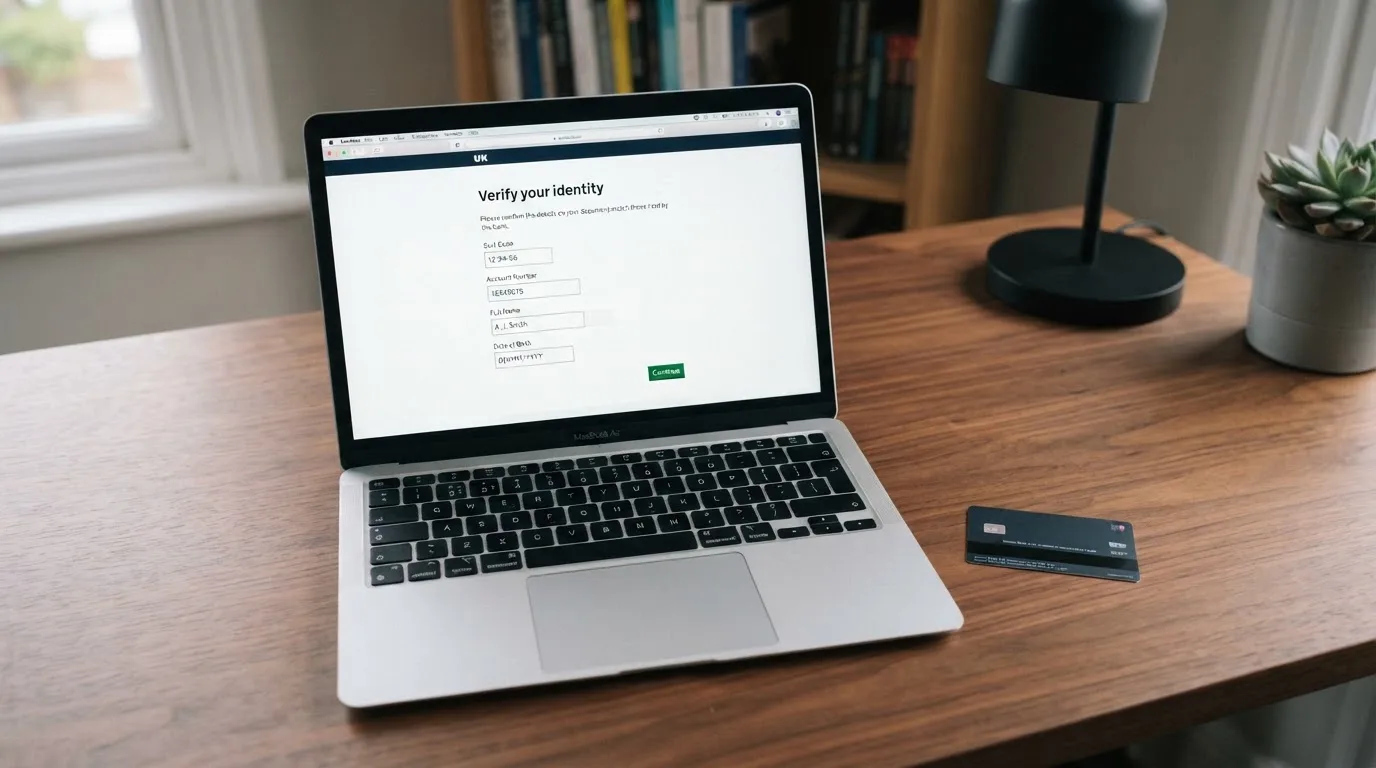
What “anonymity” actually means on a BCH casino is narrower than the marketing line suggests. The Bitcoin Cash network is a public ledger; every transaction is recorded, address by address, in perpetuity. What the coin does not do, by design, is bind those addresses to a real-world identity — that binding is what an operator’s know-your-customer process adds, and at an unlicensed BCH casino that process is either absent or perfunctory. The pitch, fairly read, is “we do not check”, not “you cannot be found”.
The pitch is also, for a British player, the surface where several rules break at once. Identity verification at the licensed brand is a precondition of play, not a courtesy; missing it is a breach of the operator’s licence conditions. A site that lets a player skip it is operating to a different rulebook, and the rulebook it operates to is the one its own jurisdiction sets — Curaçao, Anjouan, the Isle of Man in some configurations — none of which carry GAMSTOP, none of which compel a deposit limit, none of which gives a British player a route to the Commission’s complaints process.
The lawful version of using BCH at a British casino exists in principle and barely in practice. A licensed operator can accept a cryptoasset, including Bitcoin Cash, only after it has reviewed its anti-money-laundering risk assessment under Licence Condition 12.1.1, notified the Commission of the change in payment methods, and satisfied itself that the proceeds of any deposit are not, on the balance of probabilities, criminal property. The operator must also register any in-house cryptoasset activity with the Financial Conduct Authority under the Money Laundering Regulations. The Commission’s own guidance on blockchain technology and cryptoassets sets that out as the working bar, and the bar is high. None of the ten featured brands are recorded as having crossed it for BCH.
The picture on the other side of the boundary, the unlicensed BCH casino, is not all dark. Some operate to a credible anti-money-laundering standard of their own, file suspicious activity reports where the jurisdiction allows, and segregate customer funds. Some do not. The British player has no way to tell from the outside which sort they have landed on, and no domestic body to complain to if they have landed on the wrong one. That asymmetry is the gap.
Ten licensed brands, one register, one shared answer on Bitcoin Cash
The comparison below reads the Gambling Commission’s public register of gambling businesses as it stood on 18 September 2026 and asks, of each of ten brands a reader might compare, the same question: is this brand licensed by the Commission, who holds the licence, and is anything in the register record about Bitcoin Cash support. The answer to the third question is the same in every row: the register carries no such record for any of them. The first two columns are not a verdict on the brand; they are the floor.
| Brand | Licence holder and GB remote casino licence | Domain status on the register | Bitcoin Cash support recorded |
|---|---|---|---|
| Casumo | Recro Limited — 061549-R-336718-002 | Active | — |
| Gala Bingo | LC International Limited — 054743-R-330863-014 | Active | — |
| MrQ | Tek Fox Ltd — 060629-R-337532-004 | Active | — |
| Virgin Games | Gamesys Operations Limited — 038905-R-319430-022 | White Label | — |
| bet365 | Hillside (UK Gaming) ENC — 055149-R-331499-004 | Active | — |
| Betway | Betway Limited — 039372-R-319367-029 | Active | — |
| Betfair | PPB Games Limited — 039411-R-319335-010 | Active | — |
| Ladbrokes | LC International Limited — 054743-R-330863-014 | Active | — |
| Midnite | Dribble Media Limited — 042647-R-321653-022 | Active | — |
| PokerStars | Stars Interactive Limited — 039108-R-319334-026 | Active | — |
Two rows above belong to the same licensee. Gala Bingo and Ladbrokes both sit under LC International Limited, on the same remote casino operating licence 054743-R-330863-014, and a player comparing the two is comparing front ends over one operator — the same complaints route, the same GAMSTOP integration, the same financial vulnerability checks. Treating them as separate choices is the kind of error a register-aware comparison avoids. Virgin Games is listed as a white-label domain of Gamesys Operations Limited rather than as an active independent site — a white-label trades under another operator’s licence, with the licensee carrying the regulatory responsibility and the white-label partner carrying the brand.
The shared answer on Bitcoin Cash is the headline. Each cell in the right-hand column reads as an em dash because the register does not record any of these brands as accepting BCH. The register records the licence, the licensee and the domain; it does not record a payment-method inventory. The em dash there is not a denial — none of these brands are recorded as refusing BCH either — it is the register’s own shape: the question is one a brand would have to surface in its own terms, and none of these ten have done so publicly in a way that surfaces in the Commission’s record. A reader who wants Bitcoin Cash is, by this register, looking elsewhere.
Casumo — Recro Limited
Casumo’s licence is held by Recro Limited on account 61549, with the active remote casino operating licence 061549-R-336718-002. Casumo is verified on the register under that account. The Commission’s record includes no payment-method inventory for Casumo; what the brand’s own cashier lists is what a reader would check directly, and the Commission’s published guidance on cryptoassets is what tells a reader how to read that list when it appears. The brand has not been recorded as accepting BCH.
The brand sits on the right side of the divide the page is built around: licensed, GAMSTOP-integral, identity-verified at signup, deposit-limit-prompted. A player who wants BCH does not find it here, and a player who wants a Bitcoin Cash casino is, on this register, choosing against the protection this brand provides.
Gala Bingo — LC International Limited
Gala Bingo’s licence is held by LC International Limited on account 54743, with the active remote casino operating licence 054743-R-330863-014. The domain Gala Bingo sits on the register as an active entry. LC International also holds Ladbrokes under the same licence number, and the two share a licensee; they share a complaints route, a GAMSTOP integration and a financial vulnerability check.
Bingo is a thin surface for a Bitcoin Cash question, and the brand is not recorded as accepting BCH. The unlicensed route the page is built around is closer to a casino or a slots-led product than to a bingo room, and a reader who lands on Gala Bingo looking for BCH is on the wrong product before they are on the wrong operator.
MrQ — Tek Fox Ltd
MrQ’s licence is held by Tek Fox Ltd on account 60629, with the active remote casino operating licence 060629-R-337532-004. MrQ is listed on the register as an active entry. The Commission’s published guidance on blockchain technology and cryptoassets is what tells a would-be crypto-accepting operator what the regulator expects; MrQ is not on record as having notified the Commission of any crypto-asset payment method.
The brand is a slots-led, identity-verified British operator with no documented route into BCH funding. The trade-off this page tracks — the protection the licensed set provides, the friction the BCH-only route removes — is the trade a player weighing MrQ against an unlicensed BCH casino would be weighing. MrQ keeps the player inside the licensed set; the BCH casino keeps the payment rail outside it.
Virgin Games — Gamesys Operations Limited
Virgin Games is listed on the register as a white-label domain of account 38905, Gamesys Operations Limited, which holds the active remote casino operating licence 038905-R-319430-022. White-label means Virgin Games trades under Gamesys’s licence: the licensee carries the regulatory responsibility, the white-label partner carries the brand and the player-facing interface.
A white-label structure is not, on its own, a protection gap — the licensed operator is still bound by the same Licence Conditions, social responsibility codes and LCCP conditions as any other licensee. It does mean the player-facing brand and the regulated entity are not the same corporate body, and a reader who wants to know who answers to the Commission looks at Gamesys Operations Limited, not at the Virgin Games brand. The Commission’s record carries no payment-method inventory for Virgin Games, and no record of BCH support.
bet365 — Hillside (UK Gaming) ENC
bet365’s licence is held by Hillside (UK Gaming) ENC on account 55149, with the active remote casino operating licence 055149-R-331499-004. Bet365 is listed on the register as an active entry. The brand’s own terms of use are what a player reads to see what funding methods are accepted.
A brand the size of bet365 operating in the licensed set is the operator most likely, on the face of it, to have considered adding BCH and decided against it. The Commission’s published guidance on cryptoassets tells an operator why that decision is not casual: Licence Condition 12.1.1 requires an anti-money-laundering risk assessment review before any crypto-asset payment method is added. The scale of the bet365 operation makes that review expensive, and the regulatory exposure of getting it wrong makes it expensive in a different way. None of which appears in the register; all of which shapes why the register has no BCH row.
Betway — Betway Limited
Betway’s licence is held by Betway Limited on account 39372, with the active remote casino operating licence 039372-R-319367-029. Betway is listed on the register as an active entry. The brand is recorded as operating under the standard online licence conditions, including GAMSTOP integration, identity verification at signup, and the deposit-limit prompt that came into force on 31 October 2025.
A Bitcoin Cash player does not find their rail here. The trade-off this page tracks is what a Betway player gives up if they step out to a BCH-only casino: GAMSTOP cover, the Commission’s complaints route, the ADR pathway, the deposit-limit framework, and the financial vulnerability check that runs at £150 net deposits in a rolling 30 days using public data only.
Betfair — PPB Games Limited
Betfair’s licence is held by PPB Games Limited on account 39411, with the active remote casino operating licence 039411-R-319335-010. The domain Betfair.com sits on the register as an active entry. Accepted funding methods are found directly within the brand’s own cashier.
A reader weighing Betfair against an unlicensed BCH casino is weighing a product with a Commission complaints route and an ADR pathway against one with neither. That asymmetry is the page’s recurring trade, and on the BCH question the answer is the same one the register has already given ten times: nothing on record.
Ladbrokes — LC International Limited
Ladbrokes shares its licensee with Gala Bingo, both under LC International Limited on account 54743 and both on the active remote casino operating licence 054743-R-330863-014. Ladbrokes appears on the register as an active operator. The two are the same operator behind different brands; they share a complaints route, a GAMSTOP integration and a deposit-limit framework.
A reader weighing Ladbrokes against a BCH-only casino is making the trade the page has been making all along. Ladbrokes keeps the player inside the licensed set. The BCH-only casino keeps the payment rail outside it. The register does not record Ladbrokes as accepting BCH.
Midnite — Dribble Media Limited
Midnite’s licence is held by Dribble Media Limited on account 42647, with the active remote casino operating licence 042647-R-321653-022. The domain Midnite.com sits on the register as an active entry. No payment-method details are recorded with the Commission for Midnite; the brand is not on record as accepting BCH.
A newer brand is sometimes where the register’s gaps sit: a smaller operator may not have the compliance bandwidth to clear the bar the Commission’s cryptoasset guidance sets. Midnite is not on record as having done so for any cryptoasset, and the reader-facing implication is the same as for the others.
PokerStars — Stars Interactive Limited
PokerStars’s licence is held by Stars Interactive Limited on account 39108, with the active remote casino operating licence 039108-R-319334-026. The domain Pokerstars.uk sits on the register as an active entry. The operator maintains no public payment-method inventory in the register.
The brand is poker-led, with casino products running on the same licence. The licensed status keeps the player inside the GAMSTOP framework and the Commission’s complaints route; the brand is not on record as accepting BCH.
The shape of the licensed British market — and where Bitcoin Cash sits in the wider crypto picture
The register is not a vacuum. It carries 139 businesses holding an active remote casino operating licence on 18 September 2026, with 1,065 active domains and 361 white-label domain entries against those licences. That is the working set a British player chooses from. The ten brands above are a sample of it, chosen to span the licensed range from large incumbents to newer entrants and one shared licensee; they are not the whole set, and a reader who wants the full list downloads the Commission’s CSV.
The register’s silence on Bitcoin Cash is the register doing its job. It records what a brand is licensed to do, not what a brand might one day accept. A brand that wanted to add BCH would need to clear Licence Condition 12.1.1, notify the Commission of the change, and update its anti-money-laundering risk assessment; the resulting change would be in the Commission’s record. None of the ten have made that record.
Bitcoin Cash itself is a working cryptocurrency with a defined history. It forked from Bitcoin on 1 August 2017 at block height 478,559, with ViaBTC proposing the name shortly before the fork and Bitmain and Roger Ver prominent among the supporters; it runs on SHA-256 proof-of-work with an average block time of around ten minutes and a maximum supply capped at 21 million coins. In 2018 its block size limit was raised to 32MB, far above Bitcoin’s 1MB limit; in November 2018 a contentious upgrade produced a separate cryptocurrency, Bitcoin SV. None of this history is regulatory; it is what the coin is, technically, and it is what the regulator has read as it set out the bar an operator must clear to accept it.
The wider crypto picture, for a reader weighing Bitcoin Cash against another coin, is uneven. Binance Coin, launched in July 2017 as an Ethereum-based token issued by the Binance exchange, raised about $15 million through an initial coin offering in 2017 and migrated to Binance Smart Chain — later rebranded BNB Smart Chain — which launched in September 2020. By 2021 Binance Coin had the third-highest market capitalisation among cryptocurrencies, with a maximum supply capped at 200,000,000 BNB tokens. The Commission’s treatment of cryptoassets is broad, not coin-by-coin; the bar an operator clears to accept BNB is the same bar it would clear to accept BCH, and the same gap appears on the register.
The tax picture is the same for both coins, and it is the same for any cryptoasset a British player might use at an unlicensed casino. HMRC treats disposals of cryptoassets — selling, exchanging, spending on goods or services, or gifting them — as potentially subject to UK Capital Gains Tax, and treats the assets themselves as property rather than currency, so individuals owe Capital Gains Tax when they sell them and Income Tax when they receive them, for example from staking. A player who funds an unlicensed BCH casino and walks out in fiat has, on HMRC’s reading, made a disposal of BCH at the point of funding; the gain or loss is reportable.
The responsibility layer the unlicensed route removes
Three protections sit at the centre of the licensed British casino and disappear the moment a player steps outside it.
GAMSTOP is the national online self-exclusion scheme. It has been a mandatory condition of every online licence since 31 March 2020; periods run six months, one year or five years, and cannot be cancelled early. GAMSTOP works because licensed operators check it at signup. An unlicensed BCH casino, by definition, does not check it. A player who has self-excluded and intends to bypass that decision has chosen the route that lets them do it, and that is the route’s defining feature.
The financial vulnerability check runs at £150 net deposits in a rolling 30 days using public data only, from 28 February 2025. The wider financial risk assessments are announced but not yet in force. The licensed operator runs this check; the unlicensed BCH casino is not on the hook to.
The deposit-limit prompt has been in force since 31 October 2025: the operator must prompt a customer to set a financial limit before the first deposit. That is not a cap the regulator imposes; it is a default the regulator requires the operator to surface. An unlicensed operator is not bound by it, and a player who has set a limit at one brand cannot assume the next brand inherits it.
Each of those three sits on the licensed operator, not on the player. The unlicensed BCH casino is, structurally, the operator that has not done any of them. That is not a complaint about BCH; it is a description of where the responsibility lives when the licence is removed.
The legal frame around unlicensed play
The unlicensed route is not grey; it is illegal on the operator side and unprotected on the player side. Providing gambling to people in Great Britain without a Commission licence is an offence under section 33 of the Gambling Act 2005. The Commission disrupts illegal sites — cease-and-desist notices, search-engine delisting, payment and hosting referrals — but has no ISP-blocking power. The penalty is aimed at the operator, not the player. What the player loses is protection, not legal exposure.
The Commission’s own statements make that distinction explicit. No penalty is aimed at the player; what the player loses on an unlicensed site is protection — no GAMSTOP, no Commission complaints route, no approved ADR. The ADR — alternative dispute resolution — is the route a player takes when a licensed operator’s own complaint process fails; an unlicensed operator has no ADR pathway by Commission definition.
The lawful version of cross-border play, for a reader weighing this trade, is to check the register before depositing. The Commission’s public register is the whole test of whether a brand holds a licence; the domain list records each website against the licence account that runs it, with a status of Active, Inactive or White Label. A reader who reads the register before depositing is the reader who stays inside the protection layer. A reader who does not is the reader who finds out what is missing only when it would have mattered.
Bonuses and the wagering cap that took effect on 19 December 2025
Bonuses are where the licensed and unlicensed routes converge in the worst possible place, because both sets of operators use them. The licensed set is now bound by a hard cap. Since 19 December 2025 wagering requirements are capped at 10x the bonus amount, and mixed-product bonuses — a bet on sport that returns casino spins, for example — are banned. The credit-card ban has been in force since 14 April 2020, including credit cards routed through e-wallets. Anonymous play is not possible at a licensed site.
A 10x cap is a band, not a flat number, and the band works as follows. A £100 bonus carries a required turnover of £1,000 before withdrawal; a £200 bonus carries £2,000; a £500 bonus carries £5,000. At a stake of £1 per spin, the £100 bonus takes 1,000 spins; the £500 bonus takes 5,000. At 2.5 seconds per spin — the minimum gap the licensed operator must enforce, since the auto-play ban of 31 October 2021 — that is roughly forty-two minutes for the £100 bonus and roughly three and a half hours for the £500. The bonus’s real cost depends on what the wagered games return; a 96% return on a 10x turnover means an expected loss of 4% of the turnover, or £40 on a £100 bonus with £1,000 wagered. The cap is a ceiling on what the licensed set can ask; the unlicensed set is not bound by it.
The arithmetic above is the same arithmetic that applies to any bonus under the cap, and it is the arithmetic a reader should run before claiming any bonus at any operator. The 10x ceiling is the regulator’s answer to the bonus arms race; it does not make a bonus free, and the expected-loss line is what makes it not free.
Two harder limits sit on the slots themselves, separately from the bonus. Online slots carry a maximum stake per game cycle — £5 for players aged 25 and over, from 9 April 2025, and £2 for 18-24, from 21 May 2025. The licensed operator enforces that ceiling per spin; the unlicensed operator does not. A reader who treats the £5 ceiling as the industry’s ceiling is reading only the licensed half of the industry.
What a Bitcoin Cash comparison actually compares
A comparison page that lists licensed British casinos and asks which accepts BCH reaches the answer the register has already given. A comparison page that lists unlicensed BCH casinos and asks which is safest reaches a different answer, one the register cannot give because the register does not cover them. The honest version of the page is the one that does both and lets the reader see the seam.
The seam is what the trade-off is. The licensed British casino gives the player GAMSTOP cover, identity-verified onboarding, a deposit-limit prompt, a financial vulnerability check, a Commission complaints route, an ADR pathway, a £5-or-£2 stake ceiling per spin, a 2.5-second minimum spin gap, a 10x bonus wagering cap, and the Remote Gaming Duty that the operator pays to HMRC. The unlicensed BCH casino gives the player a payment rail that does not bind to a real-world identity, an onboarding flow that does not check GAMSTOP, and a bonus structure that is not bound by the 10x cap. The reader is choosing between these two sets, not between two routes to the same outcome.
A useful comparison is one that names that seam, not one that pretends it is not there. The licensed brands above are ten samples of the licensed set, each with a verified licence number, a verified licensee and a verified domain status, and each with an em dash in the BCH column because the register does not record any of them as accepting BCH. The unlicensed BCH casinos are not on the register at all, and a comparison page that does not say so is one a reader has to finish themselves.
The narrow window where a licensed brand might list BCH
The window exists in principle and is narrow in practice. A licensed operator can accept a cryptoasset, including Bitcoin Cash, only after it has reviewed its anti-money-laundering risk assessment under Licence Condition 12.1.1, notified the Commission of the change, and satisfied itself that the proceeds of any deposit are not, on the balance of probabilities, criminal property. The operator must also register any in-house cryptoasset activity with the Financial Conduct Authority under the Money Laundering Regulations; the FCA’s new authorisation regime under the Financial Services and Markets Act opens for applications on 30 September 2026.
The Commission’s own guidance on blockchain technology and cryptoassets sets out the working bar in detail, and the bar is high enough that most operators do not pursue it. The Commission’s rating of cryptoassets as a high-risk payment method for anti-money-laundering purposes is the regulator telling a would-be licensee that this category of payment attracts enhanced scrutiny. None of the ten featured brands have crossed that bar for BCH; none of them have notified the Commission of BCH acceptance.
The narrow window does not mean the answer is “no, never”. It means the answer is “no on the register, on this date, for these ten brands”. A reader who wants the live answer downloads the Commission’s CSV and checks the brand they are weighing.
What the unlicensed route looks like in practice
The unlicensed route is what a reader finds when they step off the licensed set. It is operated by brands licensed in Curaçao, Anjouan, the Isle of Man in some configurations, and a handful of other jurisdictions the Commission does not recognise for British player protection. It accepts BCH and other cryptocurrencies at the cashier, often alongside fiat. It does not, as a rule, check GAMSTOP. It does not, as a rule, run a financial vulnerability check at £150 net deposits. It does not, as a rule, prompt for a deposit limit before the first deposit.
Some unlicensed BCH casinos operate to a credible standard of their own — segregated customer funds, third-party audits, in-house anti-money-laundering checks — and a reader who lands on one of those has a different experience from one who lands on a brand with none of those. The British player has no domestic body to verify which sort they have landed on, and no domestic body to complain to if they have landed on the wrong one. That asymmetry is the gap.
The tax treatment of any cryptoasset a player uses at an unlicensed casino is HMRC’s, not the operator’s. Disposals of cryptoassets — selling, exchanging, spending on goods or services, or gifting them — are potentially subject to UK Capital Gains Tax, and HMRC treats the assets themselves as property rather than currency, so individuals owe Capital Gains Tax when they sell them and Income Tax when they receive them. A player who funds an unlicensed BCH casino and walks out in fiat has, on HMRC’s reading, made a disposal of BCH at the point of funding. The gain or loss is reportable.
What a reader does with this page
A reader who wants a Bitcoin Cash casino in the British market has three working options, and the page above does not pick between them.
The first is to use the licensed set as it is and not pursue BCH funding. The licensed set gives the player the protection layer — GAMSTOP, the deposit-limit prompt, the financial vulnerability check, the Commission’s complaints route, the ADR pathway, the bonus cap, the stake ceiling, the spin-gap. The trade-off is that BCH is not in the cashier.
The second is to use a licensed operator that accepts BCH, if one can be found. The Commission’s record does not list one for the ten featured brands, and the Commission’s guidance makes the route expensive to take; a reader who wants to check the live register does so on the Commission’s public register of gambling businesses.
The third is to use an unlicensed BCH casino. The trade-off is the protection layer, and the trade-off is what the page above has been making throughout. The unlicensed route is not a route to the same product on different terms; it is a route to a different product, with the operator’s protections and the Commission’s backstop both removed.
The page’s job has been to lay out the trade so a reader can make it. The page is not a recommendation, and the licensed brands above are not a ranking. The order they appear in is the order the Commission’s record gives them; the order a reader chooses from is the order their own trade-off makes.
Frequently asked questions
Does any Gambling Commission-licensed casino currently accept Bitcoin Cash deposits?
The Commission’s public register, as it stood on 18 September 2026, does not record any of the ten featured brands as accepting Bitcoin Cash, and does not record a payment-method inventory for any of them. The Commission’s own guidance treats cryptoassets as a high-risk payment method that requires Licence Condition 12.1.1 review before acceptance. A licensed brand that did accept BCH would have notified the Commission of the change and updated its anti-money-laundering risk assessment.
What happens to identity verification at a Bitcoin Cash casino operating outside UK licensing?
An unlicensed BCH casino is not bound by the Commission’s identity-verification rules, which require name, address and date of birth to be verified before the first deposit or any play. The Bitcoin Cash network is a public ledger; transactions are recorded, but addresses are not bound to a real-world identity. The pitch at an unlicensed BCH casino is “we do not check”, not “you cannot be found”. A British player has no Commission complaints route and no ADR pathway if a problem arises.
Is a casino accepting Bitcoin Cash automatically unlicensed for British players?
Accepting BCH is not, by itself, evidence of being unlicensed — a licensed operator can accept a cryptoasset after clearing Licence Condition 12.1.1 and notifying the Commission. In practice, no licensed operator on the Commission’s register is recorded as having done so for Bitcoin Cash, and the brands a reader meets accepting BCH are typically licensed in Curaçao, Anjouan, the Isle of Man or another jurisdiction the Commission does not recognise for British player protection.
What self-exclusion cover does a player lose by using a Bitcoin Cash-only casino?
GAMSTOP, the national online self-exclusion scheme, has been a mandatory condition of every online licence since 31 March 2020, in periods of six months, one year or five years, with no early cancellation. GAMSTOP works because licensed operators check it. An unlicensed BCH casino does not check it, and the self-exclusion does not extend across the boundary between licensed and unlicensed operators. A player who has self-excluded and intends to bypass that decision has chosen a route that lets them do it; that is the route’s defining feature.
How does funding an account with Bitcoin Cash differ from a standard UK bank transfer?
A bank transfer binds to a real-world identity through the bank’s know-your-customer process; the BCH transfer does not, by design. The licensed operator’s onboarding adds the identity binding on top of the payment rail, regardless of the rail used. The unlicensed operator’s onboarding does not. The trade is between the rail’s privacy on the one hand and the operator’s protection layer on the other; a player funding at an unlicensed BCH casino has the rail’s privacy without the operator’s protection. HMRC treats a disposal of BCH — funding the casino is one — as potentially subject to UK Capital Gains Tax.
Why do most UK-licensed casinos avoid accepting cryptocurrencies such as Bitcoin Cash?
The Commission’s published guidance on blockchain technology and cryptoassets rates cryptoassets as a high-risk payment method for anti-money-laundering purposes among Great Britain licensees, and Licence Condition 12.1.1 requires an operator to review its anti-money-laundering risk assessment before adding one. The FCA’s Money Laundering Regulations regime applies to in-house cryptoasset activity, with the FCA’s new authorisation regime under the Financial Services and Markets Act opening for applications on 30 September 2026. The combined regulatory load is high, and few licensed operators have cleared it for any cryptoasset.
Published by the casinopaymentsuk team.