
£1 minimum deposit casinos in the UK — what a one-pound stake really buys at a licensed site
 Available in GB
23 September 2026 — checked against the Gambling Commission’s public register of gambling businesses.
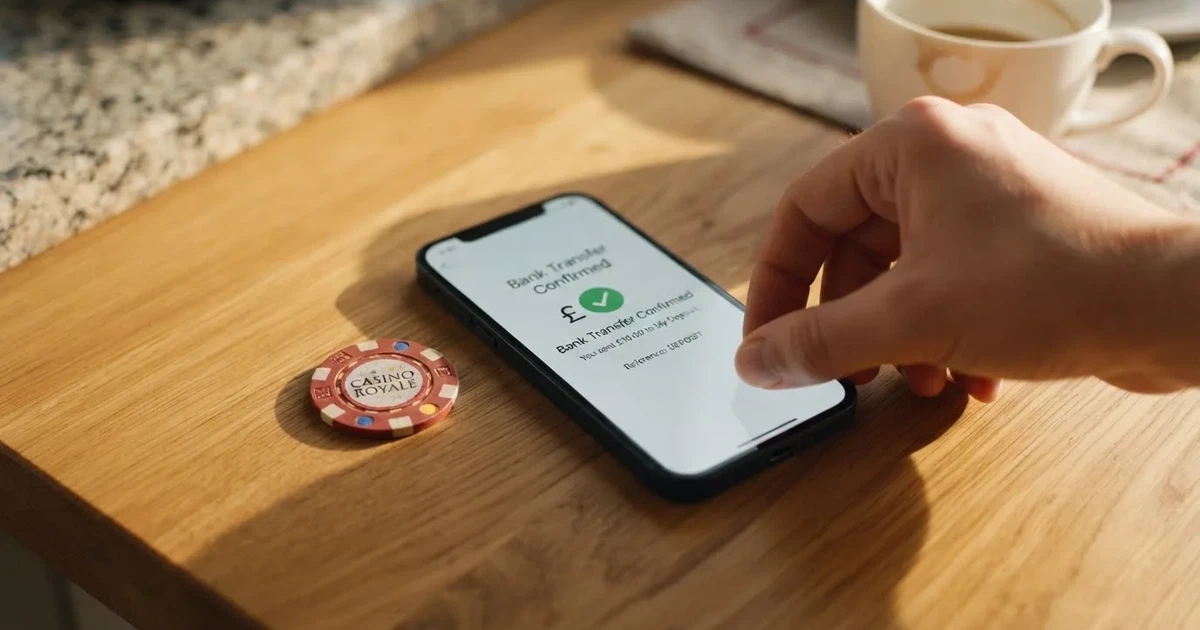
A pound gets a player through the door at more licensed UK casinos than it did five years ago. The phrase has weight because the Gambling Commission still has to license every site that takes that pound, the £150 financial vulnerability check still fires at the same trigger whether the deposit is £1 or £500, and GAMSTOP self-exclusion still binds the account regardless of the minimum. The £1 stake is a commercial setting, not a regulatory exemption, and a comparison that loses that distinction is one that costs a reader money. This page sets out what £1 minimum deposit casinos look like in the UK — who offers them, what the wagering cap does to the bonus attached, and where the small deposit’s sting actually shows up.
Table of Contents
- GAMSTOP and the deposit limit — why the £1 floor doesn’t shrink the safety rails
- Faster Payments, Apple Pay and AstroPay — how a £1 deposit and its payout actually move
- The ten licensed UK operators accepting a £1 minimum deposit
- What the £1 minimum actually looks like at a UK-licensed casino
- The 10x wagering cap in practice — what it costs a player in time
- The offshore alternative — what “not on GAMSTOP” really means
- What a reader comparing £1 minimum deposit casinos should actually compare
- Frequently asked questions
GAMSTOP and the deposit limit — why the £1 floor doesn’t shrink the safety rails
Every online casino operating in Great Britain sits inside the same protective frame, irrespective of whether the minimum deposit on the cashier screen reads £1 or £20. That frame has three pieces a player meets long before a single spin.

The first is GAMSTOP. A player registers once, picks a self-exclusion period of six months, one year or five years, and every Commission-licensed operator is required by licence condition to refuse that player’s account for the duration. The period cannot be cancelled early. A site that does not check GAMSTOP at sign-up is, by definition, not a UK-licensed site — and the section on offshore operators below spells out what that means for the player. The same binding applies to the ten brands listed further down, each of which sits on the Commission’s public register under an active remote casino operating licence.
The second is the deposit limit prompt. Since 31 October 2025 every operator must ask a new customer to set a financial limit before the first deposit goes through, and there is no state-set ceiling — only the one the player sets themselves. A £1 deposit is therefore not a way around a cap the regulator hasn’t imposed; it is a deposit at the operator the player has chosen, inside the limit that customer just agreed to.
The third is the financial vulnerability check. From 28 February 2025 any customer who has net-deposited £150 in a rolling 30-day window is run through a public-data affordability screen. The trigger is on the cumulative deposits, not on a single transaction, so a string of small deposits does not push past the check unnoticed — it pushes the reader straight into it. A player loading five pounds a day for a month will trip the same trigger as a player depositing £150 in one go.
A site marketing itself on the basis that the £1 minimum lets a player sidestep these checks is misleading the customer. The minimum governs the cashier; the checks govern the player. Conflating them is the first place a low-deposit comparison goes wrong, and the rest of the page assumes the distinction is held.
Faster Payments, Apple Pay and AstroPay — how a £1 deposit and its payout actually move
Three payment methods carry most of the £1 minimum deposit traffic on UK-licensed sites in 2026, and each behaves differently at the deposit end and at the withdrawal end. The relevant comparisons are about what the player pays, what they wait for, and whether the operator supports that method for withdrawals at all — a withdrawal-only method the deposit side doesn’t recognise tends to surface as a quiet friction point the bonus terms never warn about.

Faster Payments is the rail most UK bank transfers use, operated by Pay.UK since 2008 and open 24 hours a day, seven days a week. Most payments arrive instantly or within a couple of minutes; transfers occasionally take up to two hours. The Faster Payments scheme sets a per-transaction limit of £1,000,000, though individual banks impose lower caps on their own customers. For a £1 deposit that ceiling is irrelevant; for the eventual payout it usually isn’t, since withdrawal amounts over the bank’s own threshold get sliced into batches.
Apple Pay, developed and operated by Apple Inc., launched on 20 October 2014 in the United States and began supporting UK-issued cards on 14 July 2015. In-store transactions use near-field communication (NFC) to talk to contactless terminals; in-app and online payments use a separate authentication flow — on a Face ID iPhone, the customer double-clicks the side button; on a Touch ID iPhone, the Home button. Card data is protected through tokenisation: the actual card number is replaced with a device-specific Device Primary Account Number, and a dynamic security code is generated per transaction. Apple Pay is not available in all markets and requires a supported card from a participating issuer — a fact a few operator help-centre pages bury under their deposit-methods list. The US Consumer Financial Protection Bureau finalised a rule in November 2024 bringing large nonbank digital wallet operators including Apple Pay under bank-like federal oversight, and the European Commission opened a 2020 investigation into whether Apple abused iPhone NFC hardware to block rival payment apps’ access to contactless payments — neither directly affects UK gambling deposits, but both speak to the regulatory weather around the rail. Apple Pay deposits are typically routed through the underlying debit card, so the credit-card ban that took effect from 14 April 2020 is preserved by construction: the rail reaches the bank as a debit-card transaction.
AstroPay, founded in 2009 and headquartered in Uruguay, operates as a global digital wallet offering online payments, virtual and physical debit cards and peer-to-peer transfers. Its UK entity, Larstal Limited, is authorised by the Financial Conduct Authority under the Electronic Money Regulations 2011; the Isle of Man entity is licensed by the Isle of Man Financial Services Authority; the Brazilian entity is authorised by the Brazilian Central Bank as an electronic currency issuer; the Danish entity Larstal Denmark ApS is authorised by the Danish Financial Supervisory Authority. AstroPay serves users across markets including Argentina, Australia, Brazil, Canada, Colombia, Denmark, Spain, the United Kingdom, the United States and Uruguay. The processing arm dLocal was spun off as a separate company in 2016. Whether AstroPay works for a £1 deposit at a particular site depends on whether the operator has integrated the wallet — and on whether the wallet treats gambling merchants as a permitted category for the currency the customer holds.
Two things follow from the rail map above and matter when a player is comparing operators. First, deposits do not equal payouts: a rail that takes a pound in may not pay a pound out, and a player who reads the deposit methods list as a payout methods list will waste their first withdrawal on a wait they could have avoided by picking the right rail at sign-up. Second, the credit-card ban is structural rather than nominal — it follows the funding source, not the wallet’s name, so a credit card funding an e-wallet is still a banned route, and a debit card funding Apple Pay or Google Pay is unaffected. The Commission’s own 2018 estimate put the number of UK consumers using credit cards to gamble at around 800,000, with 22 per cent of online gamblers who did so classed as problem gamblers — the data behind the ban, useful for a reader weighing whether a small stake is a safer stake.
The ten licensed UK operators accepting a £1 minimum deposit
The list below draws from the Gambling Commission’s public register. Every brand is a domain tied to a specific account and licence number, and the same operator group can hold several licences — Ladbrokes, Coral and Gala Bingo sit under LC International Limited, for instance, and presenting them as independent operators is a misread of the register. The order is not a ranking. Each write-up closes on the operator’s own terms, in the player situation that block actually established.
| Brand | Licence holder | GB remote casino licence | Domain status on the register |
|---|---|---|---|
| PokerStars | Stars Interactive Limited (account 39108) | 039108-R-319334-026 | Active |
| Betfred | Petfre (Gibraltar) Limited (account 39544) | 039544-R-319290-010 | Active |
| Betfair | PPB Games Limited (account 39411) | 039411-R-319335-010 | Active |
| bet365 | Hillside (UK Gaming) ENC (account 55149) | 055149-R-331499-004 | Active |
| Unibet | Platinum Gaming Limited (account 45322) | 045322-R-324275-019 | Active |
| Coral | LC International Limited (account 54743) | 054743-R-330863-014 | Active |
| Casumo | Recro Limited (account 61549) | 061549-R-336718-002 | Active |
| 888casino | 888 UK Limited (account 39028) | 039028-R-319297-014 | Active |
| kwiff | Eaton Gate Gaming Limited (account 44448) | 044448-R-323408-017 | Active |
| Midnite | Dribble Media Limited (account 42647) | 042647-R-321653-022 | Active |
The register holds 139 businesses with an active remote casino operating licence on the date this page was last checked, and its domain list runs to 1065 active entries with 361 white-label sites sitting underneath — a white-label site is one that trades under another company’s licence rather than holding its own. A remote licence number on the register is structured as six-digit account number, then -R-, then a numeric identifier, then a suffix — the R marks the licence as a remote one. The reader who wants to verify any of the rows above against the live register can do so by searching either the account number or the domain; what matters is that the operator on the cashier screen is the same legal entity the register says it is.
PokerStars — poker-first heritage, casino product riding on a 2003-issued licence family
Stars Interactive Limited is the licence holder, and the Stars Group’s UK remote casino operating licence has been on the register since the early days of the UK online poker market. The casino product sits as a second string to the poker vertical, and the minimum deposit configuration follows the poker cashier rather than the casino one. For a player choosing on the basis of brand recognition and a long-running licence history, this is a safe pick — the operator has been through more Commission compliance cycles than most on the list. Ultimately, the casino lobby is broader than the branding suggests; the small-stake player entering via the £1 floor encounters the same comprehensive slot catalogue and the same stake limit restrictions as any other customer.
Betfred — bookmaker DNA, casino product that started as a sportsbook side bet
Petfre (Gibraltar) Limited is the licence holder, and the corporate structure reaches back to a 1967 high-street bookmaking business. The casino vertical has grown into a substantial part of the operation but the cashier and bonus engine still carry the bookmaker’s fingerprints, which matters at the £1 deposit end: the smaller floor is most often framed around the same deposit channels the sportsbook uses, with debit cards and Faster Payments being the load-bearing options. The reader who picks Betfred for the brand recognition is picking it on a horseracing reputation that doesn’t translate cleanly into a casino context — the product is licensed and the floor is low, but the casino lobby is the second violin, and that ordering shows in which promotions sit on the homepage.
Betfair — exchange pedigree, casino product built around the same player account
PPB Games Limited is the licence holder, and the Betfair exchange sits on a separate Commission licence family that does not appear in this casino comparison. The casino product shares the player account and wallet with the exchange, and the £1 minimum is configured against that shared wallet. For a player who already holds a Betfair account for sports, the £1 casino floor is the cheapest way to try the casino product without a separate sign-up — and the small-stake reader who picks this brand on the back of an exchange familiarity is picking it on a pedigree the casino product has to live up to. The same point cuts both ways: a player who came in cold to the casino product has no exchange context to lean on, and the brand’s reputation does less work for them.
bet365 — the largest-scale operator in the UK-licensed cohort
Hillside (UK Gaming) ENC is the licence holder, and bet365 is the operator whose scale shows up first in any side-by-side: more game providers integrated, more payment methods live, more withdrawal pathways configured, more hours of customer service staffed. The £1 minimum sits on a cashier that was built for higher-volume deposits, and the small-stake reader pays nothing for that scale — the same deposit limit prompt fires, the same GAMSTOP check fires, the same financial vulnerability check fires at the £150 trigger. The scale matters in a different way: a player with a question at 11 p.m. on a Saturday has the shortest queue here. While the casino lobby is large, the navigation is designed for regular users rather than the £1-floor newcomer, meaning the first hour of play can feel more complex than on a streamlined, casino-only platform.
Unibet — Nordic ownership, multi-product UK remote licence
Platinum Gaming Limited is the licence holder, and the Kindred Group ownership reaches across several European jurisdictions. The UK licence is one of several the group holds, and the £1 minimum sits on a cashier that takes debit cards, bank transfers and the major e-wallets. For a player who has used Unibet in another country, the UK product is the familiar one — and for a player meeting the brand here, the comparison sits on whether they want a multi-product operator (sports, casino, poker) or a casino-only one. The £1 floor is the same in either case; the difference is in how much of the casino lobby is curated for the casino reader rather than for the cross-product reader.
Coral — part of LC International Limited, the Entain multi-brand stable
LC International Limited is the licence holder, and Coral sits in the same corporate group as Ladbrokes and Gala Bingo. The £1 minimum is configured on the same cashier platform the group uses across its brands, which means a player who already holds a Ladbrokes or Gala account is unlikely to find a meaningfully different cashier at Coral. The block’s own conclusion sits in what that consolidation costs: the casino lobbies are distinct enough to look different but the bonus engines are not, and a reader comparing the £1 floor between Coral and Ladbrokes is comparing brand colours more than product. For a player who has a settled preference within the Entain group, the choice is already made.
Casumo — the casino-only operator on the list
Recro Limited is the licence holder, and Casumo is the only operator on the list whose product is casino-only — no sportsbook, no exchange, no poker room alongside. The £1 minimum sits on a cashier that was built for casino deposits from day one, and the smaller floor sits more naturally on a casino-only platform than on a multi-product one. For a player who has no other reason to hold an account with any of these brands, Casumo is the cleanest first choice — the navigation is built for the casino reader, the lobby is curated around slots and live casino, and the brand’s reputation is a casino reputation. Unlike the multi-product operators, Casumo does not offer integrated sports bonuses or exchange-linked promotions, so players who prioritize those specific bundles may prefer alternative brands.
888casino — long-running casino-only heritage under 888 UK Limited
888 UK Limited is the licence holder, and the 888 brand has been operating online casinos under Commission licences since the early 2000s. The £1 minimum sits on a casino-only cashier — there is no sportsbook product on the same account — and the operator’s product investment has gone into the casino vertical across that whole span. For a player comparing on the basis of casino catalogue depth, 888casino and Casumo are the two casino-only choices on the list, and the comparison between them is on catalogue curation rather than on cashier configuration. The block’s own conclusion sits in what long-running casino heritage looks like in 2026: the product has been re-platformed more than once, and the player meeting the brand today meets a current-generation casino product on top of a long-licence lineage — the lineage is a reliability signal, not a usability one.
kwiff — the small operator on the list, by account age
Eaton Gate Gaming Limited is the licence holder, and kwiff sits as the smaller operator on the list by both customer base and product surface. The £1 minimum sits on a cashier that supports the standard rail set — debit cards, bank transfers, the major e-wallets — and the casino product is the whole of the operation. For a player who values a smaller-scale product on the basis that it carries less cross-product clutter, kwiff fits — and the smaller operator does not have the same 24-hour customer-service staffing that bet365 does, which is a real consideration for a player who expects to need it. The block’s own conclusion sits in what scale buys at the edges: the cashier works the same way, the GAMSTOP check works the same way, the £150 vulnerability check works the same way, and a player who has decided that product surface matters more than staffing hours has already picked.
Midnite — the newest operator on the list, by account number
Dribble Media Limited is the licence holder, and Midnite sits as the most recently issued account on the list. The £1 minimum sits on a casino-and-sportsbook cashier that was built from scratch on a current-generation platform, and the product surface is the narrowest on the list. For a player who values a current-generation platform over a long-licence lineage, Midnite is the fit — and the newer account means fewer Commission compliance cycles under the operator’s belt, which is a reliability consideration that cuts the other way from how it cuts for PokerStars or 888casino. The block’s own conclusion sits in what a current-generation platform offers a £1-floor player: a cashier that hasn’t been retrofitted onto a 2000s account structure, which is a usability gain that doesn’t show up in any licence number.
What the £1 minimum actually looks like at a UK-licensed casino
The £1 floor is a configuration setting on the cashier, not a category of product. Three things follow from that, and each is what the small-stake reader will actually meet on the site.
First, the same game catalogue. A £1 minimum deposit casino is not a stripped-down product: the same slots, the same live-dealer tables and the same jackpots sit on the lobby, and the player who deposited £1 sees the same library as the player who deposited £500. The £2 or £5 maximum stake per game cycle — £2 for players aged 18 to 24 and £5 for those aged 25 and over — applies on top of the deposit floor, not underneath it. Auto-play has been banned since 31 October 2021, each spin is separated from the next by at least 2.5 seconds, and losses dressed up as wins are no longer permitted. The £1 stake and the £5 stake cap meet in the same lobby.
Second, the same verification. Name, address and date of birth have been verified before the first deposit or any play since 7 May 2019. A £1 deposit does not move that requirement; it just produces a smaller first transaction under the same verification. A player who cannot pass verification at one of these operators cannot pass it at any of them, and the £1 floor is not a way around the gate.
Third, the same bonus envelope. Since 19 December 2025 wagering requirements have been capped at 10x and mixed-product bonuses — bet on sport, receive casino spins — have been banned. A £1-deposit bonus is therefore bound by the same 10x cap as every other bonus on the same site, which is the calculation the next section runs.
The 10x wagering cap in practice — what it costs a player in time
The 19 December 2025 cap binds every bonus offered by every Commission-licensed operator to a wagering multiple of no more than ten times the bonus amount. The calculation that follows demonstrates the real cost of a bonus for a player who meets the turnover requirement.
Take a £10 bonus as the worked example, since most welcome packages sit in that neighbourhood for a £1-minimum site. At the 10x cap, required turnover is £10 multiplied by 10, which is £100 of wagering on eligible games. With a stake of £0.10 per spin — a common stake size on low-volatility slots that contribute 100 per cent to wagering — that £100 of turnover is 1,000 spins. At a minimum interval of 2.5 seconds per spin, and assuming no pause for reality-check pop-ups, 1,000 spins take 2,500 seconds — roughly 42 minutes of continuous play. Stretching the same bonus to a 20x wagering multiple would have doubled the time to roughly 84 minutes; the cap has cut that in half.
The cap matters because the casino’s house edge still runs underneath. With a worked example of 96 per cent return to player — a typical figure for a low-volatility slot — the £100 of required turnover carries an expected house-edge cost of £4, in line with the standard bonus-cost formula that expected loss equals turnover multiplied by one minus the RTP. A player who clears the bonus has paid £4 in expected edge to claim a £10 bonus — a net cost, not a net gain, and one the marketing around the offer rarely states. A player who clears it on a higher-volatility slot with a lower RTP widens that gap.
The honest framing is that the 10x cap has reduced the time cost of clearing a UK-licensed bonus and has reduced the time cost of losing the bonus money. It has not changed the underlying fact that the bonus is a marketing expense funded by the player’s expected loss, and a £1-deposit reader who treats the bonus as the reason to play has misunderstood the offer. The minimum deposit is the price of entry; the bonus is the price the player pays in expected edge for the marketing that brought them there.
The offshore alternative — what “not on GAMSTOP” really means
A site marketing itself as a £1 minimum deposit casino not on GAMSTOP is, by construction, not a UK-licensed site. The Gambling Commission requires GAMSTOP participation as a condition of every remote casino operating licence, and a brand that advertises the absence of GAMSTOP is advertising the absence of the licence. Section 33 of the Gambling Act 2005 makes it an offence to provide gambling to people in Great Britain without a Commission licence; the Commission’s enforcement tools include cease-and-desist notices, search-engine delisting, and payment and hosting referrals, though it has no ISP-blocking power. The penalty falls on the operator, not the player — but the player who uses such a site loses the protections that come with the licence: no GAMSTOP, no Commission complaints route, no approved alternative dispute resolution provider, no £150 financial vulnerability check, no LCCP social responsibility code.
A Curaçao, Maltese or Gibraltar licence is not a substitute for the Commission licence once the site takes UK customers, since the Gambling (Licensing and Advertising) Act 2014 brought all operators serving the GB market inside the UK regime regardless of where they are incorporated. The offshore route is not faster payout, looser limits and cheaper play — it is the same product under weaker rules, and the difference is paid by the player the moment a problem arises.
What a reader comparing £1 minimum deposit casinos should actually compare
The list above reduces to four things a reader needs to look at, and the rest is either product surface or marketing.
The first is the licence. Every row in the table above carries an active remote casino operating licence, and the reader should match the licence holder and the account number against the Commission’s public register before depositing. A brand whose licence account doesn’t appear, or whose account number doesn’t match the licence on the row, is not the brand it claims to be — that single check is the most powerful tool a reader has.
The second is the payment method at both ends. A £1 deposit rail that does not pay out is a rail that costs a player a separate withdrawal flow, and the cost is paid in waiting time rather than in fees. The Faster Payments rail is the strongest all-rounder for UK accounts; Apple Pay is a strong deposit rail where the operator supports it; AstroPay and other e-wallets are operator-by-operator. The credit-card ban that took effect from 14 April 2020 — including credit cards routed through e-wallets — is worth holding in mind, since a rail that takes credit-card funding is a rail that has slipped through the operator’s own compliance.
The third is the bonus envelope. Since 19 December 2025 every bonus on a UK-licensed site sits inside the 10x wagering cap, and the bonus’s real cost to the player is the expected house edge over the required turnover, calculated as turnover multiplied by one minus the RTP. A reader who treats a bonus as a way to make money has misread the offer; the same reader who treats it as the price of admission is paying the correct price.
The fourth is the responsible-gaming frame. The GAMSTOP check, the deposit limit prompt and the £150 financial vulnerability check apply at every brand on the list, and they apply cumulatively rather than per deposit. A player running small deposits in a sustained pattern is on the regulator’s radar by design, not by accident — the frame was built that way on purpose.
The closing position is that the £1 minimum deposit casino is a normal UK-licensed casino with a low cashier floor, and the protection the regulator attaches to a normal UK-licensed casino is what the small-stake reader is buying. The minimum deposit changes the size of the first transaction; it does not change the size of the regulatory frame around the player.
Frequently asked questions
What counts as a £1 minimum deposit at a licensed UK casino?
A £1 minimum deposit means the cashier allows a first deposit as low as one pound sterling through at least one payment method — usually a debit card or a Faster Payments bank transfer. The deposit sits inside every Commission rule that applies to any other deposit size: the GAMSTOP check, the verification check, the deposit limit prompt and the £150 cumulative vulnerability check all fire regardless of the deposit amount.
Is a £1 minimum deposit casino safe to use?
A £1 minimum deposit casino is safe on the same basis any other UK-licensed casino is safe — it holds an active remote casino operating licence on the Gambling Commission’s public register, it is bound by the LCCP social responsibility code, and it must take part in GAMSTOP. The minimum deposit is a cashier setting; the licence is the safety frame, and the two are independent.
Can I find a £1 minimum deposit casino that isn’t on GAMSTOP?
A site advertising itself as a £1 minimum deposit casino not on GAMSTOP is, by construction, not a UK-licensed site, since GAMSTOP participation is a mandatory condition of every remote casino operating licence. Using such a site means forgoing the protections the licence carries — no Commission complaints route, no approved ADR, no £150 vulnerability check, and no LCCP framework — and the player rather than the operator bears that loss.
How quickly do withdrawals settle after a £1 deposit?
Settlement speed depends on the withdrawal method rather than the deposit size. Faster Payments withdrawals typically arrive within minutes or a couple of hours; debit-card withdrawals vary by issuer and can take one to three working days; e-wallet withdrawals depend on the operator and the wallet, often within twenty-four hours. The £1 deposit does not delay the payout.
Which payment methods accept a £1 minimum deposit?
Most UK-licensed casinos accepting a £1 minimum deposit do so through debit cards and Faster Payments bank transfers; Apple Pay works where the operator has integrated it; AstroPay and other e-wallets work operator by operator. Credit cards are banned for gambling in Great Britain since 14 April 2020, including credit cards routed through e-wallets, so any rail funded by credit is not a legal route regardless of the wallet name.
Created by the ”casinopaymentsuk” editorial team.