Craps at UK-Licensed Online Casinos in 2026: The Honest Field
 Available in GB
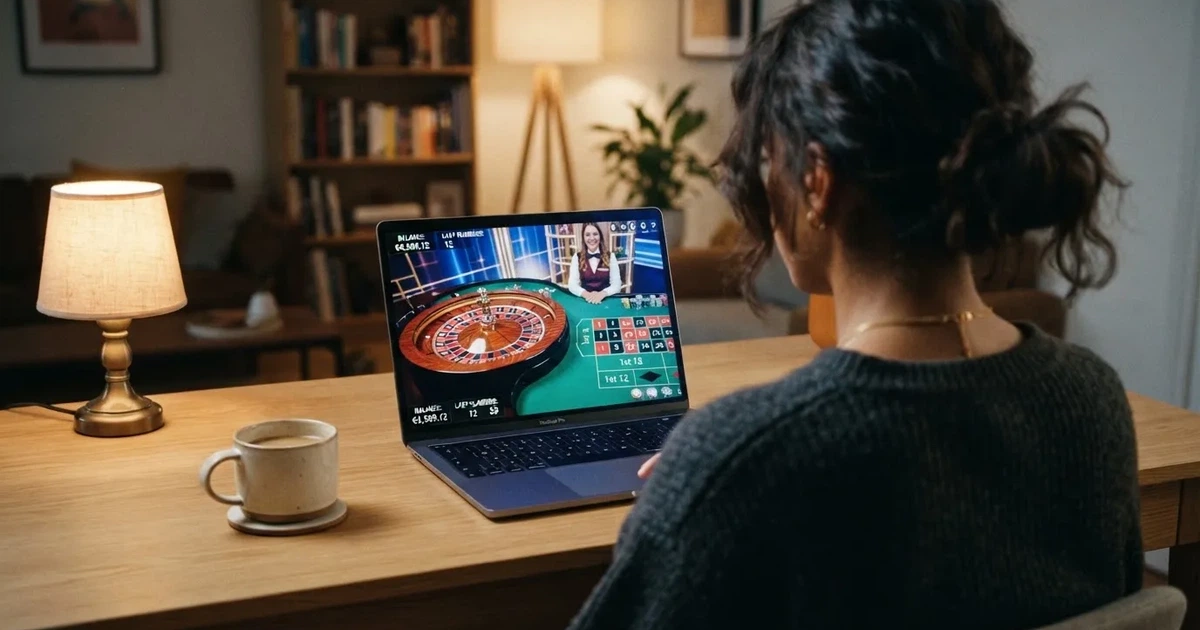
The hard part of finding a place to play craps online from a kitchen table in the UK is not the search box. It is the difference between a site that takes UK deposits legally and one that simply accepts them. Only the first kind will check your age, let you set a limit on what you can lose, and route any complaint to the Gambling Commission if something goes wrong. That is what this page is about: the GB-licensed field, what it offers a craps player in 2026, and where the marketing language falls down under inspection.

Current as of 23 September 2026 · verified against the Gambling Commission’s public register of gambling businesses (CSV download, 18 September 2026).
Table of Contents
- Bonus Terms and How They Sit With a Craps Table
- Mobile and App Access to a Craps Table
- Live Dealer and RNG Versions of Online Craps
- The Ten Operators, Compared
- What “UK-Licensed” Actually Means
- Player Protection on a Craps Session
- Crypto, E-Wallets and the End of Anonymity
- The Operator Field, Site by Site
- Frequently Asked Questions
Bonus Terms and How They Sit With a Craps Table
Bonuses for table games look, at first glance, like any other casino offer. They are not. A welcome package is usually built around slots, and the small print that says “100% match up to £100” usually hides a wagering requirement and a list of games that count at reduced weight, sometimes not at all. Craps is one of the games that operators routinely exclude, slash to a fraction of a credit, or block outright during bonus play. Reading the terms is the difference between a bonus that pays out and one that sits on the balance as unconvertible cash.
What changed in late 2025 matters here. Since 19 December 2025 the Gambling Commission has capped wagering requirements at 10x for any bonus that can be spent in the casino product. That figure sounds generous until the maths is done. A £100 bonus with a 10x wagering cap means £1,000 of qualifying play before any of it converts to withdrawable cash. Multiply that by the house edge on craps — 1.41% on the Pass Line, 0% on odds bets laid behind it — and the cost of “clearing” the bonus becomes a number rather than a feeling.

A worked example makes the shape of the deal clearer. Take a £100 welcome bonus with the 10x cap. Required turnover is £1,000 of qualifying wagers. Stake-per-spin on a craps bet varies — a flat £1 chip on the Pass Line is the smallest unit most live tables accept — and not every chip counts towards the requirement, because some operators restrict which bets count. Even at the friendly assumption that every £1 wager on the Pass Line counts in full, the player must place 1,000 such wagers. At a measured five seconds per wager — the kind of pace a live table allows between dice throws — that is 5,000 seconds of play, or roughly an hour and twenty-three minutes of uninterrupted play. The expected loss across that volume, applying the 1.41% house edge to the £1,000 turnover, sits at £14.10. That is the price of a £100 bonus, expressed honestly: the player gives up £14.10 of expected value to extract £100 of bonus credit, and they spend the better part of an afternoon at the table to do it. The arithmetic is not a deal-breaker; it is a price tag, and the buyer should see it before signing.
For players with a smaller bankroll, the calculation tightens further. A £25 bonus at 10x wagering requires £250 of qualifying play. At a £1 stake that is 250 wagers, around 21 minutes of play and an expected loss of roughly £3.53 on the Pass Line. The smaller offer costs less in absolute terms but carries a higher ratio of effort to bonus: a quarter of an hour for £25 of headroom is a thinner trade than the same multiple applied to a larger balance. The band — twenty minutes to an hour and a half of play, a low double-digit loss to convert a four-figure bonus — is the shape of any standard craps offer on a GB-licensed site in 2026.
Mixed-product bonuses — a sportsbook bet that unlocks casino credit, a deposit bonus that comes with free spins — are now banned outright. That removes one of the more confusing forms of promotion, where a player used a £5 sports wager to claim £50 of slot play without realising the wagering rule that came attached. The cap does not lift craps into the bonus-friendly column; it just stops the worst excesses from being sold alongside it.
Mobile and App Access to a Craps Table
Most GB-licensed operators have spent the last few years shifting their casino product onto mobile, and the craps section has come along for the ride. The typical experience in 2026 is a browser-based casino that runs through a phone’s standard web browser, with a smaller number of brands offering a downloadable app for iOS or Android. Both routes get to the same product: a live dealer craps table streamed from a studio, or a digital RNG-based craps game with a virtual dice throw.
The browser route is the more common one, and it works on any modern phone with no install step. A live dealer table streams video and accepts chip clicks over the mobile data connection; a digital table draws dice on the screen and resolves bets the moment the throw settles. Either runs on the same screen real estate as a slots game. Where the table falls short on a phone is the betting layout itself: a full craps table has more zones than a blackjack layout, and on a six-inch screen some of those zones become hard to read, particularly the proposition bets in the centre of the felt. The licensed operators have not solved this with any particular cleverness — the layout just shrinks — and a player who values the proposition bets may find the experience cramped.
The app route, where it exists, mirrors the browser product but lets a player sign in with a saved password and reach the craps table without retyping the address. A few brands offer biometric sign-in through the phone’s fingerprint or face scanner. The Commission requires the same age and identity checks regardless of how the player reaches the site: a first-time depositor passes through the same verification flow on a phone as on a laptop, and that flow runs before any money moves or any bonus is credited. The app is a convenience layer on top of the regulated product; it does not change the rules the operator runs under.
Live Dealer and RNG Versions of Online Craps
Two formats sit on a GB-licensed craps page: a live dealer table and a digital RNG version. They are different products aimed at different moods, and the choice between them shapes the kind of session a player has.
Evolution’s Live Craps is the most visible live dealer version on the UK market. It is set in a speakeasy-themed studio, with the felt laid out in the regulation U-shape and a presenter running each round. The studio adds two features worth flagging. The first is a built-in interactive tutorial that walks a new player through the Pass Line, Don’t Pass and the odds bets behind them, with the presenter explaining each step as the dice are thrown. The second is an “Easy Mode” view, a stripped-down layout that hides the proposition bets and the more obscure wagers in the centre of the felt, aimed at players who want to learn the round-by-round structure before they face the full table. The round itself splits into a Come Out roll and, when a point is set, a Point roll. Some bets resolve after the first throw; others stay on the felt until the point is made or missed. That rhythm is the heart of craps, and the live format preserves it — the dice are real, the stick is real, the table runs at the pace the shooter sets.
The RNG version is the digital alternative. A virtual layout draws dice on the screen, applies a random outcome, and credits the wins. It is faster than the live table, sometimes by a factor of three or four, because there is no dealer and no inter-roll chatter. It is also the only version where a player can place a wager on the come-out roll and resolve it in under a second. The trade-off is sensory: there is no studio, no stick, no sense of pace. For players who want to grind through volume — and craps bonuses, where they are permitted, reward volume rather than judgement — the RNG version is the working tool. For players who want the table itself, the live dealer format is the closer match.
A live dealer craps game is not always on offer at every GB-licensed site. Some brands carry the slot-heavy Evolution portfolio without taking on the craps studio, because craps is a niche game and the studio requires a minimum table take to justify the feed. RNG craps is more widely stocked, sometimes as a single title sitting at the bottom of the table-games list. A player who wants both formats on one licence may need to look beyond the biggest mainstream brands.
The Ten Operators, Compared
The comparison below is built from the Gambling Commission’s public register, taken on 18 September 2026. Every brand named is an active remote casino operator licensed by the Commission, and the licence numbers are reproduced exactly as the register holds them. Two of the ten are white-label or co-licensed sites trading under another operator’s permission, and that fact changes what a player can expect from each brand.
| Brand | Licence holder and GB remote casino licence | Domain status on the register |
|---|---|---|
| Grosvenor Casinos | Rank Interactive (Gibraltar) Limited (account 57924) · 057924-R-334666-005 | Active |
| Betfred | Petfre (Gibraltar) Limited (account 39544) · 039544-R-319290-010 | Active |
| 32Red | Platinum Gaming Limited (account 45322) · 045322-R-324275-019 | Active |
| BetVictor | BV Gaming Limited (account 39576) · 039576-R-319370-028 | Active |
| William Hill | WHG (International) Limited (account 39225) · 039225-R-319373-015 | Active |
| Virgin Games | Gamesys Operations Limited (account 38905) · 038905-R-319430-022 | White Label |
| Ladbrokes | LC International Limited (account 54743) · 054743-R-330863-014 | Active |
| Paddy Power | PPB Games Limited (account 39411) · 039411-R-319335-010 | Active |
| Betfair | PPB Games Limited (account 39411) · 039411-R-319335-010 | Active |
| Jackpotjoy | Gamesys Operations Limited (account 38905) · 038905-R-319430-022 | Active |
The “Subject support” column has been omitted because the research carries no data on whether any of these ten brands actually stocks a craps table — neither confirmed nor denied. That absence is itself the point. A licence to operate a remote casino in Great Britain does not require the operator to carry craps. Many of the largest brands run their casino product around slots, with blackjack, roulette and live game shows filling the table-games section, and craps appears only at a minority of GB-licensed sites. A player who wants craps on a regulated UK site needs to check the table-games lobby of the specific brand, not the register.
The pairing of brands under shared licence accounts is the other fact the table makes visible. Paddy Power and Betfair share PPB Games Limited; Virgin Games and Jackpotjoy share Gamesys Operations Limited. Two brand identities, one licence, one complaints route and one GAMSTOP enrolment per pair. A complaint made against Paddy Power goes to the same licensee as one made against Betfair, which is useful to know if something goes wrong on the less-familiar of the two.
The register’s “white-label” status on Virgin Games is also worth pausing on. A white-label site trades under another operator’s licence and shares its operational infrastructure; in Virgin Games’ case the licence is Gamesys Operations Limited, which also runs Jackpotjoy. The difference between the two domains is largely a marketing difference rather than a regulatory one, and a player who has already enrolled with one of the two through GAMSTOP is excluded from the other for the duration of the exclusion period. A player who treats Virgin Games as a separate licence is mistaken about the structure.
What “UK-Licensed” Actually Means
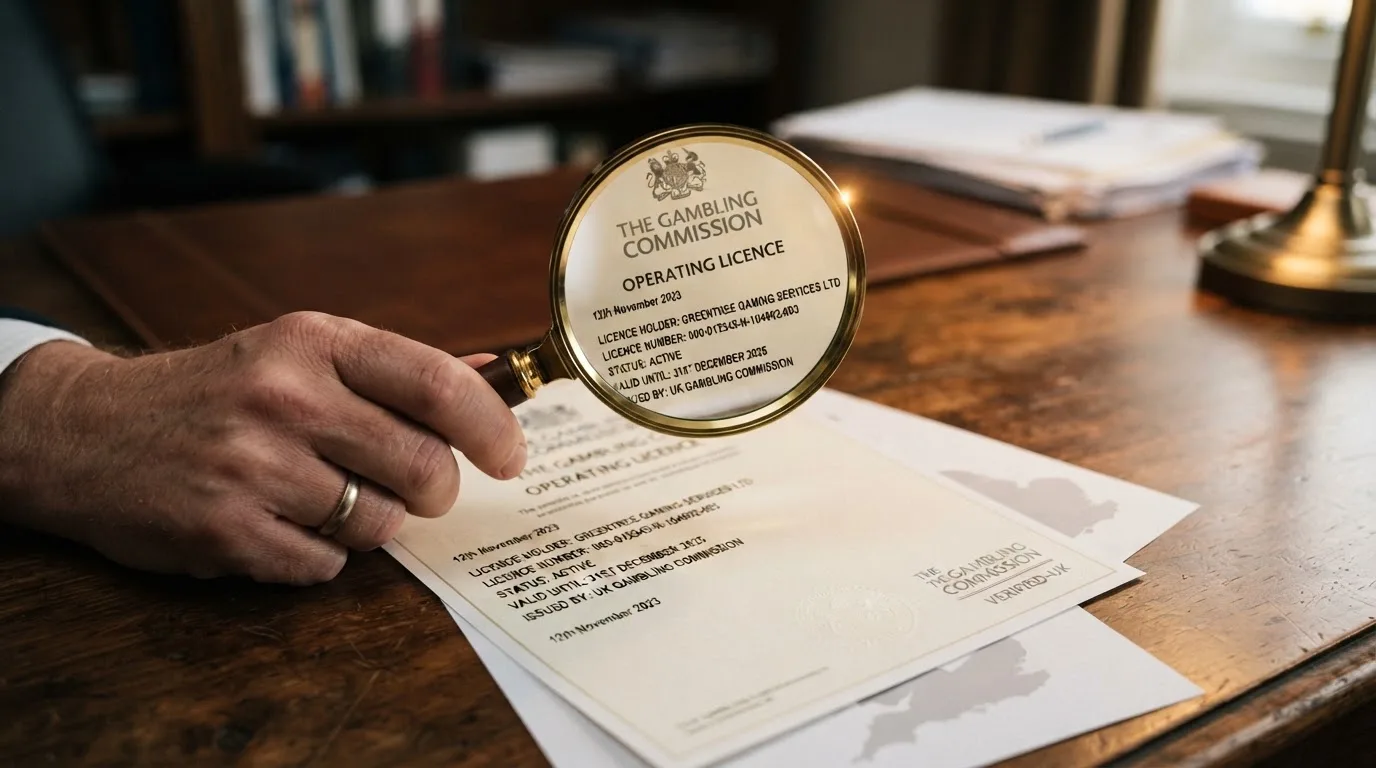
The phrase “UK-licensed casino” is bandied about, and the meaning varies depending on who is using it. The strict definition sits in the Gambling Act 2005 and the Gambling (Licensing and Advertising) Act 2014. The 2014 Act closed the loophole that let operators based in Gibraltar, Malta or the Isle of Man serve British customers on a non-UK licence. From 2014 onwards, any operator taking deposits from customers in Great Britain — England, Scotland and Wales, but not Northern Ireland, which sits under separate legislation — must hold a licence from the Gambling Commission. A Maltese licence, a Curaçao licence or a Gibraltar licence alone is not enough. The Commission’s public register is the only test of whether a brand actually holds one.
The register itself is published online and downloadable in full as a CSV or Excel file. On 18 September 2026 it listed 139 businesses holding an active remote casino operating licence, with the licence number formatted as account-R-number-suffix. The leading six digits of the licence number repeat the licence holder’s account number, and the “R” marks a remote (online) licence rather than a land-based one. The accompanying domain list, also part of the register, recorded 1,065 active domain entries and 361 white-label entries on the same date — a white-label entry being a site that trades under another operator’s licence.
Holding the licence obliges the operator to a list of things that, taken together, are what “UK-licensed” means in practice. Identity verification before the first deposit or any play, with name, address and date of birth confirmed from documentary evidence, has been required since 7 May 2019. Online slots carry a maximum stake per game cycle — £5 for players aged 25 and over since 9 April 2025, and £2 for players aged 18 to 24 since 21 May 2025. Slots cannot run faster than 2.5 seconds per spin, and the auto-play feature is banned outright — both rules set after Commission research showed that faster spins and auto-play caused players to lose track of their activity. The reverse-withdrawal loophole, which let a player re-gamble money they had already requested to take out, was closed on 31 October 2021. Credit cards have been banned for any gambling transaction, including credit-card-funded e-wallet top-ups, since 14 April 2020. From 31 October 2025 every operator must prompt a customer to set a financial limit before accepting the first deposit. And from 19 December 2025 wagering requirements on casino bonuses are capped at 10x, with mixed-product bonuses banned.
That bundle of rules is not a marketing claim; it is the substance behind the licence. A site that lacks any one of these features, regardless of where it is based, is not the licensed operator the term implies.
Player Protection on a Craps Session
The safer-gambling layer around craps is largely the same as around any other casino product, with a few points that bear specifically on how the game is played. Every GB-licensed online operator must enrol every customer in GAMSTOP, the national online self-exclusion scheme, on first sign-up. A player who has registered with GAMSTOP for six months, one year or five years cannot be removed early; the period runs to its end regardless of subsequent intent. The exclusion applies across every GB-licensed site, not just the one the player used at the point of registration. A player considering a craps session during a self-exclusion period will be refused by every operator on the register, not only by the brand where the original account was held.
GAMSTOP is mandatory, but the safer-gambling toolkit on each site is broader. Reality checks — pop-ups that ask a player how long they have been playing — fire on a fixed interval set by the operator. Time-outs let a player freeze their own account for a shorter period, typically twenty-four hours to six weeks, without enrolling in GAMSTOP. Financial vulnerability checks run automatically once a player’s net deposits reach £150 in a rolling 30-day window; the check uses publicly available data only and was brought in on 28 February 2025. A wider financial risk assessment has been announced but is not yet in force. The National Gambling Helpline (GamCare) and GambleAware are the support channels a licensed operator will signpost; they are independent of the operator and reachable without going through the brand’s customer service.
A point specific to craps: the table layout, with its many proposition bets in the centre of the felt, makes impulse wagering easier than on a blackjack layout. The 1.41% house edge on the Pass Line is one of the cheaper bets on the table; the proposition bets in the centre carry edges well above 5%, and several sit above 10%. A player who treats craps as a session around the Pass Line and the odds bets behind it is paying the cheapest price the table offers. A player who wanders into the centre is paying a very different price. The Commission does not distinguish between these two patterns in its rules; the choice of which to take is the player’s.
Crypto, E-Wallets and the End of Anonymity
The phrase “crypto casino” carries an implication of anonymity — that one can deposit, play and withdraw without identity checks. That implication does not survive contact with the UK regulatory frame. Any operator licensed by the Gambling Commission must verify a customer’s name, address and date of birth before the first deposit or any play. The rule does not depend on the payment method. A Bitcoin deposit from a verified wallet is welcome; a Bitcoin deposit from an unverified wallet is not, because the wallet cannot be verified until the customer is. The Commission does not ban cryptocurrency as a payment method, but it treats the customer as identifiable whether the deposit is in pounds, euros or bitcoin.
That has consequences for the kind of craps player who would otherwise prefer a no-KYC route. The regulatory frame does not allow one. A player who wants to deposit with bitcoin and play immediately will not find that experience on a GB-licensed site; the verification flow runs first. A player who wants the lighter-friction experience some offshore crypto casinos advertise can find it, but only by leaving the GB-licensed field, and that move gives up the protections that come with the licence — no GAMSTOP enrolment, no Commission complaints route, no approved ADR. The “anonymous” framing on an offshore site is, in the UK context, a description of what the player has chosen to leave behind rather than what the site offers in addition.
The Commission’s stance on payment methods sits behind this. Credit cards have been banned for gambling since 14 April 2020, and the ban extends to credit-card-funded e-wallet top-ups. Debit cards, bank transfers and a limited set of e-wallets are the standard routes. Cryptocurrency is permitted but, as above, runs through the same verification flow as a debit card deposit. The choice of payment method on a GB-licensed site does not change the regulatory frame; it changes the speed at which the deposit settles.
The Operator Field, Site by Site
Grosvenor Casinos
Grosvenor Casinos trades under Rank Interactive (Gibraltar) Limited, account 57924, with the remote casino licence 057924-R-334666-005. The brand is one of the longer-established names on the GB-licensed register, with a land-based estate behind the online product. The licence is the same one that runs the brand’s full casino and live-dealer product on the licensed site; the Commission’s domain list records Grosvenor Casinos as an active domain against the account. A player used to the brand’s retail floors will recognise the operating style; the online product is the same operation adapted to a screen.
Betfred
Betfred sits on the Commission’s register under Petfre (Gibraltar) Limited, account 39544, with the remote casino licence 039544-R-319290-010. The brand is best known as a bookmaker, with the casino product layered onto the sportsbook on the same site. It holds a valid remote licence from the Commission. The combination shapes the player experience: deposits and withdrawals run through the same cashier as the sportsbook, and the safer-gambling controls apply across both products rather than to the casino alone. A craps player at Betfred is using a casino product attached to a sportsbook, and that is the frame.
32Red
32Red trades under Platinum Gaming Limited, account 45322, with the remote casino licence 045322-R-324275-019. 32red is listed as an active domain against the account. The brand has built its reputation around a focused casino product rather than a sportsbook; the live dealer lobby is fuller than at most GB-licensed brands, and several live game shows sit alongside the table games. A player drawn to 32Red for the live casino product will find the craps section at the bottom of the table-games list, and the question of whether craps is offered at all is one the live-dealer lobby answers brand by brand rather than category by category.
BetVictor
BetVictor sits under BV Gaming Limited, account 39576, with the remote casino licence 039576-R-319370-028. It is also licensed by the Commission for remote casino operations. The brand mixes sportsbook and casino on the same site, and the casino product carries a narrower table-games lobby than 32Red. The craps position is similar to other mixed brands: the table sits behind a blackjack and roulette lobby, and the proposition is essentially whether the craps table is present on the brand at all.
William Hill
William Hill trades under WHG (International) Limited, account 39225, with the remote casino licence 039225-R-319373-015. William Hill is listed as an active domain against the account. The brand is the oldest name on this list and the most diverse in product, with sportsbook, casino, live casino and bingo on a single licence. The craps section sits inside the casino product and follows the same stock decisions as the rest of the live dealer portfolio. A player using William Hill for craps is also using it for sports betting, and the safer-gambling controls span both.
Virgin Games
Virgin Games is listed on the Commission’s register as a white-label domain of Gamesys Operations Limited, account 38905, which holds the remote casino licence 038905-R-319430-022. The white-label status means the site trades under another operator’s licence rather than holding its own; the operating infrastructure, complaints route and GAMSTOP enrolment are Gamesys Operations Limited’s, not a separate Virgin-branded entity. A player at Virgin Games shares their GAMSTOP enrolment with the same licensee’s other brand, Jackpotjoy.
Ladbrokes
Ladbrokes sits under LC International Limited, account 54743, with the remote casino licence 054743-R-330863-014. Ladbrokes.com operates as an active domain under this account. The brand shares its licence account with several other LC International brands, including Coral and Gala Bingo; the Commission’s register lists the licence account, not the brand, and a single complaints process covers the whole family. A craps player at Ladbrokes is using a casino product attached to one of the larger UK-facing sportsbooks, and the table-games lobby follows the same stocking decisions as the rest of the LC International estate.
Paddy Power
Paddy Power trades under PPB Games Limited, account 39411, with the remote casino licence 039411-R-319335-010. Paddy Power is listed as an active domain against the account. The brand is Irish in origin but holds a GB licence for its UK-facing online product; the sportsbook is the headline product, and the casino is layered onto it. The craps question is the same as at other mixed brands: the table sits in the casino lobby, and the question is whether the operator has chosen to stock it.
Betfair
Betfair trades under the same PPB Games Limited account as Paddy Power, with the same remote casino licence 039411-R-319335-010. Betfair.com operates as an active domain under this account. The two brands share a licence account, a complaints route and a GAMSTOP enrolment. A player who has signed up to GAMSTOP under one of the two brands is excluded from the other for the duration of the period. The casino product on Betfair is smaller than Paddy Power’s, and the craps position reflects that; the table sits in the live casino lobby and may not be stocked at all.
Jackpotjoy
Jackpotjoy trades under Gamesys Operations Limited, account 38905, with the remote casino licence 038905-R-319430-022 — the same licence as Virgin Games. Jackpotjoy.com operates as an active domain under this account. The brand’s product is built around bingo and slots, with a smaller table-games lobby than the sportsbook-led brands. A craps player using Jackpotjoy is using a brand whose main product is not casino tables, and the table-games lobby reflects that focus.
Frequently Asked Questions
How do craps payouts work at a licensed UK online casino?
A craps bet pays according to a fixed schedule set by the operator; the Pass Line pays 1:1, odds bets behind it pay at true mathematical odds, and the proposition bets in the centre of the felt pay at the rates the felt advertises. The Pass Line carries a 1.41% house edge; the odds bets sit at 0%. Every GB-licensed site must publish its paytable on the game page, and that page is the binding schedule for any bet placed on the table.
Is online craps available as a live-dealer game or only as a digital table?
Both formats exist on the UK licensed market. Evolution’s Live Craps runs from a speakeasy-themed studio, with a built-in tutorial and an Easy Mode aimed at new players; the round splits into a Come Out roll and a Point roll. The RNG version is a digital layout that resolves bets in under a second and rewards volume rather than pace. Live dealer craps is stocked only at a minority of GB-licensed brands; the RNG version is more widely available.
Can craps be played through a casino app on a phone?
Where the operator offers a downloadable app for iOS or Android, yes — the app reaches the same live dealer and RNG craps tables as the browser version. Where no app is offered, the browser version runs on a modern phone with no install step. Either route runs the same age and identity checks before the first deposit or any play, regardless of whether the player reaches the site through an app or a browser.
Do UK craps tables use the same bet types as a physical casino table?
The licensed UK online versions use the same bet types as the regulation U-shaped table: Pass Line, Don’t Pass, Come, Don’t Come and the odds bets behind them, plus the proposition bets in the centre of the felt. The Easy Mode view on Evolution’s Live Craps hides the proposition bets to keep the layout readable for new players, but the full set of bets is available behind it. A live craps table mirrors the regulation layout rather than a simplification.
What bonus terms usually apply when a bonus can be used on craps?
Since 19 December 2025 wagering requirements are capped at 10x for any casino bonus; craps may count at full weight, reduced weight or not at all, depending on the operator’s game-contribution list. A £100 bonus at the 10x cap means £1,000 of qualifying wagers, and at the 1.41% Pass Line edge that volume costs roughly £14.10 of expected loss to clear. The exact figure varies with stake size and game contribution; the band is the same shape for any standard craps-friendly offer.
Are craps tables offered by crypto-friendly casinos different from standard ones?
The craps product itself is the same — a live dealer table or an RNG layout produced by studios like Evolution — regardless of how the player funds the account. The payment method is the only variable, and on a GB-licensed site the customer passes the same identity check before any deposit, whether the deposit is in pounds or in bitcoin. Crypto-friendly framing on an offshore site is a description of what the player has left behind, not an additional service.
Published by the casinopaymentsuk team.