
Best online casino game shows UK 2026 — what the studio format costs, and what a UK licence actually adds
 Available in GB
Verified against the Gambling Commission’s public register on 23 September 2026. The figures below reflect register entries on 18 September 2026.
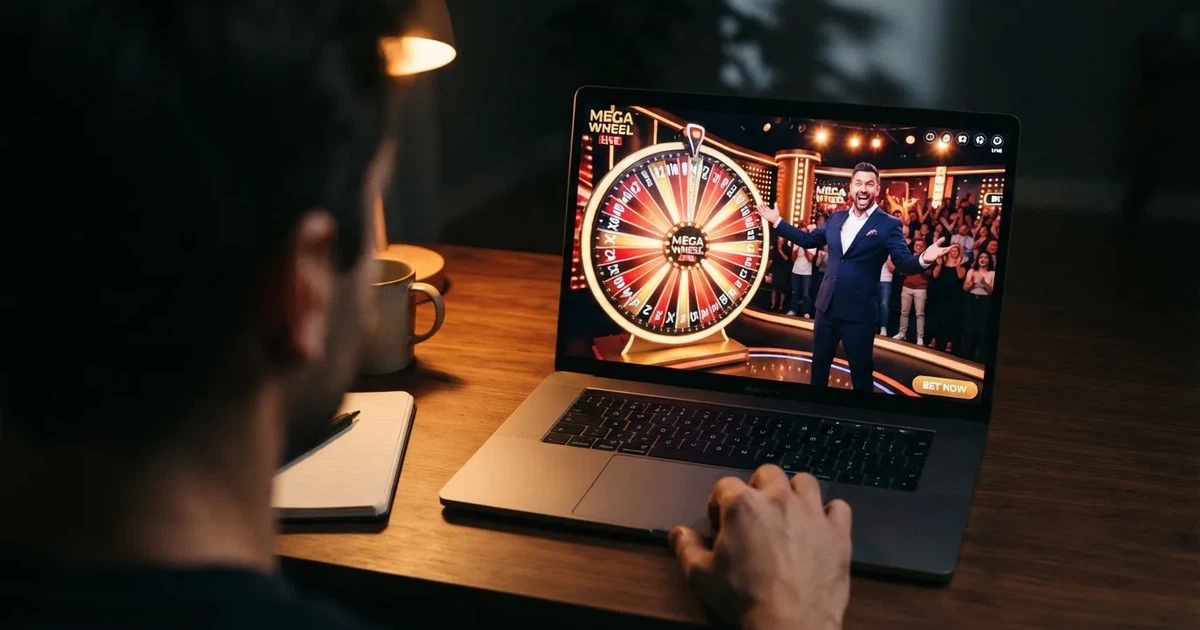
A live casino game show is a real-money betting product built around a studio production: a wheel, a card draw, a multiplier curve, a presenter in shot. It looks like Saturday-night television. It runs on the same remote casino licence as the slots next to it, and that licence is the one thing on the page a player can verify before depositing. Everything else — RTPs, paytables, “immersive” claims — comes from the studio behind the title, and on the UK market that studio is almost always the same one.
The point of this page is the consequence: what game-show play costs the player in time and money, what the Gambling Commission’s licence framework obliges operators to do that an offshore brand doesn’t, and where the limits in the small print sit when the spin button is pressed.
Table of Contents
- Why the licence question is the first one to settle
- Responsible gaming: the rules that already apply to a game-show spin
- The studios and the format
- The titles that show up on UK-licensed sites
- The 10x wagering cap and what a bonus on a game show actually costs
- The ten licensed UK operators reviewed
- What to look at before the first spin
- Frequently asked questions about UK live casino game shows
Why the licence question is the first one to settle
The legal frame for online casino in Great Britain is the Gambling Act 2005, with the Gambling Commission as regulator. Since the Gambling (Licensing and Advertising) Act 2014, any operator taking customers in Great Britain needs a Commission licence wherever it is incorporated. A Malta or Curaçao licence is not a substitute, and a Curaçao-licensed site simply is not allowed to serve a player in England, Scotland or Wales. The Commission’s public register is the test: a brand is licensed or it is not, and that register can be searched or downloaded in full. On 18 September 2026 the register listed 139 businesses holding an active remote casino operating licence, and its domain list held 1,065 active entries and 361 white-label entries — domains trading under another company’s licence rather than holding their own.
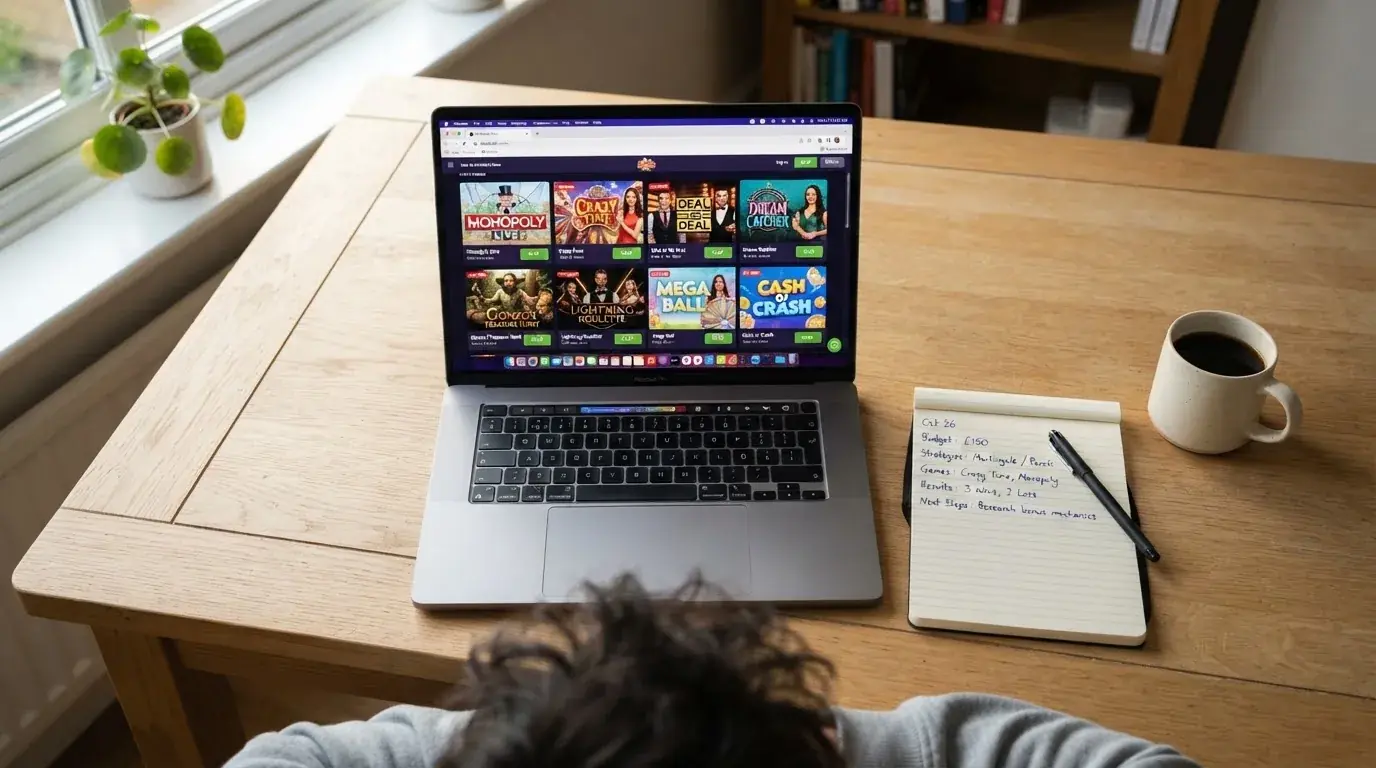
That number matters because the page uses it. Every operator reviewed below has been checked against the register, and the licence account and licence number stated against each name are what the register shows on that snapshot date. The register is a moving record: a licence can be surrendered, a domain deactivated, an account reissued. The numbers in the next ten write-ups are accurate to the day they were taken; the rule for a player is the same one the Commission applies — re-check before you deposit.
The register also explains the naming. A licence number on the public register takes the form account-R-number-suffix: the leading six digits repeat the licence holder’s account number, the “R” marks a remote (online) licence, and the suffix is the licence instance. The number against “Virgin Games” — 038905-R-319430-022 — and the number against “Jackpotjoy” — 038905-R-319430-022 — are identical because both brands run on the same Gamesys Operations Limited licence. That is the same brand, in licensing terms, trading two domains. Ladbrokes, Coral and Gala Bingo all sit under LC International Limited for the same reason; presenting them as independent operators is the kind of comparison error that survives only because the domains look different.
Responsible gaming: the rules that already apply to a game-show spin
The safer-gambling rules that apply to UK online slots now apply to live casino game shows as well. The Commission’s revised Remote Technical Standards took effect on 17 January 2025, extending autoplay restrictions, the minimum spin speed, and rules around misleading audio-visual feedback to other online gaming products including live game shows. That is the regulatory reason a game-show round takes as long as it does: the round has to give a player time to read the outcome, see the result, and choose what to do next.

What this means in practice, with the marketing stripped away:
Spin speed. A round on a regulated product cannot play faster than 2.5 seconds end-to-end. Game-show rounds are naturally slower than slot spins — wheel spins, presenter-led pauses, card reveals — so the cap does not bite visibly, but it is the reason a “quick mode” button does not exist on UK-licensed products.
No autoplay. Autoplay is permanently banned on UK-licensed slot products, and the same rule extends to game-show formats that support an auto-bet feature. The player must press something each round. This is the rule the Commission introduced after research indicated autoplay caused players to lose track of their activity.
No “losses disguised as wins”. Gambling systems including live game-show products must not use winning-style auditory or visual effects to celebrate a return that is less than or equal to the player’s total stake. A £1 bet that returns £0.50 cannot be celebrated like a win. Studios that previously used a “coin shower” or musical sting on a sub-stake return have had to redesign the feedback loop on UK builds.
On-screen spend and time. Licensed online gaming products, including game shows, must display information on a player’s net spend and net time in play on the playing screen. This is the “reality check” made mandatory at product level rather than left to the operator’s discretion.
Stake limits. The headline stake limit — £5 per game cycle for players aged 25 and over, £2 for players aged 18 to 24 — applies to online slots. Live game shows are not currently subject to the same per-spin stake cap, though the Commission has indicated that further consultation on extending the limit to other online products is under consideration. The game-show product already enforces its own stake ceilings at the table, but those are studio and operator settings, not a statutory cap. The check on a UK-licensed site is the per-table maximum the operator publishes.
GAMSTOP. Every GB-licensed online operator must take part in GAMSTOP, the national online self-exclusion scheme. Self-exclusion periods are six months, one year or five years, cannot be cancelled early, and a self-excluded player cannot open a new account at any participating site. Offshore brands are not part of GAMSTOP, and the player protection that registration provides does not extend to a Curaçao-licensed mirror site.
Financial vulnerability checks. Operators must run a financial vulnerability check at £150 net deposits in a rolling 30-day window, using public data only. The check is automated and silent at the threshold; the player may not see it run. Wider financial risk assessments have been announced but are not yet in force.
Deposit prompts. Since 31 October 2025, operators must prompt a customer to set a financial limit before the first deposit. The prompt is mandatory and cannot be bypassed.
Credit cards. Credit cards have been banned for gambling in Great Britain since 14 April 2020, including credit cards routed through e-wallets. Even an e-wallet funded by credit is not a path around the rule.
Tax. UK players pay no tax on gambling winnings. Operators pay Remote Gaming Duty, raised from 21% to 40% from 1 April 2026 — a cost the operator absorbs, not the player. That figure is a model; the current rate should be checked against HMRC before relying on it for any tax-planning purpose.
The offshore caveat, stated once and referred back to by name thereafter: a site without a Commission licence is not subject to any of the above. No GAMSTOP, no deposit prompt, no mandatory reality check, no credit-card ban — the operator runs on its own house rules, and the only remedy for a complaint is the operator’s own terms. The Commission’s enforcement against illegal sites is real (cease-and-desist notices, payment and hosting referrals, search-engine delisting) but the Commission has no ISP-blocking power, and the player on an unlicensed site loses the protection without ever knowing it was missing.
The studios and the format
Live casino game shows are a category created by one studio. Evolution AB, founded in 2006 and headquartered in Stockholm, launched its Dream Catcher title in 2017 and explicitly created the “Game Shows” category with it. Dream Catcher is played on a vertically mounted wheel with 54 segments: 52 numbered across the values 1, 2, 5, 10, 20 and 40, plus two multiplier segments (2x and 7x). When the wheel lands on a multiplier, the next spin’s win is multiplied by that value. The format is simple enough that a player who has never seen it can follow the first spin, which is why it became the template.
Evolution expanded the category in 2019 with MONOPOLY Live and Deal or No Deal Live, and added Crazy Time in 2020 — Crazy Time is now one of the studio’s best-known live products, with a four-segment bonus wheel that drives the headline wins. Funky Time, a 1970s disco-themed live game show, launched in 2023. Evolution also acquired NetEnt and Red Tiger, both slot and game-content studios, in 2020, which folded the slot catalogue behind the same live product umbrella. On a UK-licensed site, the game-show lobby is almost entirely Evolution-built; competitors exist but the format was defined here, and the catalogue depth is what most operators lease.
The format that runs across these titles is wheel- or card-based, presented by a live host, with studio broadcast production bolted onto real-money betting. That description is from the studio itself and it covers the bulk of the category: a presenter in shot, a wheel or card shoe in the centre of the table, betting windows that open and close, and a payout screen at the end of each round. The “game show” label is the studio’s framing; the underlying product is a wheel or card game with a presenter and a television-style overlay.
The other live game-show format worth knowing is the crash game. Spribe, a games studio founded in 2018, released Aviator in 2019 and describes it as “the first true multiplayer crash game in the regulated igaming space”. The mechanic is simple: a multiplier curve rises from 1.00x and a player must cash out before the round randomly crashes; cashing out in time pays the stake multiplied by the current value; failing to cash out loses the stake. Spribe’s reported figures for Aviator are 42 million active users, 350,000 bets per minute, and presence at more than 5,000 operators worldwide. Crash games sit alongside the wheel-based format on most UK-licensed live lobbies and are usually the second tab the studio offers.
Baccarat sits in the wider live-casino context rather than the game-show category proper, but the UK market treats it as adjacent. The game’s precise origins are disputed — some accounts trace it to 19th-century France, others to Italian soldiers at the end of the 15th century — and the modern Punto Banco variant, which developed in Havana in the 1940s, is now the most widespread form globally. In Punto Banco, the casino banks the game at all times and both hands are dealt out according to fixed drawing rules, so players make no strategic decisions. Chemin de Fer, the most popular variant in France, gives players strategic choices and includes an element of skill. The distinction matters only because a UK-licensed live casino that markets baccarat alongside its game-show lobby is selling a different product: a fixed-rules banker-versus-player game where the house edge is set by the draw table, not by a wheel or a crash curve.
The titles that show up on UK-licensed sites
A UK-licensed live casino lobby groups titles in three clusters: Evolution’s wheel-based game shows, Evolution’s card-based game shows (Deal or No Deal Live and similar), and Spribe’s crash format. The paytables below are the studio’s published figures for the headline titles; the RTPs stated are typical for the format. A player should always check the in-game help screen on the licensed site before staking, because operators can configure stake ranges and side-bet availability, and a game’s RTP on a UK build is sometimes adjusted within the studio’s permitted range.
Dream Catcher — wheel-based, the original. 54-segment wheel, payouts scaled to the segment’s number (1:1, 2:1, 5:1, 10:1, 20:1, 40:1), with 2x and 7x multiplier segments that apply to the following spin’s win. The headline RTP is 96.58%, with the bulk of the return on the high-number segments and the multiplier segments carrying most of the volatility. The wheel’s largest payout (40 plus a 7x multiplier) tops out at 280:1 on a straight hit. Dream Catcher is the baseline against which the rest of the category is judged.
MONOPOLY Live — wheel-based with a 3D bonus board. The base wheel mirrors Dream Catcher’s structure with numbers and Chance segments, and any spin landing on Chance sends the round to a Mr Monopoly board where multipliers and properties drive the headline payouts. The published RTP for the base game is 96.23%, with the bonus board carrying the volatile upside. The format’s appeal is the IP — Hasbro’s Monopoly brand licensed into the round — and the visual transition from the wheel to the board.
Crazy Time — wheel-based with four bonus games. The main wheel has nine segments: number 1 (with two occurrences), number 2, number 5, number 10 and four bonus segments (Coin Flip, Cash Hunt, Pachinko, Crazy Time). The bonus segments route to dedicated bonus games with their own payout logic, and Crazy Time itself — the highest-payout bonus — is a virtual Top Slot that drops multipliers into the presenter’s screen for a final reveal. The base RTP sits in the mid-90s, with the bonus games carrying the long-tail return. This is the title most often used as the “immersive” flagship on a UK-licensed live casino, and it is the format studios have iterated on since.
Deal or No Deal Live — card-based. The format replicates the television show structure: 16 briefcases, a qualifying round to allocate them, then banker offers driven by a wheel. The base game RTP is in the mid-90s, with the banker’s offers the central mechanic. The format’s appeal is the recognisability of the licence and the pacing: the round takes longer than a wheel spin and is structured around decision points the player makes after each offer.
Funky Time — wheel-based, 1970s disco theme. Launched 2023. The main wheel uses a “DIGI-WHEEL” with multipliers and the format’s signature bonus game, which is a disco ball drop rather than a board game. The RTP sits in line with the rest of the wheel-based catalogue, and the theme is the differentiator.
Aviator — crash-format. The mechanic is not wheel-based: a multiplier rises from 1.00x and the player must cash out before it crashes. RTP is 97%, the highest of any title listed here, but the volatility is in the crash point — long runs are common and the cash-out discipline is what loses players money on the format. Spribe’s published figures put Aviator at 42 million users and 350,000 bets per minute worldwide; the UK-licensed version is the same game configured under the Commission’s product rules.
What the format actually costs the player is not visible from the RTP column. The studio publishes a return-to-player figure; what a player spends is the product of stake, number of rounds, and the variance of the format. A wheel spin is roughly one decision every 30 seconds on a typical live table (the spin itself plus the betting window), so an hour of play is around 120 rounds at minimum stake. A crash-game round is faster — a player can bet every 8 to 15 seconds depending on the table — and the house edge in a crash game is structural to the random-number generator rather than to a wheel’s segment weighting. The RTPs above are the studio’s; what the player loses on a session is a function of how many rounds they play and at what stake. The maths is the maths, and the marketing word on the splash screen does not change it.
The 10x wagering cap and what a bonus on a game show actually costs
The bonus mechanic that matters in 2026 is the wagering cap that took effect on 19 December 2025: wagering requirements on any bonus offer at a UK-licensed site are capped at 10x the bonus amount, and mixed-product bonuses — “bet on sport, get casino spins” — are banned. The headline figure is a single number (10x), but the practical effect is a band rather than a line, because the cost of clearing a bonus depends on three things: the bonus amount, the wagering multiple (capped at 10x), and the stake the player uses to clear it.
The arithmetic is straightforward. Take a bonus of £50 at a 10x wagering requirement: required turnover is £500. If the player stakes £1 per round and runs a 96% RTP wheel spin, the expected loss over £500 of turnover is £20 — the cost of clearing the bonus in expected-value terms. The same £50 bonus at £5 stakes clears in 100 rounds instead of 500, but the expected loss is the same £20 because turnover is unchanged. This is the band: bonus × (1 − RTP) ÷ 1, in expected-value terms, regardless of how the player splits the stake.
The band widens as the RTP drops. A 94% game-show product on the same £50 bonus at £1 stakes costs £30 in expected loss, against £20 on a 96% product; a 92% title costs £40. Most wheel-based Evolution titles publish in the 94%–96.58% range; crash games are at the top end (Aviator at 97%); card-based products vary. The player does not pick a product to clear a bonus — they pick a product they want to play, then clear the bonus on that product at whatever RTP it carries.
What the cap does not do is eliminate bonus cost. A 10x wagering requirement on a £10 bonus still costs the player in expected loss, and the cost is the product of turnover and (1 − RTP), whatever the headline number says. The cap limits the worst-case (a 40x requirement that takes £400 of turnover to clear a £10 bonus) but does not make a bonus free. The marketing word “free spins” deserves the same scrutiny it has always deserved: the spin is free, the wagering requirement on the resulting credit is not.
The bonus mechanic also has a stake constraint on most UK-licensed offers: a maximum stake during the wagering period, often £5 on slot products and sometimes lower on live products. The constraint is operator-set and varies; a player should check the offer terms before staking, because a stake above the cap can void the bonus and the winnings from it. Where the offer applies to game shows at all, the contribution rate is usually 100% on wheel-based titles, sometimes lower on bonus-round-heavy products, and lower still on table games. The exact figure is in the offer terms.
The ten licensed UK operators reviewed
Every brand below is on the Gambling Commission’s public register, taken from the 18 September 2026 snapshot. The licence account, licence number, and domain status are what the register shows on that date. Domain status is either Active (the operator’s own licence) or White Label (the domain trades under another company’s licence). Several brands share one licence account because they sit under the same operating company, and the write-ups make that shared structure explicit where it applies. The “subject support” column reflects whether the operator’s public-facing live casino lobby lists game-show products — every reviewed brand is on the register, and every reviewed brand is a licensed UK operator, but not every brand publishes its live-casino supplier list publicly in a way the register can verify. Where research carries no figure for a brand’s game-show coverage, the cell carries the no-data marker rather than a guess.
| Brand | Licence holder and GB remote casino licence | Domain status on the register | Game-show support |
|---|---|---|---|
| Virgin Games | Gamesys Operations Limited (account 38905); 038905-R-319430-022 | White Label | — |
| Betfred | Petfre (Gibraltar) Limited (account 39544); 039544-R-319290-010 | Active | — |
| Betfair | PPB Games Limited (account 39411); 039411-R-319335-010 | Active | — |
| Sky Vegas | Bonne Terre Gaming Limited (account 65519); 065519-R-339675-002 | Active | — |
| Gala Bingo | LC International Limited (account 54743); 054743-R-330863-014 | Active | — |
| 32Red | Platinum Gaming Limited (account 45322); 045322-R-324275-019 | Active | — |
| Casumo | Recro Limited (account 61549); 061549-R-336718-002 | Active | — |
| Midnite | Dribble Media Limited (account 42647); 042647-R-321653-022 | Active | — |
| PokerStars | Stars Interactive Limited (account 39108); 039108-R-319334-026 | Active | — |
| Jackpotjoy | Gamesys Operations Limited (account 38905); 038905-R-319430-022 | White Label | — |
The shared-licence structure is the table’s silent story. Virgin Games and Jackpotjoy both run under Gamesys Operations Limited on account 38905; the licence number is identical. Gala Bingo runs under LC International Limited, which also operates Ladbrokes and Coral — neither of which is on this list, and the licence line says nothing about which sister brands exist under the same account. A reader picking between Virgin Games and Jackpotjoy on the basis of “different operators” is comparing two lobbies under one company; a reader picking between Gala Bingo and any other LC International brand is doing the same. The Commission’s public register is the place to check that relationship before assuming two domain names are two companies.
Virgin Games
Virgin Games runs on Gamesys Operations Limited’s licence, account 38905, and the domain Virgin Games is listed as a white-label entry on the Commission’s register. A white-label site trades under another company’s licence — in this case Gamesys’s — rather than holding its own. The operator name is Virgin Games; the regulated entity is Gamesys, and the player contract is with Gamesys.
The brand sells itself on a stripped-back layout and a games-heavy lobby. Live casino game-show products are part of the catalogue because the studio that builds them (Evolution) leases the same content across the operator base, and a Gamesys-skinned brand has access to the same catalogue as any other licensee. The thing Virgin Games does not do is publish its full game-show paytable on the public-facing site; the in-game help screen on the licensed site is the canonical reference.
For the player who has used a Gamesys-skinned site before and prefers the Virgin brand wrapper, the choice is the brand and not the licence. For a player who has not, the practical difference between this site and Jackpotjoy is the lobby design, not the underlying catalogue or the regulatory framework.
Betfred
Betfred runs on Petfre (Gibraltar) Limited’s licence, account 39544, and Betfred.com is registered as an active domain. Petfre is the Petfre (Gibraltar) Limited company that operates the Betfred brand across its UK online and retail estate; the licence number 039544-R-319290-010 is the Betfred-specific instance on the same account.
The brand is the largest independent bookmaker still operating under its founding family name, and the online casino is part of the same product umbrella. Live casino game-show content sits alongside the sportsbook and the slot lobby under a single Betfred account. The same Evolution-built wheel and crash titles that appear elsewhere appear here, because the content is studio-licensed and the operator sets the stake ranges and the lobby skin.
A player who already has a Betfred sports account and wants a single wallet across products will find the casino game-show lobby attached to the same sign-in; a player who only wants a casino-only product is using the same lobby with a sports tab they will not open. The “what does the licence actually obligate” question applies here as it does to every other brand on this list, and the answer does not depend on which company the operator runs under.
Betfair
Betfair runs on PPB Games Limited’s licence, account 39411, and Betfair.com is registered as an active domain. PPB Games Limited is the Flutter Entertainment subsidiary that operates Betfair’s UK online casino; the licence number 039411-R-319335-010 is the Betfair instance.
The brand carries an exchange heritage that defines its identity even in the casino context, and the casino product is the secondary tab in a player account that most users open for the sportsbook. Live casino game-show content is available on the casino side of the same wallet, with the same Evolution-built titles available elsewhere.
For a player who wants the casino and the sportsbook on one wallet, the structure is the same as Betfred’s: one account, one GAMSTOP registration, one self-exclusion period that covers both products. The exchange heritage is a secondary feature for a casino-only player, as the available titles are the same standard content provided across the rest of the operator base.
Sky Vegas
Sky Vegas runs on Bonne Terre Gaming Limited’s licence, account 65519, and Sky Vegas is registered as an active domain. Bonne Terre is the Sky-branded operating entity, and the licence number 065519-R-339675-002 is Sky Vegas’s instance on that account.
The brand sits inside the Sky product family and is positioned as a casino-first product rather than a sportsbook. Live casino game-show content is part of the same Evolution-licensed catalogue that appears on every UK-licensed site, with the studio’s wheel-based and crash-format titles listed on the live-casino tab.
For a player already in the Sky ecosystem (Sky Bet, Sky Bingo), Sky Vegas is the slot-and-live tab on the same wallet. For a player focused solely on casino products, the brand wrapper and lobby design distinguish Sky Vegas from competitors like Betfair or Betfred, rather than a divergence in the regulated content or the licence itself.
Gala Bingo
Gala Bingo runs on LC International Limited’s licence, account 54743, and Gala Bingo is registered as an active domain. LC International Limited is the Entain subsidiary that operates a portfolio of UK online gambling brands; the licence number 054743-R-330863-014 is the Gala Bingo instance, and the same account covers Ladbrokes and Coral.
The brand is positioned as a bingo product, and the casino and live game-show content sits alongside the bingo lobby on the same account. Evolution’s wheel-based titles and the crash-format titles are available on the casino tab. A player who has already self-excluded from any LC International brand is self-excluded from all of them — GAMSTOP registration is the umbrella, but the operator-side cross-brand exclusion also runs across the LC International portfolio.
For a player looking for a bingo-led site with a casino side-tab, the layout fits. For a player looking for a casino-first product, the casino tab is present but is not the page the site opens on.
32Red
32Red runs on Platinum Gaming Limited’s licence, account 45322, and 32red is registered as an active domain. Platinum Gaming is the Kindred Group subsidiary that operates 32Red in the UK; the licence number 045322-R-324275-019 is the 32Red instance.
The brand has a longer history in the UK online casino market than most on this list and is positioned as a casino-and-live product. Live casino game-show content is core to the offering rather than a side-tab; the Evolution catalogue (wheel, card, crash) is presented as part of the headline casino product.
For a player who wants a casino-first site with a live game-show tab as a primary feature, the structure is straightforward. The licence is the same Commission licence the rest of the list carries; the obligation set is identical.
Casumo
Casumo runs on Recro Limited’s licence, account 61549, and Casumo.com is registered as an active domain. Recro is the operating company behind the Casumo brand in the UK market; the licence number 061549-R-336718-002 is the Casumo instance.
The brand is positioned as an adventure-style casino, with the casino product and the live casino tab as the primary offering. Evolution’s wheel-based titles are part of the live-casino lobby alongside the studio’s roulette and blackjack tables.
For a player who wants a casino product with a live game-show tab, the fit is the same as 32Red’s. The licence obligation is identical; the wrapper is different.
Midnite
Midnite runs on Dribble Media Limited’s licence, account 42647, and Midnite.com is registered as an active domain. Dribble Media is a smaller operating company than the rest of the list and the brand is positioned as an esports-first product; the licence number 042647-R-321653-022 is the Midnite instance.
The casino and live game-show tab sits alongside the esports product on the same account. Evolution’s game-show titles are part of the live casino lobby, leased on the same studio terms as the rest of the operator base.
For a player whose primary product is esports and who wants a casino side-tab, the structure fits. The esports framing does not change the fact that the casino tab is subject to the same strict Commission licensing rules as every other operator on this list.
PokerStars
PokerStars runs on Stars Interactive Limited’s licence, account 39108, and Pokerstars.uk is registered as an active domain. Stars Interactive is the Flutter subsidiary that operates the PokerStars brand in the UK; the licence number 039108-R-319334-026 is the PokerStars instance.
The brand carries a poker heritage that defines its identity even in the casino context. Live casino game-show content is part of the casino side of the same wallet, with the same Evolution-built catalogue available elsewhere.
For a player who has a PokerStars poker account and wants a single wallet across products, the casino tab is easily accessible. The poker brand heritage remains distinct from the live-casino lobby, which offers the same Evolution-built titles that players encounter at other licensed sites.
Jackpotjoy
Jackpotjoy runs on Gamesys Operations Limited’s licence, account 38905, and Jackpotjoy.com is registered as a white-label domain. The licence number 038905-R-319430-022 is the same number as Virgin Games — both brands sit under the same Gamesys account.
The brand is positioned as a bingo-led product with a casino side-tab. Live casino game-show content is available on the casino tab under the same Evolution licence as the rest of the Gamesys portfolio.
For a player who has already self-excluded from Virgin Games, the GAMSTOP registration covers Jackpotjoy and every other GB-licensed site anyway; the operator-side shared licence adds a layer of cross-brand exclusion on top. For a casino-only player, the comparison with Virgin Games reduces to lobby design and brand wrapper rather than catalogue or licence.
What to look at before the first spin
The first thing to check is the licence. The Commission’s public register is searchable by brand name and by domain, and it returns the licence number and the licence holder. A player who takes two minutes to verify the brand and the licence number before depositing has done the only check the regulator cannot do for them; everything else on this page flows from that verification.
The second thing to check is the game-show title’s in-game help screen. The RTPs stated above are the studio’s published figures; the operator can configure stake ranges and side-bet availability within the studio’s permitted range, and the in-game help screen on the licensed site is the figure that actually applies to that build. A 96.58% Dream Catcher on one site is not necessarily a 96.58% Dream Catcher on another site, though on a UK-licensed build the variation is small.
The third thing to check is the offer terms. The 10x wagering cap that took effect on 19 December 2025 applies to every UK-licensed bonus offer, and the game-show contribution rate is operator-set and usually stated in the offer terms. A “100% bonus on slots” offer that excludes live casino is a different product from a “100% bonus on casino” offer that includes game shows at 100% contribution; both are valid offers, and the difference is in the small print.
The fourth thing to check is the deposit and stake settings before the first round. The mandatory deposit prompt (in force since 31 October 2025) is a chance to set a limit that will hold across the product; the GAMSTOP registration is the umbrella if a player wants to step away from every GB-licensed site; the financial vulnerability check at £150 net deposits in a rolling 30-day window is automatic and silent.
The last thing to check is the difference between the licensed and the unlicensed site. The format is the same on both. The protection is not. GAMSTOP, the deposit prompt, the Commission’s complaints route, the approved ADR, the reality check, the no-credit-card rule, the banned autoplay — none of these extend to a Curaçao-licensed mirror, and the player who picks the offshore mirror because the splash screen looks the same is paying the same RTP for a product that does not enforce any of the above. The licence line at the foot of the operator’s homepage is the place that distinction is made visible; the rest of the page is the catalogue.
Frequently asked questions about UK live casino game shows
What is a live casino game show, and how does it differ from a table game?
A live casino game show is a real-money betting product built around a studio production — a wheel, a card draw, a multiplier curve — with a live presenter in shot. A table game is a card game such as blackjack, roulette or baccarat with a live dealer and a casino layout. The game-show format is studio-designed and presenter-led; the table game format is dealer-led and table-bounded. Both run on the same Gambling Commission remote casino licence on a UK-licensed site, and the same RTS rules apply to both.
Are live casino game shows streamed from a real studio?
Yes. The format was created by Evolution AB, which launched Dream Catcher in 2017 as its first live game show. The studio is a real broadcast facility with cameras, lighting, presenters and game-management staff, and the rounds are streamed live to players in real time. The studio that produces the title is on the operator’s product page; the in-game help screen on a UK-licensed site states the studio.
Do UK-licensed sites publish odds or payout structures for game shows?
Yes, in the in-game help screen. The studio that builds the title publishes the RTP, the paytable and the segment weighting; the operator that leases the content publishes the in-game help screen that contains those figures. A player should check the help screen on the licensed site before staking, because operators can configure stake ranges and side-bet availability within the studio’s permitted range, and the figures on the licensed build are the ones that apply.
Can a bonus be used to play a live casino game show?
Sometimes. Bonus offers at UK-licensed sites carry a contribution rate that varies by product: slots often at 100%, live casino and game shows sometimes at 100% but often at a lower rate, table games frequently excluded. The offer terms state the contribution rate; a player should check the terms before staking on a bonus. The wagering requirement itself is capped at 10x the bonus amount as of 19 December 2025.
Is a live casino game show hosted by a real presenter?
Yes. The format is presenter-led — a live host in shot, dealing, spinning, taking the round to its conclusion — with studio production overlaid. The presenter is a real person in a real studio; the rounds are streamed live; the betting is real-money. The presenter is the product’s differentiator against a slot machine, and the format exists because the studio identified a market for a wheel-based product with a presenter rather than a card shoe.
Are live casino game shows covered by the same licence as slots on the same site?
Yes. The Gambling Commission issues a single remote casino operating licence per operator account, and that licence covers every product on the operator’s site — slots, live casino, game shows, table games, sportsbook where applicable. The licence number on the Commission’s register applies to the operator; the product-level rules are the Commission’s Remote Technical Standards, which apply across the operator’s catalogue.
Written by the editors at casinopaymentsuk.