
Online casino tournaments in the UK: what changes about a leaderboard and what doesn’t
Data current as of 7 November 2026 and verified against the Gambling Commission’s public register of gambling businesses.
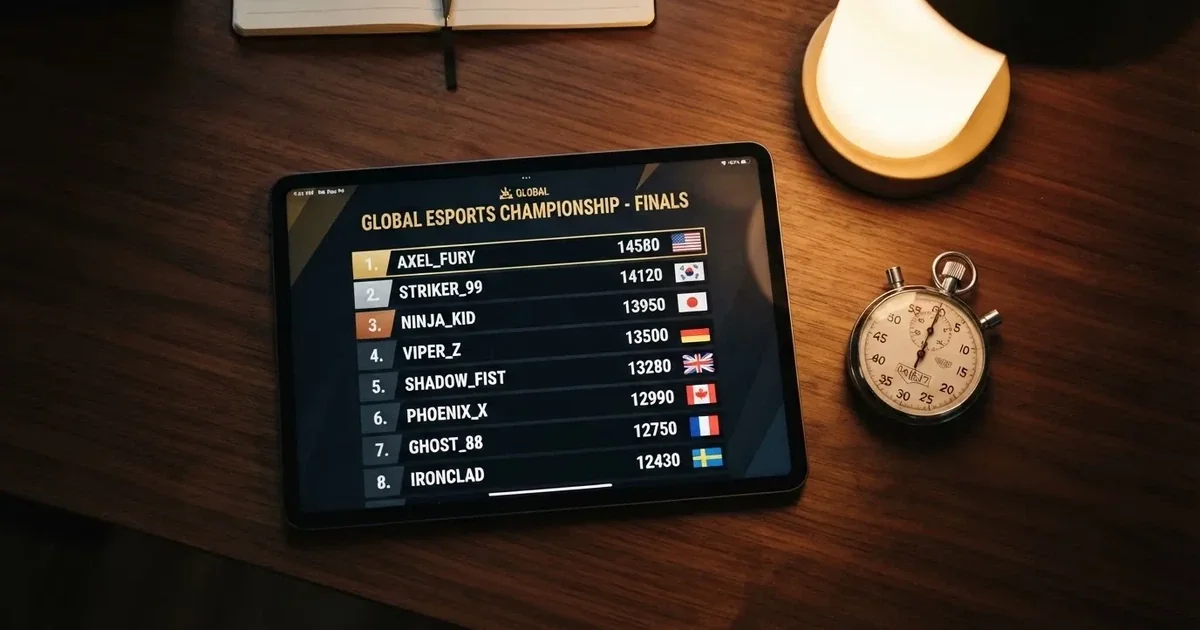
The marketing picture presents a leaderboard, a prize pool, a clock. Underneath, every tournament at a British-licensed casino runs inside the same legal frame: a maximum stake per spin, a hard ceiling on wagering requirements, a self-exclusion register that covers every brand that takes your deposit. The leaderboard is new; the machine it’s plugged into is not. A player who knows which is which gets a sharper read on which promotions are worth the time and which are dressed up for the screenshot.
This page walks through how slot tournaments actually work, where the prize money sits once a leaderboard closes, and the ten brands that can legally run one for a player in Great Britain. The angle is choice — what each format costs the player in time and money, which brand suits which kind of bankroll, and where a tournament’s fine print quietly trims the prize pool the leaderboard advertised.
Table of Contents
- Cluster 5 — Payments & payout speed: how tournament prize money reaches you
- Cluster 6 — Bonuses & free spins: the prize pots that sit behind a leaderboard
- Cluster 7 — Specific games / providers / live tables: what gets played and what gets watched
- Cluster 8 — Comparison: the ten brands that can run a tournament for you
- Cluster 1 — Overview / core: what a UK slot tournament actually is
- Cluster 2 — Legality / regulation: the licence that lets a tournament run
- Cluster 3 — Responsible gaming: the cost a leaderboard does not show
- Cluster 4 — Crypto & anonymity: where cryptocurrencies fit
- The wagering arithmetic in plain words (2)
- Cluster 8 — Comparison: the brands, reviewed
- Frequently asked questions about slot tournaments at UK casinos
Cluster 5 — Payments & payout speed: how tournament prize money reaches you
Faster Payments is the pipe tournament cash rides
Every British high-street bank clears domestic transfers through the Faster Payments Service, run by Pay.UK. The system has no published waiting hours — it operates every minute of every day, and most payments land in the receiving account instantly or within a couple of minutes. A small minority take up to two hours. The scheme itself caps a single transfer at £1,000,000, although individual banks set their own limits below that.
Tournament prizes at UK-licensed casinos are paid as cash, not as bonus funds with strings attached. The fastest path to a player’s bank account is a withdrawal back through the same Faster Payments rail the deposit came in on. That is not a brand’s special promise; it is the plumbing the whole British retail banking system has used since 2008, and a casino that runs on it inherits the same upper bound on waiting time.
What this means for a tournament winner
Once a leaderboard closes and a casino confirms a result, the rest is ordinary banking. A debit card withdrawal goes back through Faster Payments once the operator releases it, so the practical delay between a leaderboard closing and cash arriving is the operator’s own pending period rather than any card network’s. A withdrawal to a bank account the player has used to deposit is also the cheapest route, because most operators do not charge for it.

A winning player should expect two delays stacked on top of each other: the casino’s internal processing window, then the bank’s clearing time. The first is brand-specific and varies from minutes to a couple of days; the second is the Faster Payments rail itself, which usually means seconds. The sum of the two is what a player reads as “payout speed”, and a brand’s reputation on that front is largely a reputation on the first number.
Debit cards, bank transfers and what the law has banned
Credit cards have been off the menu for British gambling since 14 April 2020 — for online slots, for the high-street bookmaker, for the lottery bought over the counter with a credit card. The Gambling Commission’s reasoning at the time cited its own finding that 22% of online gamblers who used credit cards to fund play were classed as problem gamblers, and that around 800,000 UK adults used a credit card to gamble in 2018. E-wallets are not a way around the ban: routing a credit card through PayPal or a similar wallet is treated the same as using the card directly, and licensed operators block it.
What is left is debit cards, bank transfers, prepaid vouchers and a handful of e-wallets that fund only from a bank account or a debit card. For a player entering a tournament, the practical implication is that the deposit and the withdrawal use the same family of rails, and the deposit that funded entry is the account the prize lands in. That is Faster Payments for most British banks.
Apple Pay as a deposit rail — what it adds
Apple Pay is Apple’s wallet layer, launched on 20 October 2014 in the United States and extended to UK-issued payment cards on 14 July 2015. It does not store card numbers on the device; instead it tokenises the card into a device-specific Device Primary Account Number and generates a fresh security code per transaction. In a shop it talks to the terminal over near-field communication; in a browser or app it confirms a payment through Face ID or Touch ID.
For a tournament deposit, Apple Pay is a debit card route in a different wrapper. The funding source is still a debit card, and the Gambling Commission’s credit-card ban follows the funding source, not the front-end brand. Apple itself requires the supporting card to come from a participating issuer, and it warns that the service is not available in all markets. Where a casino accepts Apple Pay and the player’s bank has issued a card to the wallet, the deposit lands through Visa or Mastercard’s own rails in the usual way.
AstroPay and the e-money licence picture
AstroPay is a digital wallet founded in 2009 and headquartered in Uruguay. Its UK arm, Larstal Limited, is authorised by the Financial Conduct Authority under the Electronic Money Regulations 2011 as an electronic money institution — the same status a smaller UK challenger bank might hold. It runs parallel entities in the Isle of Man, in Brazil under the Brazilian Central Bank and in Denmark under the Danish Financial Supervisory Authority, and serves users across markets including the UK, Spain, Brazil, Argentina, Canada, Colombia, Australia, the United States and Uruguay. The 2016 spin-off of its payment-processing business as dLocal is the reason the brand fans out across so many local licences; each entity holds only what its own regulator asks for.
For a British player, the relevant licence is the FCA one, because that is what governs funds held in the UK entity. AstroPay is also an answer to players who do not want their bank statement to read the casino’s name: the casino receives a payment from the wallet, not from the player’s bank, so the line item on the statement is AstroPay rather than the operator. That is privacy, not anonymity — the wallet itself is regulated and the operator still verifies identity on the casino side.
Why no path is anonymous at a UK-licensed casino
Every GB-licensed casino has verified name, address and date of birth before the first deposit since 7 May 2019. A deposit through a wallet does not change that. What the wallet can do is shorten the visible chain between a bank and an operator — useful for a player who would rather not see a casino’s name on a statement, irrelevant to anyone trying to play without identity checks. There is no legal route into a UK-licensed tournament without the verification step, and a wallet does not get around it.
Cluster 6 — Bonuses & free spins: the prize pots that sit behind a leaderboard
What kind of promotion a slot tournament actually is
A slot tournament is a timed competition on a single title or a small set of titles, with players ranked by a metric such as biggest single-spin win, total win over a fixed spin count, or win multiplier relative to stake. The prize pool is split across the top finishers — sometimes hundreds of small cash shares, sometimes a top prize that dwarfs the rest. Entry can be free as part of an existing promotion, free with a deposit in the same week, or paid; the paid variety is rare at UK-licensed casinos because the £2/£5 stake cap pulls against it.
The thing that separates a tournament from an ordinary bonus is its transparency. A deposit bonus is paid in a lump and wagered down to a withdrawable balance over a stretch of play; a tournament pays the prize pool to a ranked list, and a player can see their own position on the leaderboard at any moment. That visibility is the appeal — a player can watch their score update, decide whether to grind on or stop, and react to a competitor’s run in real time.
The 10x cap on wagering requirements
Since 19 December 2025 the Gambling Commission has capped wagering requirements on casino bonuses at 10x. A bonus of £10 carries at most £100 of turnover to clear; a £50 bonus carries at most £500. The cap is a ceiling on the multiple, not a floor, and a casino may set the requirement below it. The same rule closed off the mixed-product bonus, where a free bet on sport would unlock casino spins — that combination is no longer legal.
For tournament prizes this matters in two places. First, where a tournament pays out as bonus funds rather than cash — rarer at UK-licensed brands than at offshore ones — the 10x cap puts a hard lid on how much grinding the prize requires. Second, where a tournament is unlocked by a deposit bonus or a free-spin package, that unlocking bonus itself falls under the cap. A player reading a tournament page should check whether the prize is cash or bonus, and if it is bonus, what multiple sits on top of it.
The wagering arithmetic in plain words
Take a £30 bonus with the cap’s ceiling applied: the player must turn over £300 before the bonus funds convert to withdrawable cash. At the £2-per-spin stake cap that applies to the 18–24 age band, that is 150 spins; at the £5 cap that applies to players aged 25 and over, that is 60 spins. A spin runs at a minimum 2.5 seconds under the Commission’s auto-play rules, so 60 spins takes two and a half minutes of pure reel time, and 150 spins takes just over six minutes. Neither figure is the play time a human actually spends — a player choosing the bet size, the lines, sometimes a bonus-buy on a feature-heavy title — but it is the bare machine speed the rule assumes.
A tournament leaderboard does not impose this clearing requirement because the prize is paid as cash; the wagering cap matters when a casino converts tournament winnings into a bonus instead, or when a player claims a separate deposit offer to fund entry. The 10x ceiling does not change a tournament leaderboard, but it caps the marketing a casino can attach to one.
Free-spin packages as tournament entries
A common shape is a free-spin package credited on a deposit or awarded as part of a reload promotion, with the spins playable on a single named slot. Sometimes the casino runs a leaderboard across the same promotion: the top spinners on the free-spin package split a prize pool, the rest get nothing. The free-spin package itself may carry the 10x cap if its winnings are paid as bonus; the tournament winnings, paid as cash, do not.
A player should read two terms, not one. The free-spin package’s terms state how the winnings are paid and what multiple sits on them. The tournament’s terms state how the leaderboard is ranked, what window it runs in, and what the prize breakdown looks like. Where the two overlap, the casino’s terms are usually written to take the stricter interpretation, and a player who reads only the tournament page misses the wrapper.
Cluster 7 — Specific games / providers / live tables: what gets played and what gets watched
The titles that anchor a typical leaderboard
Tournaments at UK-licensed casinos tend to cluster around a small set of high-volatility slots with a clear top-end payout and a recognisable theme. The reason is operational: a casino running a leaderboard wants every player on the same title so the score is comparable, and a slot with a defined maximum win gives players a sense of what is at stake. The brand is almost always a major studio — Pragmatic Play’s Drops & Wins network is the obvious example, and is the single biggest source of cross-brand leaderboards because the same network sits behind several UK brands.
A live-dealer tournament is rarer. The mechanics of a live table — a real dealer, a fixed schedule, a table maximum — do not lend themselves to the “lots of small spins, count the wins” model a slot leaderboard rewards. Where a casino runs a live tournament it is usually a short-window event tied to a specific game show or a prize-drop promotion, with a much smaller player pool than the slot equivalent.
Slot tournament rules: the mechanics a player should know
The standard rule set across UK-licensed brands looks like this: a fixed spin allowance (often 20 to 100 spins, sometimes unlimited within a time window); a fixed bet size set by the casino rather than the player; a leaderboard ranked by total win or by win-to-stake ratio; a tiebreak rule (usually first to the score, then highest single spin). Some tournaments require a minimum number of spins to qualify for a prize, so a player who stops early forfeits their position.
What the rules do not say is also worth reading. Most UK tournament terms do not allow multiple accounts or coordinated play; a player found running two entries under different identities forfeits both. Most do not pay out in jurisdictions that the brand does not serve, and a player who wins while travelling may find the prize held until they are back in a covered market. The brand’s standard bonus-abuse and identity terms apply, and a tournament win does not exempt a player from them.
Online slot tournament strategy: what moves the score
The honest version first: a slot tournament is a game of chance under a uniform bet size, and a player’s score is a function of which spins hit. There is no skill that converts a 94% RTP into a 96% one. What a player can control is the volume of spins and the timing of entry.
The volume move is simple. A tournament with a fixed spin allowance gives the same number of spins to every entrant, so the player who clicks faster scores the same as the player who clicks slowly — there is no edge in being quick. A tournament with a time window rewards the player who uses the full window, because every spin that is not taken is a spin that cannot contribute to the score. The mistake players make is treating a time-window tournament like a spin-allowance one and stopping early.
The timing move is sharper. Slot wins cluster, and a player who enters a tournament early and finishes mid-window has a smaller sample than one who enters late but finishes at the close. Where the prize pool is split across many positions, the bigger sample wins; where the prize is one top prize and the rest are small, the cluster matters less than the variance. A player should know which shape the tournament is before they pick their window.
Cluster 8 — Comparison: the ten brands that can run a tournament for you
The brand list below comes from the Gambling Commission’s public register of gambling businesses, cross-checked on 18 September 2026. Each domain is listed against the licence account that runs it, and the remote casino operating licence number is the one the Commission issues for online play. Several brands share one licensee — Ladbrokes, Coral and Gala Bingo all sit under LC International Limited — and they are reviewed as separate shops on the same licence, not as independent operators. Every brand on the list runs the GAMSTOP self-exclusion register, the LCCP social responsibility code and the Commission’s affordability checks, so the comparison below is about how each operator runs a tournament, not whether they have permission to take a deposit.
| Brand | Licence holder and GB remote casino licence | Domain status on the register | Tournament support |
|---|---|---|---|
| Paddy Power | PPB Games Limited · 039411-R-319335-010 | Active | — |
| Ladbrokes | LC International Limited · 054743-R-330863-014 | Active | — |
| MrQ | Tek Fox Ltd · 060629-R-337532-004 | Active | — |
| Coral | LC International Limited · 054743-R-330863-014 | Active | — |
| bet365 | Hillside (UK Gaming) ENC · 055149-R-331499-004 | Active | — |
| Betfred | Petfre (Gibraltar) Limited · 039544-R-319290-010 | Active | — |
| Casumo | Recro Limited · 061549-R-336718-002 | Active | — |
| 888casino | 888 UK Limited · 039028-R-319297-014 | Active | — |
| Jackpotjoy | Gamesys Operations Limited · 038905-R-319430-022 | Active | — |
| Gala Bingo | LC International Limited · 054743-R-330863-014 | Active | — |
The em-dash in the tournament support column is the honest answer. The Commission’s public register does not list which brands currently run a tournament and which do not, and the licence-level fields above do not speak to promotional schedules. A player looking for a leaderboard to enter today should treat the absence of a figure in this column as the absence of a verified fact, not as a verdict that the brand does not run one. Some brands run tournaments constantly; some run them in seasonal bursts; some never run them at all. The licence tells you who is allowed to take the entry; it does not tell you what is on the page this week.
The shared-licence point deserves its own sentence. Ladbrokes, Coral and Gala Bingo are three different shops at three different web addresses, but the operating company behind them is the same LC International Limited, the same Commission account, and the same licence number. A player who has self-excluded through GAMSTOP from one has self-excluded from all three; a player who has won a prize at one and is querying a payout is dealing with the same finance team at all three. The differences between them are branding, game catalogue and the promotions schedule, not the licence underneath.
What the table cannot say
A licence is permission, not a tournament calendar. The Commission’s domain register tells a player that Paddy Power’s Paddy Power is listed against PPB Games Limited’s account and is currently marked Active; that MrQ’s Mrq.com is listed against Tek Fox Ltd and is currently marked Active; and so on down the list. It does not tell a player which of these brands has a leaderboard open right now, what the prize pool is, what the entry requirement looks like or how the winnings are paid. For that a player has to open the brand’s own promotions page, and the only honest answer to “which brand runs the best tournament” is the one that has the tournament running at the moment a player is looking.
A player comparing brands on a quieter metric — game catalogue, mobile app, live-dealer coverage, customer-service responsiveness — will get more out of the licence confirmation than from a leaderboard ranking. The licence confirms the brand is regulated, that winnings are paid in pounds sterling, that identity checks have been passed, that GAMSTOP applies, and that an ADR route exists for an unresolved complaint. None of that depends on whether a tournament is live.
Cluster 1 — Overview / core: what a UK slot tournament actually is
The cleanest way to think about a slot tournament is as a leaderboard bolted onto an ordinary slot session. The casino picks a title, sets a fixed bet size the player cannot change, gives every entrant the same number of spins or the same time window, and ranks them by an agreed metric. The prize pool is split across the top of the leaderboard, sometimes in equal shares, sometimes in a steep top-heavy curve where the winner takes the lion’s share.
The format exists because it works for both sides. A casino gets a promotion that runs on its existing game catalogue with no extra build, and it gets a clear commercial story for the marketing email — “win a share of £X” reads more concretely than “deposit and play”. A player gets a defined session with a defined prize and the ability to see where they sit. The compromise is that a tournament does not change the underlying math of the slot: the RTP and the volatility are the slot’s own, and a leaderboard does not put money onto a spin that the maths would not otherwise have paid.
The formats British casinos run
Three shapes cover most of the UK market. The first is a fixed-spin tournament: every entrant gets the same number of spins at the same stake, the score is the total win, and the leaderboard is final the moment the last spin is taken. The second is a timed tournament: a window of minutes or hours, an unlimited number of spins, the score is the total win within the window, and a player who enters late has less time to accumulate spins. The third is a freeroll: a tournament with no entry fee, often run as part of a deposit bonus or a loyalty reward, with a smaller prize pool and a wider leaderboard.
A fourth shape, rarer in the UK than offshore, is a paid-entry tournament with a buy-in. The £2/£5 stake cap and the 10x wagering cap both pull against the paid-entry format at GB-licensed brands: a player paying to enter a tournament has a stake per spin above what the law allows, and the casino paying out a buy-in-funded prize pool sits uneasily with the wagering rules. Most UK tournaments are either free with a qualifying deposit or free as a standalone promotion.
How a leaderboard settles a score
The metric varies. Some leaderboards use total win across the spins, which favours high-volatility titles where one big hit dominates the score. Some use win-to-stake ratio, which normalises for the bet size and gives a steadier ranking. Some use the biggest single spin, which collapses the session to one number and rewards the variance player. The casino’s terms page states which metric is in use, and a player who does not check is playing a different game from the one they think.
Tiebreaks are usually published in the same terms: first to reach the score wins, then highest single spin, then earliest entry. A player who is tied on score with another at the close of the window is not a player who wins the tie. The rule matters more than it looks, because ties at the prize-boundary positions are common — a tournament paying the top 50 with a player tied at 50th and 51st is a tournament where the tiebreak rule decides the payout.
Cluster 2 — Legality / regulation: the licence that lets a tournament run
The Gambling Commission’s role
The Gambling Commission is the regulator for gambling in Great Britain, sponsored by the Department for Culture, Media and Sport and operating under the Gambling Act 2005. Its remit covers England, Scotland and Wales but not Northern Ireland, which has its own framework. Since the Gambling (Licensing and Advertising) Act 2014 any operator taking customers in Great Britain needs a Commission licence no matter where in the world it is based, so a Curaçao, Maltese or Gibraltar licence is not a substitute. The Commission publishes a public register of gambling businesses that lists every licence holder, every active domain, and the status of each. On 18 September 2026 the register showed 139 businesses holding an active remote casino operating licence.
The register can be searched online and downloaded in full as a CSV or Excel file, which is the source the brand-by-brand table above is built on. The domain list records each website against the licence account that runs it, with a status of Active, Inactive or White Label. On 18 September 2026 the register held 1065 active and 361 white-label domain entries — a white-label site trades under another company’s licence, so the player is dealing with a smaller brand whose cashier and terms are run by the licence holder behind it.
What a remote casino licence number means
A remote casino operating licence number on the register has the form account-R-number-suffix, where the leading six digits repeat the licence holder’s account number and the “R” marks a remote (online) licence. So 039411-R-319335-010 is account 39411 (PPB Games Limited), remote licence 319335, suffix 010. The format is the player’s quickest check that the licence is real and that the brand is the brand it claims to be; a licence number that does not parse is a licence number that does not appear on the Commission’s register.
The rules that govern a slot tournament’s prize pot
Three Commission rules touch a tournament prize directly. The first is the stake cap: from 9 April 2025 the maximum stake per game cycle is £5 for players aged 25 and over; from 21 May 2025 the cap is £2 for 18–24-year-olds. A “game cycle” is one full round of the game — for a slot, one spin. So a tournament with a fixed stake of £2 or £5 sits inside the law for the relevant age band, and a tournament with a stake above the cap does not.
The second is the wagering cap. Since 19 December 2025 the wagering requirement on a casino bonus is capped at 10x, and mixed-product bonuses are banned. A tournament that pays its prize as bonus funds rather than cash falls under this rule. A tournament that pays cash does not — there is no wagering requirement on a cash prize because the funds are already withdrawable.
The third is auto-play. Since 31 October 2021 auto-play is banned on slots, and a spin may not resolve faster than 2.5 seconds. A tournament cannot ask a player to switch on auto-play to reach the spin count, and the player cannot use a turbo mode that resolves faster than the 2.5-second floor. In practice the floor is what stops the fastest scores; the cap on stake size is what stops the most expensive ones.
What the law does not do
There is no state-set deposit ceiling or loss ceiling for UK players. Operators must prompt a customer to set a financial limit before the first deposit, but the limit is the customer’s choice. The Commission’s financial vulnerability checks fire at £150 of net deposits in a rolling 30-day window, using public data only; the wider financial risk assessments are announced but not yet in force. A player entering a tournament is not protected from overspending by a state-imposed ceiling — only by the limit the player sets themselves and by the brand’s own monitoring.
Players pay no tax on gambling winnings in the UK. Operators pay Remote Gaming Duty, which the government raised from 21% to 40% from 1 April 2026 — a model-only figure, and any reader should check HMRC for the current rate and how it applies. The tax change is at the operator level and does not affect the prize a player receives.
Cluster 3 — Responsible gaming: the cost a leaderboard does not show
Why tournaments deserve a time limit before entry
A leaderboard is a small piece of game design with a large behavioural pull. A player watching their position on a ranked list tends to keep playing past the point they would have stopped at on an ordinary slot session — the comparison to other scores is more salient than the slot’s own RTP. The Commission has not banned tournaments, but its rules around reality checks and time-outs apply in full.
A practical move is to set a time limit before the first spin of a tournament session. The limit should be a hard stop — the moment the timer expires, the session ends, regardless of where the player sits on the leaderboard. The discipline is harder to keep than to set, because the moment the player is one position away from a paid rank is the moment the limit feels optional. The rule that works is the rule written down before the session begins.
GAMSTOP and the cross-brand protection it gives
GAMSTOP is the national online self-exclusion scheme and has been a mandatory condition of every online licence since 31 March 2020. Self-exclusion runs for six months, one year or five years, and cannot be cancelled early. Every brand on the brand list above runs GAMSTOP, so a player who has self-excluded through one has self-excluded through all of them. The cross-brand nature of the scheme is the point: an offshore operator with a Curaçao licence does not run GAMSTOP, and a player who has self-excluded in the UK but opens an offshore account is unprotected on that account.
Where to get help if the leaderboard starts costing more than the prizes pay
The National Gambling Helpline, run by GamCare, is free and confidential. GambleAware funds a wider network of treatment and support services across Great Britain. Both names appear in every UK-licensed casino’s responsible-gaming page and on the Commission’s own site. A player who finds a tournament session running longer than planned, or a series of sessions strung together without a break, is a player who should make the call before the next session rather than after.
What the protections do not cover
The protections above cover a player at a UK-licensed casino. They do not cover a player at an offshore casino with no Commission licence, even if the offshore casino is well-known. The Commission can disrupt illegal sites — cease-and-desist notices, search-engine delisting, payment and hosting referrals — but it has no power to block an ISP from reaching one, and the player who opens an offshore account has no Commission complaints route, no GAMSTOP coverage, and no approved ADR. The law under section 33 of the Gambling Act 2005 makes providing gambling to people in Great Britain without a licence an offence, but the offence is aimed at the operator, not the player; what the player loses on an unlicensed site is the protection, not the money already gone.
Cluster 4 — Crypto & anonymity: where cryptocurrencies fit
How a crypto deposit flows into a UK tournament
A cryptocurrency deposit at a UK-licensed casino works like any other deposit: the player sends funds to the casino’s wallet, the casino credits the player account, and the player enters the tournament through the ordinary entry path. The leaderboard does not know what rail the entry fee came in on. The payout, if the player wins, is paid in pounds sterling to a UK bank account, not in the deposited cryptocurrency — converting at the casino’s exchange rate at the moment of withdrawal. The player who chose crypto to deposit ends up with a sterling payout either way.
A player who wants the payout in crypto is asking for something the Commission does not require licensed casinos to offer, and most do not. A handful of UK-facing brands accept crypto deposits through a payment processor that converts to sterling on arrival, but the casino’s own ledger is in sterling and the prize is paid in sterling. A player who values holding the position in a cryptocurrency between deposit and withdrawal is a player the UK regulatory frame is not designed for.
What the law has settled on anonymity
Anonymous play is not possible at a UK-licensed casino. The Commission’s identity verification rule, in force since 7 May 2019, requires name, address and date of birth to be checked before the first deposit or any play. A crypto deposit does not exempt a player from the check — the casino verifies the player’s identity at the cashier, not the payment rail. A wallet does not get around it; an exchange account does not get around it. The verification is the price of entry, and a tournament that sits behind it is a tournament that has already cost the player their anonymity.
What “subject support” looks like for a crypto player
None of the ten brands on the brand list carries a verified cryptocurrency-deposit route in the data the Commission publishes, and the licence-level fields above do not speak to the payment methods a brand currently accepts. The em-dash in the subject support column reflects that absence rather than a verdict that any of them does not take crypto. A player who wants a verified crypto deposit route should check the brand’s own payments page rather than rely on the register, and should expect the brand to convert to sterling on deposit.
The wagering arithmetic in plain words (2)
Take a £30 bonus credited under a promotion that unlocks tournament entry. The 10x wagering cap that has been in force since 19 December 2025 puts the maximum turnover at £300. At the £2-per-spin stake cap that applies to players aged 18 to 24, that is 150 spins; at the £5-per-spin cap that applies to players aged 25 and over, that is 60 spins. With the 2.5-second-per-spin floor that has applied since 31 October 2021, 60 spins takes two and a half minutes of reel time and 150 spins takes just over six minutes.
A tournament prize paid as cash does not carry a wagering requirement. A tournament prize paid as bonus does, and the multiple sits at or below 10x. A player who claims a £30 bonus at the maximum multiple to clear a tournament entry is a player who turns over £300 at minimum, takes at least 60 spins at £5 or 150 spins at £2, and clears the bonus in roughly two to six minutes of pure reel time — longer in real time once a human is choosing bet sizes and clicking. The arithmetic is the floor; the session is the ceiling.
Cluster 8 — Comparison: the brands, reviewed
The reviews below sit beside the licence table above. Each is what the register confirms about the brand — the licence, the licensee, the active domain — and what the brand’s profile looks like from outside that data. Where the research carries no figure for a particular field the field reads qualitatively or is left to the brand’s own page.
Paddy Power
Paddy Power runs under PPB Games Limited’s remote casino operating licence 039411-R-319335-010, with Paddy Power listed as an active domain on the Commission’s register. PPB Games is the online arm of the Flutter Entertainment group, and the brand’s profile sits inside a sportsbook-heavy group rather than a casino-first one. A player who reaches Paddy Power for a tournament will land on a casino product that is built next to a sportsbook rather than the other way around, and the tournament catalogue tends to follow the sportsbook’s promotional calendar more than a standalone casino’s.
Ladbrokes
Ladbrokes is one of three brands in this list sitting under LC International Limited’s remote casino operating licence 054743-R-330863-014, alongside Coral and Gala Bingo. The shared-licence fact matters for any player comparing the three: they are different shops with different branding and different promotions, but the same finance team sits behind the cashier. Ladbrokes is the oldest of the three by reputation, and its casino product has been built up alongside the sportsbook for decades.
MrQ
MrQ is the smaller brand on the list by reputation, run by Tek Fox Ltd under remote casino operating licence 060629-R-337532-004. MrQ’s profile in the UK market has been built around a no-wagering stance on its bonuses, which puts it in an unusual position under the 10x cap: a brand that already sat at the strictest end of the market now sits comfortably below the new ceiling. A player comparing the brand on promotional terms will find less to compare on the bonus side and more to compare on the catalogue and the loyalty side.
Coral
Coral shares LC International Limited’s licence 054743-R-330863-014 with Ladbrokes and Gala Bingo. Coral’s profile is closer to Ladbrokes’ than to Gala Bingo’s — both are casino-and-sportsbook brands rather than bingo-led — but the promotional schedules are independent. A player who has a self-exclusion through GAMSTOP on any of the three has the exclusion on all three, and a player who has opened an account with one and is querying a payout is dealing with the same finance function regardless of which brand they log in through.
bet365
bet365 sits under Hillside (UK Gaming) ENC’s remote casino operating licence 055149-R-331499-004. The brand is the largest privately-owned sportsbook and casino operator in the UK by reputation, and its casino product sits next to a sportsbook that runs a global promotional calendar. A tournament at bet365 tends to come with the operator’s own scale behind it — a wide game catalogue, an in-house platform, a payments operation that handles the volume.
Betfred
Betfred runs under Petfre (Gibraltar) Limited’s remote casino operating licence 039544-R-319290-010, and is listed as an active domain. The licensee is Gibraltar-domiciled, which is a familiar shape in the UK market — the Gibraltar licence is the operator’s corporate base, the UK licence is the player-facing one. Betfred’s casino product is the smaller side of the brand relative to its sportsbook, and its tournament promotions follow that weighting.
Casumo
Casumo runs under Recro Limited’s remote casino operating licence 061549-R-336718-002, and is listed as an active domain. Casumo’s profile in the UK market has been built as a casino-first brand with a rewards programme layered on top, and the tournament schedule tends to come through the rewards side rather than as standalone events. The brand has been one of the more visible UK-licensed casino brands for promotional innovation since the 10x cap came in.
888casino
888casino runs under 888 UK Limited’s remote casino operating licence 039028-R-319297-014, with 888casino listed as an active domain. The 888 group is one of the older casino-only operators in the UK market, and the brand’s profile is built on a proprietary casino platform rather than a third-party white-label. A tournament at 888casino tends to come through the operator’s own game catalogue rather than a network shared with other brands.
Jackpotjoy
Jackpotjoy runs under Gamesys Operations Limited’s remote casino operating licence 038905-R-319430-022, and is listed as an active domain. Gamesys is a casino-and-bingo group, and Jackpotjoy sits on the casino-and-bingo side of its portfolio. The brand’s tournament promotions tend to be lighter than the pure-casino brands on the list, and the catalogue is weighted toward games that cross the casino-bingo line.
Gala Bingo
Gala Bingo is the third brand under LC International Limited’s licence 054743-R-330863-014, sharing the licence with Ladbrokes and Coral. Unlike the other two LC International brands, Gala Bingo’s profile is bingo-led rather than sportsbook-led, which puts a different shape on its casino product. A player comparing Gala Bingo to a pure-casino brand is comparing different promotional calendars; the licence is the same.
Frequently asked questions about slot tournaments at UK casinos
How do online slot tournaments work at UK casinos?
A casino picks a slot, sets a fixed bet size every entrant must use, and gives each player either a fixed number of spins or a fixed time window. Scores are ranked on the leaderboard by an agreed metric — total win, win-to-stake ratio, or biggest single spin — and the prize pool is split across the top finishers once the window closes. Entry is usually free with a deposit or as part of a loyalty reward.
Can I enter a slot tournament without making a deposit?
Yes, where the casino runs a freeroll. A freeroll is a no-entry-fee tournament that runs as a standalone promotion or as part of a reload offer, and the prize pool is funded by the casino rather than by the entry fees. A paid buy-in tournament is rare at UK-licensed brands because the £2/£5 stake cap sits awkwardly with a buy-in model.
What determines my ranking on a tournament leaderboard?
The tournament’s terms state the metric. Total win rewards the player who hit the biggest aggregate; win-to-stake ratio normalises for bet size; biggest single spin collapses the session to one number. The casino’s tiebreak rule is also published in the same terms — usually first to the score, then highest single spin, then earliest entry — and a tied player at the prize boundary is settled by that rule, not by negotiation.
How quickly are tournament prizes paid out?
A tournament prize paid as cash is processed through the casino’s standard withdrawal route, which for a UK player is most often a debit card or bank transfer over the Faster Payments rail. The casino’s own pending window varies from minutes to a couple of days; the bank clearing time is usually seconds. The two stacked together is the payout time a brand’s reputation is built on.
Do crypto deposits count towards tournament entry the same as card payments?
Yes, in the sense that the leaderboard does not see the payment rail. A crypto deposit at a UK-licensed brand is converted to sterling on arrival and the player enters the tournament through the ordinary entry path. The payout is paid in sterling to a UK bank account rather than back in cryptocurrency, so a player who deposited in crypto ends up with a sterling prize. The casino’s identity check applies regardless of how the deposit was funded.