
What a 600% casino bonus actually delivers in 2026, once the rulebook is laid over the offer
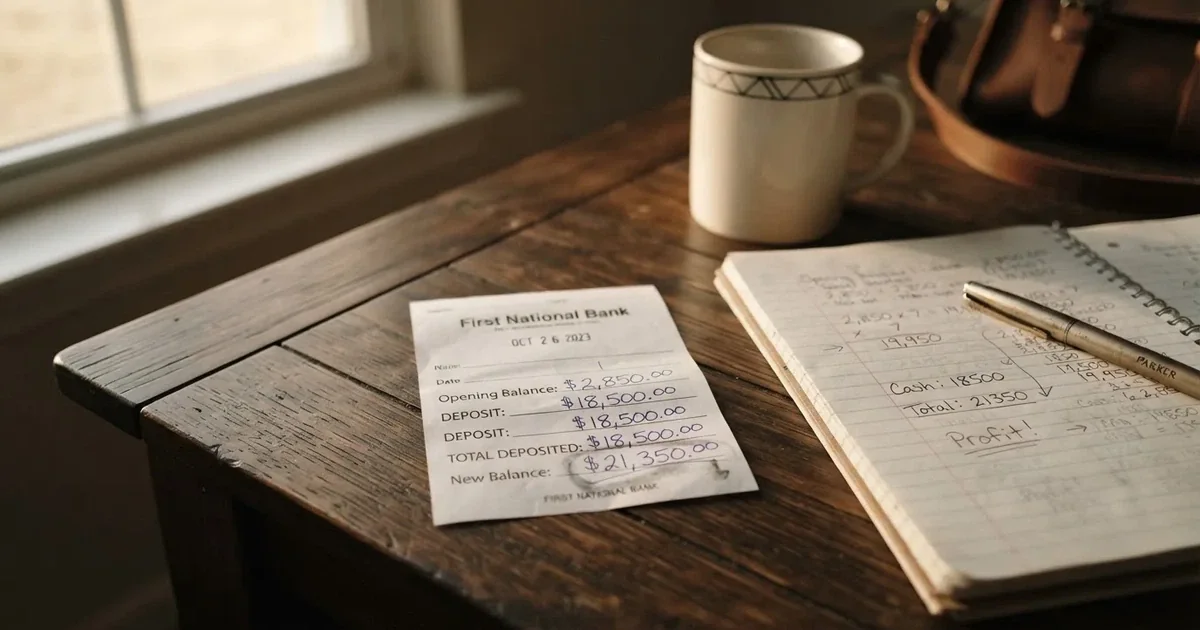
A “600% casino bonus” is, on the face of it, a generous thing. A £100 deposit returns £600 in bonus funds, leaving the player with £700 to play with — seven times the cash they put down. The arithmetic behind the marketing line is real. What the line tends to leave out is what sits on top of it in the British market: the 10x wagering cap that took effect on 19 December 2025, the credit-card ban that has been in place since 14 April 2020, and a Gambling Commission register that, on 18 September 2026, listed 139 businesses holding an active remote casino operating licence across 1065 active and 361 white-label domain entries. This page works through what a 600% match offer actually delivers when those rules are applied, and what a player looking at one should be checking before they accept it.
Current as of 7 November 2026, with figures cross-referenced against the Gambling Commission’s public register of gambling businesses.
Table of Contents
- The shape of a 600% match offer
- Where the licence sits in the picture
- Responsible play sits underneath the bonus, not beside it
- What “deposit match” means for the payment method
- The wagering requirement and the 10x cap that sits on top of it
- The brands the register covers, and how the licences group
- Reading each brand against the page’s subject
- The offshoreness warning that applies to anything outside the table
- The numbers that travel and the ones that do not
- What the calculation actually tells a player
- Where the player who arrives from a search actually lands
- The licence is the floor; the offer is the variable
- What this page is for, and what it is not
- FAQ
The shape of a 600% match offer
A match bonus is a percentage added to whatever the player deposits, up to a stated ceiling. A “600% match” means the operator adds six pounds for every pound the player puts in. The ceiling sets the upper bound — a £50 cap on the bonus element means a £50 max bonus, which is reached with an £8.33 deposit, and any further deposit earns no additional match.
The most common ceiling research surfaces for offers of this shape sits at or below £50 in bonus funds. That figure matters more than the headline percentage, because the percentage alone tells a player nothing about how much bonus money they will actually have to use. A 600% match with a £50 cap produces a £50 maximum bonus from a minimum deposit of roughly £8.33. A 600% match with a £1,000 cap, by contrast, would need a £166.67 deposit to reach the ceiling — a much larger cash commitment for a player who wants the full bonus value.
Three practical points fall out of this. First, the “600%” figure is a multiplier on the deposit, not a fixed payout — the more someone deposits, the more bonus they unlock, until the cap closes it off. Second, the cap itself is a marketing choice, not a regulatory one, so two operators running the same percentage can produce wildly different maximum bonuses. Third, the deposit threshold is what determines whether an offer is realistic for a small-bankroll player or only useful to someone prepared to commit a four-figure sum up front.
The match is paid in bonus funds, not withdrawable cash. Until the wagering requirement attached to those bonus funds is met, the bonus element cannot be withdrawn — and any attempt to withdraw the original deposit before completing the wagering typically forfeits the bonus along with any winnings earned from it.
Where the licence sits in the picture
Every online casino serving players in Great Britain needs a Gambling Commission remote operating licence, whichever country the operator is actually based in. This is the test: the Commission’s public register. The register can be searched online and downloaded in full as CSV or Excel files, and on 18 September 2026 it listed 139 businesses holding an active remote casino operating licence. Each licence has the form account-R-number-suffix, where the leading six digits repeat the licence holder’s account number and the R marks a remote (online) licence.

A second layer sits on the register’s domain list. Every website is recorded against the licence account that runs it, with a status of Active, Inactive or White Label. A white-label site trades under another company’s licence — the front-end brand is licensed, but the licence holder sits behind it. On 18 September 2026 the register held 1065 active and 361 white-label domain entries. White-label arrangements are not a problem per se, but they change who is accountable to the Commission, and they explain why a small new brand can appear on the register without holding its own licence.
For a player checking whether a brand is licensed, three things matter: the licence number on the register, the licence holder named against it, and whether the domain the player landed on is the one the register associates with the licence. Where the domain differs from the one on the register, the licence does not travel with the site — and the protections that come with it do not either.
The four protections the licence brings
The Commission licence is the difference between a complaint route and none. A licensed operator must be part of GAMSTOP, the national online self-exclusion scheme, which has been a mandatory condition of every online licence since 31 March 2020. Self-exclusion periods run six months, one year or five years and cannot be cancelled early. Any player who self-excludes through GAMSTOP is locked out of every licensed brand for the duration.
A licensed operator must offer an approved alternative dispute resolution (ADR) provider for unresolved complaints. A licensed operator must verify the customer’s name, address and date of birth before the first deposit or any play — verification has been required since 7 May 2019, which means anonymous play is not possible at a licensed site. A licensed operator must contribute to the funding arrangements for treatment and research through organisations such as GamCare and GambleAware.
The point is not that the licence makes gambling safer on its own. The point is that the licence is the entry ticket to a set of routes — self-exclusion, complaints, affordability checks, signposted help — that an unlicensed site does not have to provide.
Responsible play sits underneath the bonus, not beside it
The bonus is what brings a player to the cashier. The responsible-gaming infrastructure is what they hit first. Since 31 October 2025 operators must prompt the customer to set a financial limit before the first deposit; since 28 February 2025 financial vulnerability checks run at £150 net deposits in a rolling 30-day window, using public data only; and since 31 October 2021 auto-play is banned on slots, a slot spin may not be faster than 2.5 seconds, and losses disguised as wins are banned.
What this means in practice: a player depositing to claim a 600% bonus will be asked to set a deposit limit before the cashier opens, will hit a vulnerability-check prompt the first time 30-day net deposits cross £150, and will not be able to let a slot autoplay itself while the wagering requirement is being cleared. The slot spin cap, in particular, reshapes how quickly wagering can be completed — a player used to autoplaying a hundred spins in a minute has to drive each one manually.
For a player funding the offer with paysafecard, the limit infrastructure is identical to any other deposit method — a prepaid voucher counts as a debit instrument under the Commission’s rules, and a limit set against the account applies regardless of where the cash comes from. There is no anonymous bypass through paysafecard; the verification that runs against the account runs against every deposit that lands in it.
A 600% bonus, because it septuples the playable funds available, makes the responsible-gaming infrastructure load-bearing. A £20 deposit becomes £140 of playable funds under the offer, and the loss capacity has been multiplied as well as the balance. That is the right time to set a deposit limit, not after the first session.
What “deposit match” means for the payment method
A deposit match bonus triggers when money lands in the casino account. The trigger does not care which method delivered it — debit card, bank transfer, e-wallet, prepaid voucher, all qualify if the operator has marked the method as bonus-eligible. What does not qualify is credit. Since 14 April 2020 credit cards have been banned for gambling across all online and offline products in Great Britain, including credit cards routed through e-wallets. Debit cards and bank transfers are unaffected.
UK bank transfers typically move through the Faster Payments Service, which has been live since 2008 and is operated by Pay.UK. Faster Payments runs 24 hours a day, seven days a week, and most transfers arrive instantly or within a couple of minutes, with the scheme setting a £1,000,000 per-transaction limit, though individual banks commonly impose lower limits. Apple Pay, which began supporting UK cards on 14 July 2015, sits on top of a debit card in the wallet and is therefore unaffected by the credit-card ban; in-store it uses NFC to communicate with contactless terminals, and each transaction carries a device-specific tokenised Device Primary Account Number and a dynamic security code. AstroPay, headquartered in Uruguay and founded in 2009, operates as a global digital wallet offering online payments, virtual and physical debit cards and peer-to-peer transfers, with Larstal Limited as its UK electronic money institution authorised by the Financial Conduct Authority under the Electronic Money Regulations 2011.
The bonus-trigger question to ask the cashier, then, is not “which cards work” but “which methods on my account are bonus-eligible”. A given operator may accept Skrill and Neteller deposits for play but exclude them from the welcome offer; the same operator may run the welcome offer on a debit card and on Apple Pay, but not on a bank transfer. The exclusion list is a per-offer setting and the only way to find out is to read the bonus terms.
Minimum deposit and the offer’s real floor
Every deposit-match offer carries a minimum deposit threshold — typically £10 or £20 in the British market — below which the bonus does not trigger. A player depositing £5 to a £10-minimum offer gets the deposit, the play, and no bonus. The threshold sits inside the offer’s terms and is the floor on what the percentage applies to.
For a 600% match with a £50 cap and a £10 minimum deposit, the maths is straightforward: depositing the £10 minimum returns a £60 bonus and a £70 playable total; depositing £8.33 returns the £50 cap on bonus funds and a £58.33 playable total; depositing anything above £8.33 returns £50 in bonus plus the deposit, capped at the bonus ceiling. Above the cap, the percentage still applies in principle, but the bonus does not grow with it.
What that means for the offer’s economics is that the player gets diminishing returns the closer they sit to the cap from above. Depositing £100 to a £50-cap 600% offer produces the same £50 bonus as depositing £8.33 — but the player has risked twelve times the cash for no extra match.
The wagering requirement and the 10x cap that sits on top of it
The wagering requirement is the multiplier applied to bonus funds before they become withdrawable. A 30x wagering requirement on a £50 bonus means the player must stake £1,500 in qualifying bets before the £50 — and any winnings earned from it during wagering — can be withdrawn. Before 19 December 2025, wagering requirements on casino bonuses in the British market ran at 30x to 65x. Since 19 December 2025 a 10x cap has been in force, and mixed-product bonuses — for example “bet on sport, get casino spins” — are banned.
The cap has reshaped what a 600% offer looks like in practice. On a £50 bonus, the required turnover drops from a pre-cap £1,500–£3,250 range to a post-cap £500 ceiling. On a £100 bonus the cap takes the required turnover from £3,000–£6,500 down to £1,000. The arithmetic the marketing copy invited the player to skip — “a £100 bonus at 30x means £3,000 of wagering” — is now arithmetic the rulebook refuses to let the operator write in the first place.
What a 10x cap does not do is guarantee the offer is worth taking. It caps the requirement, not the loss. A £50 bonus at 10x wagering is £500 of qualifying turnover, and that £500 carries the house edge on every spin played through it. At a 96% return-to-player on a typical online slot, the £500 of wagering carries an expected £20 of house-edge loss; at 94% RTP that rises to £30. The bonus is paid in full at the end of the wagering either way; what the player keeps is whatever survives that house edge.
Calculating the turnover band the offer sits inside
The prescribed calculation for this material is the wagering-turnover band. Two inputs drive it: the bonus amount and the 10x wagering cap that took effect on 19 December 2025.
For a £50 bonus, the 10x cap produces a £500 turnover floor — the minimum turnover the operator must impose to clear the bonus. The exact turnover can sit anywhere from the bonus amount itself (a 1x turnover, still allowed under the cap) up to the £500 ceiling. Most operators in the post-cap market have settled on a 10x requirement, so the £500 figure is the working turnover.
For a £100 bonus, the band runs £100 to £1,000; for a £200 bonus, £200 to £2,000. The bonus-cost calculation sits inside that band: expected loss equals the required turnover multiplied by one minus the RTP. At 10x wagering and a 96% RTP, a £50 bonus produces £500 of turnover and an expected £20 of house-edge loss. At the same 10x wagering and a 94% RTP the expected loss is £30. The turnover band is the same; the cost band depends on which games the wagering is played through.
The reason it is presented as a band rather than a single figure is that the offer’s required turnover is, post-cap, a marketing choice within the 10x ceiling. A 1x turnover is technically compliant; a 10x turnover is the market norm; anything above is unlawful. A player reading the terms sees a single number, but the rulebook lets that number sit anywhere inside a defined corridor.
Mixed-product offers are out
Since 19 December 2025, a bonus cannot cross product boundaries. A “deposit at the casino, get sports free bets” structure is no longer available at a licensed operator, and the same applies the other way round. The 600% match on a casino deposit must stay a casino-only offer, and any free spins attached to it must be played on casino games, not on a sportsbook. The ban is on the cross-product bundling, not on the casino welcome offer itself.
For a player this means the welcome bonus is a single-product offer with a single set of terms. There is no sportsbook side to discover later, no separate free-bet pool to chase. The wagering requirement, the eligible games and the max-cashout cap all sit inside the casino terms page.
The brands the register covers, and how the licences group
Ten brands sit on the register against active remote casino operating licences. Several share a single licence holder: Ladbrokes, Coral and Gala Bingo all sit under LC International Limited, which holds the active remote casino operating licence 054743-R-330863-014. The remaining seven brands are licensed to their own operators.
The table below carries each brand, its licence holder, the licence number, and the domain status on the register. It is not a ranking, and the brands are not arranged by any measure of player value.
| Brand | Licence holder and GB remote casino licence | Domain status on the register | Subject support |
|---|---|---|---|
| MrQ | Tek Fox Ltd — 060629-R-337532-004 | Active | — |
| Gala Bingo | LC International Limited — 054743-R-330863-014 | Active | — |
| Paddy Power | PPB Games Limited — 039411-R-319335-010 | Active | — |
| Casumo | Recro Limited — 061549-R-336718-002 | Active | — |
| Sky Vegas | Bonne Terre Gaming Limited — 065519-R-339675-002 | Active | — |
| BetVictor | BV Gaming Limited — 039576-R-319370-028 | Active | — |
| Coral | LC International Limited — 054743-R-330863-014 | Active | — |
| Betfred | Petfre (Gibraltar) Limited — 039544-R-319290-010 | Active | — |
| bet365 | Hillside (UK Gaming) ENC — 055149-R-331499-004 | Active | — |
| Ladbrokes | LC International Limited — 054743-R-330863-014 | Active | — |
The LC International cluster is the single licence behind three of the ten brands. Reading the brands as independent operators is the misreading the licence structure invites — the brands are independent marketing front-ends, but the licence holder is one company. From a player-protection standpoint the licence travels with each brand, which means complaints, GAMSTOP and ADR routes all sit on the same body. From a competitive standpoint, comparing Coral’s 600% match to Gala Bingo’s is, structurally, comparing one offer from one operator against another offer from the same operator.
The “Subject support” column is empty across the table because none of these ten brands is recorded in the research materials as carrying a 600% match bonus. That is the honest answer. A brand with no 600% offer on its books is a brand where the page’s headline does not apply; the table is the place to say so, rather than making the absence into a sentence the reader has to read past.
Reading each brand against the page’s subject
MrQ — the small-catalogue brand built around a single rule
MrQ runs under Tek Fox Ltd, account 60629, on the active remote casino operating licence 060629-R-337532-004. MrQ has built its reputation on no-wagering free spins, the kind of offer that pays any winnings as cash because there is no multiplier to clear. That structure is the opposite of what the 600% match headline describes: the 600% offer is a percentage of the deposit, returned as bonus funds with a turnover condition; MrQ’s house style is to skip the turnover condition altogether. A player drawn to a 600% bonus for the multiplier will not find it on MrQ’s welcome page, because MrQ’s house style is to drop the multiplier. The brand is on the register and licensed; the welcome offer the page is about is not what the welcome page offers.
For a player who values the no-wagering structure, the 600% headline is the wrong frame. For a player who wants a 600% match specifically, MrQ is the wrong operator.
Gala Bingo — the bingo-led brand that shares an LC International licence
Gala Bingo runs under LC International Limited, account 54743, on the active remote casino operating licence 054743-R-330863-014. The bingo-led product means the welcome page is structured around bingo tickets and game-room entry rather than casino match percentages. A 600% casino match is a casino product, and a brand whose offer ladder starts in the bingo room is unlikely to lead with it. The licence holder is the same one that runs Coral and Ladbrokes, which means the player-protection infrastructure is shared, but the bonus catalogue on the casino side of each brand is set per-brand and does not transfer.
The honest read: a 600% casino bonus on a bingo-led brand is a search through a different offer ladder to a product the brand leads with elsewhere.
Paddy Power — the high-street bookmaker that runs casino alongside
Paddy Power runs under PPB Games Limited, account 39411, on the active remote casino operating licence 039411-R-319335-010. The Paddy Power brand is associated with sports betting first and casino second, and the casino welcome offer sits beneath the sportsbook on the navigation. A 600% casino match on a sportsbook-rooted brand is structurally possible — the licence covers casino products — but it competes for prominence with the sports welcome offer, and the post-19 December 2025 ban on mixed-product bonuses means the casino offer cannot be packaged as a sportsbook lead-in.
What this means for a player: the casino tab on Paddy Power is where the offer lives, and the offer ladder there is its own thing, separate from the sports side. The 600% headline is a casino product and is found in the casino tab.
Casumo — the casino-native brand with its own licence
Casumo runs under Recro Limited, account 61549, on the active remote casino operating licence 061549-R-336718-002. Casumo is casino-native, with a product built around slots and live casino, and a welcome offer ladder that runs on deposit matches and free spins. A 600% match sits inside the kind of welcome structure Casumo runs — the brand is not having to step outside its own product to host one. The licence is the brand’s own, not part of a cluster.
The 600% headline is the kind of offer Casumo’s product fits. Whether the brand runs one on the day a player checks is a separate question — the welcome ladder is updated, and a 600% offer is not a permanent fixture on the page.
Sky Vegas — the broadcaster-tied brand on its own licence
Sky Vegas runs under Bonne Terre Gaming Limited, account 65519, on the active remote casino operating licence 065519-R-339675-002. The Sky brand association brings media profile to the operator, and the casino product sits underneath it. Sky Vegas runs its own welcome ladder, with the bonus structure set per the operator’s own offer team.
A 600% match on Sky Vegas would be an offer-tier choice — the brand is not structurally barred from running one, and the licence is its own. What the player finds on the welcome page is what the brand has decided to run.
BetVictor — the established bookmaker with a casino product
BetVictor runs under BV Gaming Limited, account 39576, on the active remote casino operating licence 039576-R-319370-028. Like Paddy Power, BetVictor is a high-street bookmaker with a casino product bolted to the sportsbook, and the casino welcome offer sits beneath the sports ladder. The post-19 December 2025 mixed-product ban does not change the structure of the casino offer itself, only how it can be packaged.
The 600% headline is a casino-side product; whether it appears on BetVictor’s casino page is a separate question from whether the brand runs casino at all.
Coral — the high-street bookmaker that shares an LC International licence
Coral runs under LC International Limited, account 54743, on the active remote casino operating licence 054743-R-330863-014, the same licence that covers Gala Bingo and Ladbrokes. Coral is sportsbook-rooted with a casino product, and the casino welcome offer sits underneath the sports side. The licence holder’s three brands run their own offer ladders independently.
A player looking for a 600% match on Coral is looking at the casino tab. The licence it sits on is shared with two other brands, but the offer ladder is per-brand.
Betfred — the high-street bookmaker licensed through Gibraltar
Betfred runs under Petfre (Gibraltar) Limited, account 39544, on the active remote casino operating licence 039544-R-319290-010. The Gibraltar-incorporated licence holder is a structural detail: the Gambling (Licensing and Advertising) Act 2014 brought every operator taking customers in Great Britain into the Commission’s regime regardless of where they are based, so a Gibraltar company holding a Commission licence is a licensed British operator, not a separately licensed foreign one. The brand runs sports and casino side by side.
A 600% match on Betfred is a casino-side product, and the licence holder’s domicile does not affect the offer’s terms.
bet365 — the largest of the high-street brands with its own licence
bet365 runs under Hillside (UK Gaming) ENC, account 55149, on the active remote casino operating licence 055149-R-331499-004. bet365 is the largest of the high-street bookmakers in the cluster, with its own licence and a casino product that sits alongside a dominant sports product. The casino welcome offer is set per the operator’s own offer team and the brand does not share a licence holder with any other brand in the table.
A 600% match on bet365 is a casino-side product on a self-licensed brand. The offer ladder is its own.
Ladbrokes — the third LC International brand
Ladbrokes runs under LC International Limited, account 54743, on the same licence that covers Gala Bingo and Coral. Ladbrokes is sportsbook-rooted with a casino product, and the casino welcome offer sits beneath the sports side. The three LC International brands run their offer ladders independently of each other.
A 600% match on Ladbrokes is a casino-side product on a brand whose licence is shared with two others. The offer is per-brand, the protection is shared.
The offshoreness warning that applies to anything outside the table
Every brand above is on the Commission’s public register. Anything outside the register is operating without a British licence, and the protections attached to a Commission licence — GAMSTOP, ADR, financial vulnerability checks, the affordability framework — do not apply. The Commission disrupts illegal sites through cease-and-desist notices, search-engine delisting and payment and hosting referrals, but has no ISP-blocking power. The penalty is aimed at the operator, not at the player; what the player loses on an unlicensed site is protection, not the right to play.
The 600% match headline is heavily marketed by offshore operators precisely because it sits outside the Commission’s bonus rules. An offshore operator can offer a 600% match with a 40x wagering requirement, with mixed-product bonuses bundled in, with credit card deposits accepted — none of which a licensed operator can do. The cost of those terms is the absence of the routes a player has when something goes wrong.
For a player holding a GAMSTOP self-exclusion, an offshore site is also outside the self-exclusion scheme. A self-exclusion made through GAMSTOP locks a player out of every licensed brand; it does not lock a player out of an unlicensed brand, and the offshore operator has no obligation to honour a Commission-issued exclusion. The protection a player expects from the self-exclusion they set up at home does not travel to an offshore site.
The numbers that travel and the ones that do not
The figures this page has carried — the 19 December 2025 10x wagering cap, the 14 April 2020 credit-card ban, the £5 and £2 slot stake limits that took effect on 9 April 2025 and 21 May 2025 respectively, the 28 February 2025 £150 net-deposit vulnerability-check threshold, the 31 October 2025 financial-limit prompt, the 31 March 2020 GAMSTOP requirement — are all rulebook figures. They apply to every operator licensed by the Commission and to no operator outside it.
The figures that do not travel across the table are the welcome-offer specifics: the bonus percentage, the cap, the minimum deposit, the eligible games, the max-cashout rule. Each operator sets these for itself, and the offer the player sees on the welcome page is the offer the player sees. The Commission’s job stops at the bonus-cap ceiling (10x), the cross-product ban, the credit-card ban and the verification requirements; what sits inside those constraints is the operator’s choice.
A player looking at a 600% match offer should be able to confirm three things from the offer page and one from the Commission’s register: that the wagering requirement is at or below 10x; that the offer is casino-only and not bundled with sports or bingo free bets; that the minimum deposit is within the player’s budget; and that the brand running the offer is on the register under the licence it claims.
What the calculation actually tells a player
The wagering-turnover band calculation is the page’s core practical takeaway. It puts a number on what the offer’s wagering requirement costs in qualifying turnover, and it gives the player the band inside which the operator has set the requirement.
For a £50 bonus under the post-19 December 2025 cap, the band runs £50 to £500 of qualifying turnover. The £50 floor is a 1x requirement, which is the most generous legal post-cap structure; the £500 ceiling is a 10x requirement, which is the legal maximum. The market sits mostly at 10x, so the £500 figure is the working turnover.
The expected loss on that turnover depends on the games played. At 96% RTP, a £500 turnover carries an expected £20 of house-edge loss; at 94% RTP, the expected loss is £30; at a lower-RTP game the figure climbs. The bonus itself is paid in full at the end of the wagering either way; what the player keeps is the bonus minus the cumulative house-edge loss across the wagering volume. A £50 bonus with a £20 expected loss is worth roughly £30 in expectation; a £50 bonus with a £30 expected loss is worth roughly £20. The bonus is positive in expectation only if the player’s game selection pulls the house-edge loss below the bonus amount — and at 96% RTP on a £500 turnover, the £20 expected loss is comfortably under the £50 bonus.
The 10x cap is what makes this calculation work for the player. At a 30x pre-cap requirement, the £50 bonus would carry £1,500 of turnover and an expected £60 of house-edge loss — already above the bonus amount, which means the player is paying to play. The cap has moved the math back inside the bonus-positive zone.
Where the player who arrives from a search actually lands
A player searching for “online casino with 600% bonus” is, in most cases, looking for the headline percentage and not knowing yet that the British market has reshaped what the headline can mean. Three practical paths fall out of the page:
A player with a small bankroll lands on a £50-cap 600% offer with a £10 minimum deposit. They deposit £10, claim the £60 bonus (£10 cash plus £60 bonus at 600% match), and wager the bonus at 10x to clear £600 of turnover. They play a 96% RTP slot and expect to keep roughly £30 of the £60 bonus after house edge. The offer is small but it is positive in expectation.
A player with a larger bankroll lands on the same offer, deposits £50 (or more, up to the cap), and clears the same £50 of bonus at 10x wagering. They have risked twelve times the cash to reach the same bonus, and the offer’s value-per-pound-deposited is now twelve times lower. The cap is doing the same job for both players; the deposit size is determining who got the better deal.
A player who cannot find a 600% offer on a licensed brand’s welcome page is, in most cases, looking at the wrong ladder. The headline is heavily marketed offshore, and the British market’s licensed operators do not all run offers at that percentage. The honest answer is that a 600% match on a Commission-licensed brand is a niche offer, not a market default, and the page’s table reflects that.
The licence is the floor; the offer is the variable
The Commission’s framework sets the floor: 10x wagering cap, no cross-product bundling, no credit cards, GAMSTOP membership, ADR route, vulnerability checks, financial-limit prompts, slot stake limits, verification before first deposit. These are not negotiable, and a licensed operator cannot move them.
What is negotiable, and what changes across operators, is the welcome offer itself: the percentage, the cap, the minimum deposit, the eligible games, the max-cashout rule. A 600% match is a marketing decision the operator makes within the framework, and the operator can also choose to run a 100% match, a 200% match, or no match at all on a given day.
For a player, the framework is what they should check first. Is the brand on the register? Is the licence number on the register? Is the domain on the register? Is the offer’s wagering requirement at or below 10x? Is the offer casino-only? Is credit not being asked for? Once those questions are answered, the offer comparison is the variable that changes between operators and the question the player is asking in the first place.
What this page is for, and what it is not
This page is for a player who has seen a 600% match headline and wants to know what the offer actually delivers in the British market, what the rulebook does to it, and which brands the Commission’s register covers. It is not a recommendation of where to play, and it is not a ranking of the ten brands. The table is a register snapshot, not a leaderboard, and the order of brands follows the Commission’s list.
This page is also not legal or financial advice. The responsible-gaming infrastructure described above is the Commission’s framework, and the player-facing decisions — whether to set a deposit limit, whether to self-exclude, where to seek help — are decisions the player makes for themselves. The National Gambling Helpline (GamCare) and GambleAware are the routes to signposted help, and the offer terms on each operator’s welcome page are the binding terms the player accepts when they claim.
A 600% match offer, after the rulebook is laid over it, is a casino welcome offer that septuples the deposit up to a cap, with a 10x wagering requirement at most, on a brand the player has confirmed is on the Commission’s register. The headline is real; the rulebook is what determines what the headline is worth.
FAQ
How does a 600% casino bonus actually work?
A 600% match bonus adds six pounds in bonus funds for every pound the player deposits, up to a stated cap. A £10 deposit returns £60 of bonus, leaving £70 of playable funds; the bonus element carries a wagering requirement before it can be withdrawn. The cap determines the maximum bonus, and the minimum deposit determines the floor at which the offer triggers.
What is the usual maximum on a 600% match offer?
The most common cap in the British market for offers of this shape is at or below £50 in bonus funds, which means a deposit of around £8.33 reaches the ceiling. Operators can set higher or lower caps, and the cap is a per-offer marketing choice rather than a rulebook figure. The percentage is fixed at 600; the cap is what makes the offer small or large.
Can a 600% bonus be claimed using paysafecard?
A paysafecard-funded deposit qualifies for the welcome offer if the operator has marked paysafecard as bonus-eligible in the offer terms. The prepaid voucher counts as a debit instrument under the Commission’s rules, and the credit-card ban that took effect on 14 April 2020 does not apply to it. Verification against the account still runs on the first deposit regardless of the method used.
What wagering requirement applies to a 600% deposit match under current UK rules?
Since 19 December 2025, wagering requirements at Commission-licensed operators are capped at 10x the bonus amount. A £50 bonus therefore carries between £50 and £500 of qualifying turnover, depending on where the operator sets the requirement inside the cap. The market sits mostly at 10x, which is the legal ceiling, and the offer terms will state the exact figure.
Are crypto deposits eligible for a 600% welcome bonus?
A Commission-licensed operator that accepts cryptocurrency deposits will treat them as a deposit method like any other for bonus eligibility, subject to the per-offer eligibility list. The Commission’s framework does not prohibit crypto deposits, and the 10x wagering cap applies to the bonus element of any deposit method. Where an operator does not list crypto as bonus-eligible, the deposit will not trigger the welcome offer.
How long before a 600% bonus offer expires?
Welcome offers at Commission-licensed operators carry a stated expiry on both the bonus itself and the wagering requirement. The bonus typically expires 30 days from issue if unclaimed, and the wagering requirement typically expires 30 days from activation, though the exact window is set per offer. The expiry sits in the offer terms and is binding once the player has accepted the bonus.