
250 Free Spins No Deposit in the UK — What the Numbers Actually Mean
A “250 free spins no deposit” headline is a marketing coin: half of it is the spin count, half of it is the absence of any deposit. The two together feel like a free trial, and for someone trying to size up an unfamiliar casino that framing is fair. What the framing does not carry is the wagering requirement on whatever the spins win, the cap on what those winnings can ever become, and the identity check that runs before the first spin — let alone the Gambling Commission licence a UK-facing operator is required to hold before any of this is offered at all. The page below works through each of those in turn, on the assumption that a reader who turns up here wants to know what 250 free spins with no deposit really amount to, and which of the licensed names behind the headline is worth a closer look.
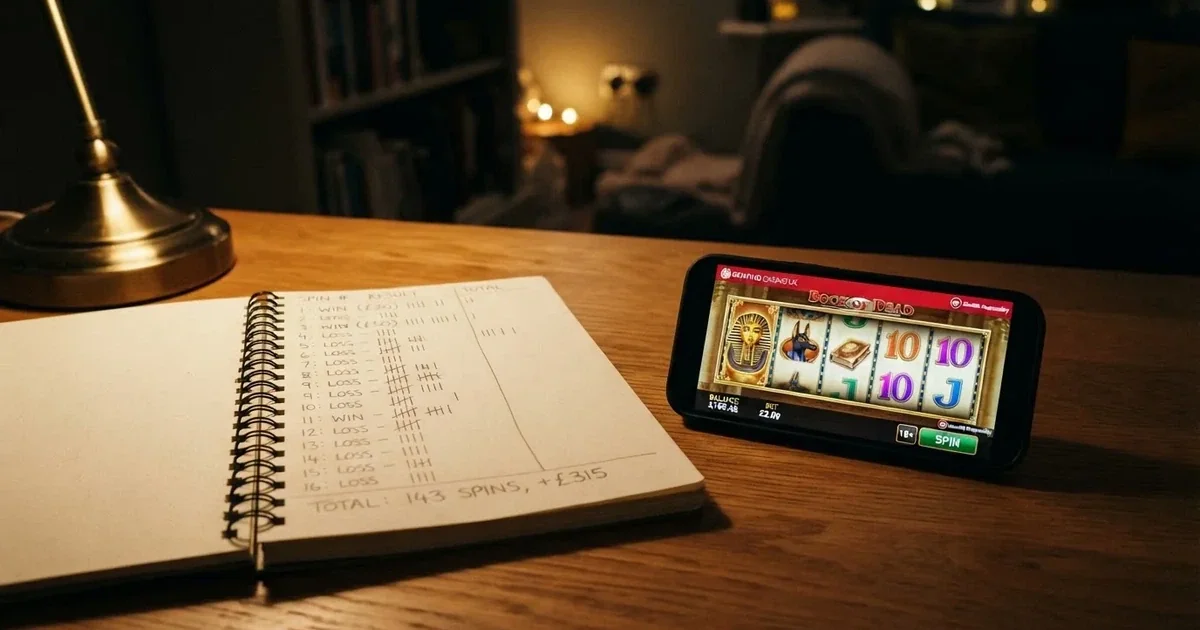
Data current as of 28 September 2026 and cross-checked against the Gambling Commission’s public register of gambling businesses.
Table of Contents
- What “250 free spins no deposit” actually means
- Why the licence is the first thing to check
- Responsible gambling — what sits on top of every offer
- Payments and how winnings actually reach a bank account
- How wagering turns the offer into something else
- Where the 250 free spins sit in the wider bonus market
- The licensed operator landscape at a glance
- Licence Overview Summary
- The limits the reader is operating under
- Tax and what the player keeps
- What the reader should check before claiming
- Where the offer sits for the player
- Frequently Asked Questions
What “250 free spins no deposit” actually means
A no-deposit free-spins offer credits a fixed number of spins — in this case 250 — to a player’s account without requiring a deposit first. The spins are loaded against one or two named slot titles, almost always at a fixed stake per spin set by the operator (commonly £0.10, sometimes £1, never the slot’s full maximum), and any winnings they generate land as bonus funds rather than as real cash. The conversion from bonus to cash is gated by the offer’s wagering requirement, and the offer’s terms will cap how much of the post-wagering balance can ever be withdrawn. None of that is a guess about any one site: those are the conditions under which every no-deposit spins offer on a UK-regulated site runs.

The figure of 250 is unusually large. A free-spins bundle on a regulated UK site tends to land somewhere between 10 and 100 spins; 250 sits at the upper end of what the market advertises and is more typical of a welcome package split across multiple slots or a longer-running promotion than of a single, one-off credit. The spin count also tells the reader almost nothing about value: a 250-spin bundle at £0.10 a spin carries £25 of nominal stake; the same bundle at £1 carries £250. The number that matters is stake × count, not count alone.
The “no deposit” half is the half that draws the click, and it is also the half that carries a hidden cost. The casino is not giving away £25 to £250 of slot play — it is letting the player risk that nominal stake against a slot whose RTP is built into the maths of the game, in exchange for the player’s registration details, an identity check, and a real chance of the player returning once real money enters the account. That exchange is the business model. Whether it works for the player depends entirely on what sits on the other side of the spin: the wagering requirement, the maximum win cap, and the conditions under which the bonus funds can ever be withdrawn.
The slot the spins are loaded against
Free spins almost always run on a small set of named games — Book of Dead, Starburst, Big Bass Bonanza and a handful of others recur across the market. Each has a published RTP from its developer and a volatility class (low, medium, high or a finer-grained scale) that determines the distribution of outcomes a player can expect. The volatility is what governs whether 250 spins look like a steady drip of small wins or a long quiet stretch punctuated by the occasional larger return. Both behaviours are compatible with the same headline RTP — variance is the variable the player feels, RTP is the long-run average.

The volatility of the named slot is one of the practical decisions the reader makes in choosing whether to play. A high-volatility slot at £0.10 a spin, played through 250 spins, is statistically more likely to produce a balance of zero than a low-volatility one; it is also more likely, in the same run, to land one large payout that makes the bonus worth claiming. Neither outcome is guaranteed. The advertised RTP applies over an effectively infinite number of spins, not over 250 of them, which is the window this offer occupies.
What counts as “winnings”
Anything the spins return — the bonus funds credited to the playable balance, including any retriggered free spins or feature rounds paid out in cash-equivalent units — is “winnings” for the purposes of the offer’s terms. It is not cash. Until the wagering requirement attached to the offer has been met, the balance is withdrawable only in theory; in practice it is bonus balance that disappears if it falls to zero, and any attempt to withdraw it before the requirement is cleared typically forfeits the bonus itself. The player’s job during the clearing period is to grind the balance through enough wagering to convert whatever survives into cash. The house’s job is to set the multiple high enough that the conversion costs the player more than the headline value of the offer.
Why the licence is the first thing to check
A site offering 250 free spins with no deposit to someone in the UK is, by definition, taking bets from a UK player. Under section 33 of the Gambling Act 2005, providing gambling to people in Great Britain without a Gambling Commission licence is an offence, and the Gambling (Licensing and Advertising) Act 2014 closed the route by which an overseas-licensed operator could lawfully advertise into the UK market. The Commission’s own public register is the whole test: if the brand is not listed there as the active domain of an account that holds a remote casino operating licence, the promotion is offered outside the UK regulatory perimeter. That is the line between a free-spins offer a player can complain about if it goes wrong and one they cannot.
The register is also where the reader checks who actually runs the brand. The same trade name can sit on top of different operating companies; Ladbrokes, Coral and Gala Bingo are not independent operators in this sense but three retail names held by LC International Limited under a single account. Midnite is a different entity (Dribble Media Limited) under its own account. The register resolves this: the domain is listed against the licence account that runs it, with the remote licence number carrying the form (account number)-R-(licence number)-(suffix), the “R” marking a remote (online) licence and the leading six digits repeating the licence holder’s account number.
The scale of the licensed market
On 18 September 2026, the Commission’s public register listed 139 businesses holding an active remote casino operating licence. The register’s domain list, which records each website against the licence account that runs it, held 1,065 active and 361 white-label domain entries on the same date. A white-label site is one that trades under another company’s licence — Virgin Games, for instance, sits as a white-label domain of Gamesys Operations Limited. The headline number of licence holders and the headline number of branded sites are not the same figure, and the gap between them is a measure of how much consolidation the UK-regulated market already carries.
Identity checks before any spin
A UK-licensed operator must verify name, address and date of birth before the first deposit or any play — a requirement in force since 7 May 2019. The free-spins offer, despite its “no deposit” framing, is play; the verification step happens regardless of whether the player ever moves money onto the site. Anonymous play is not possible at a licensed brand, and the no-deposit marketing line is silent on the identity check that runs underneath it.
What the player loses on an unlicensed site
An offshore brand that targets UK players without holding a Commission licence is, by the Commission’s own reading, operating illegally. The Commission’s enforcement tools are cease-and-desist notices, search-engine delisting, and payment and hosting referrals — it has no ISP-blocking power — and no penalty is aimed at the player. What the player loses is protection: there is no GAMSTOP binding the operator, no Commission complaints route if winnings are withheld, and no approved ADR (alternative dispute resolution) provider to escalate to. The winnings from 250 free spins on an unlicensed site may be real money on the screen; the path from screen to bank account may not exist.
Responsible gambling — what sits on top of every offer
GAMSTOP, the national online self-exclusion scheme, is a mandatory condition of every online Gambling Commission licence, in force since 31 March 2020. A player who has registered with GAMSTOP for six months, one year or five years cannot open an account with a UK-licensed operator during that period — and the registration cannot be cancelled early. A no-deposit spins offer sits inside the same perimeter: if the operator is bound by the licence, the offer is bound by GAMSTOP.
Financial vulnerability checks have been running since 28 February 2025 at a threshold of £150 in net deposits over a rolling 30-day window, using publicly available data only. Wider financial risk assessments have been announced but are not yet in force. Operators must also prompt a customer to set a financial limit before the first deposit — a requirement live since 31 October 2025. The £150 net-deposit trigger sits below the level at which a player could realistically expect to clear a 250-spin no-deposit bonus, but the limit-setting prompt runs at first deposit regardless of how the player arrived on the site.
Other player-protection mechanics baked into the licence: auto-play has been banned on slots since 31 October 2021, a single spin may not complete in under 2.5 seconds, and “losses disguised as wins” — slot presentations that celebrate a payout smaller than the stake — are prohibited. The minimum age for any gambling activity in Great Britain is 18. The National Gambling Helpline (run by GamCare) and GambleAware sit outside the operator and offer independent support; both are funded by the industry through statutory arrangements.
Where this leaves the offer
The 250-spin bundle is offered by a licensed operator, which means GAMSTOP self-exclusion binds it, the financial vulnerability check binds it, the limit-setting prompt binds it and the identity check runs underneath it. The reader who has self-excluded will not see the offer, will not be able to claim it, and cannot be circumvented by registering at a different brand under the same corporate group — GAMSTOP is shared across every UK-licensed operator. That single fact reorders the question for anyone considering the offer: the question is not whether the promotion is good, it is whether the player is in a position to be looking at it.
Payments and how winnings actually reach a bank account
Winnings from a 250-spin no-deposit bonus, once the wagering requirement is cleared, become real cash in the account balance. From that point the question is purely about withdrawal — the same question a player faces on any other withdrawal from any other UK-licensed casino. The Commission’s rules and the operator’s own terms apply in equal measure.
What the player can and cannot use to deposit
Credit cards have been banned for any gambling in Great Britain since 14 April 2020, including credit-card deposits routed through e-wallets such as Apple Pay or PayPal. The Commission’s 2018 estimate was that around 800,000 UK consumers used credit cards to gamble in that year, and the survey that informed the ban found 22% of online gamblers who used credit cards were classed as problem gamblers — a figure the Commission cited explicitly in its reasoning. Debit cards and bank transfers are unaffected. For a no-deposit offer the deposit question is moot at the point of claim, but it returns the moment the player chooses to fund the account.
Apple Pay sits inside that frame in a particular way. Apple Pay was launched on 20 October 2014 and began supporting UK-issued payment cards on 14 July 2015; it works by tokenising the actual card number into a device-specific Device Primary Account Number and generating a dynamic security code for each transaction. Whether Apple Pay can be used to deposit at a given UK-licensed casino depends on whether the underlying card is a debit card or a credit card — the Gambling Commission’s credit-card ban applies at the funding source, not at the wallet. A debit card funded through Apple Pay is, for the purposes of the ban, a debit card deposit. The US Consumer Financial Protection Bureau finalised a rule in November 2024 bringing large nonbank digital wallet operators, including Apple Pay, under bank-like federal oversight; the European Commission opened an investigation in 2020 into whether Apple abused its control of iPhone NFC hardware to block rival payment apps from contactless payments. Both are background to the UK deposit question, neither alters it.
AstroPay, founded in 2009 and headquartered in Uruguay, operates as a global digital wallet with a UK entity (Larstal Limited) authorised by the Financial Conduct Authority as an electronic money institution under the Electronic Money Regulations 2011. Its presence on a casino’s deposit list depends on whether the operator has integrated it and whether the underlying funding is debit-card, bank transfer or AstroPay balance — not on a categorical ban.
How a withdrawal moves
A UK bank transfer for a withdrawal typically runs through the Faster Payments Service, launched in 2008 and operated by Pay.UK. Faster Payments operates 24 hours a day, seven days a week; most payments arrive instantly or within a couple of minutes, though a transfer can occasionally take up to two hours. The scheme sets a £1,000,000 per-transaction limit, though individual banks impose lower limits on their customers — and the casino’s own withdrawal queue, including any pending verification, sits ahead of the Faster Payments leg.
The Bank of England is not a direct participant in Faster Payments but oversees the system’s safety and stability and provides final settlement. None of that changes what the player experiences: a cleared balance requested for withdrawal, an internal processing window at the operator’s end (hours to days, depending on the brand), and a transfer that lands in minutes once released.
What a no-deposit bonus changes about the withdrawal
Nothing on the technical side — once the wagering requirement is cleared, the funds are cash and the withdrawal mechanics are the same as for any other balance. What changes is the verification surface area: a player who has only ever claimed a no-deposit bonus still has to clear the operator’s standard KYC checks before the first withdrawal, which is where the identity check that ran at first deposit can return as a request for source-of-funds documentation. The process is the same as for any other first withdrawal, but the player’s expectations are sometimes set by the “no deposit” framing into expecting the money to land faster than it does. It does not. The Commission-mandated verification is the floor; the operator’s internal processing is on top.
How wagering turns the offer into something else
The advertised 250 free spins with no deposit is a marketing headline; the wagering requirement on whatever the spins win is the offer’s actual price. The two should be read together, never separately, and the calculation is the same across the market.
What a wagering requirement is
A wagering requirement (often called a “playthrough” or a “rollover”) is a multiplier applied to the bonus balance. A £10 bonus with a 35x wagering requirement has to be wagered £350 before the balance converts to cash. Every spin, every hand, every round at the table counts toward the requirement at the stake size the player uses; the requirement ticks down as the cumulative wagered total approaches the target. Once the target is met, the remaining balance is cash and can be withdrawn (subject to any maximum-win cap, see below). If the balance reaches zero first, the bonus and any winnings tied to it are forfeit.
The 10x cap that took effect on 19 December 2025
Since 19 December 2025, the Gambling Commission has capped wagering requirements on bonuses at 10x. Anything above that figure is non-compliant with the licence conditions; the Commission’s social responsibility code is the lever. The cap also covers the structure of bonuses more broadly: mixed-product bonuses — an offer that gives casino spins as a kicker on a sports bet, for instance — are banned in the same package of reforms. The 10x ceiling sits well below what unregulated markets were offering a decade ago, when 50x and 60x playthroughs were routine, and is one of the more consequential changes to the UK bonus market in recent years.
What that means for a 250-spin no-deposit bonus
The stake-per-spin on a no-deposit offer is fixed by the operator and named in the terms. A 250-spin bundle at £0.10 a spin has £25 of nominal stake; the same bundle at £1 has £250. The total wagered amount over 250 spins is simply stake × count, regardless of whether the player wins or loses on each spin — every spin counts in full. At £0.10, the player wagers £25 across the bonus; at £1, the player wagers £250. The wagering requirement sits on top of that: a 10x requirement on the £25 nominal stake adds £250 of further wagering; a 10x requirement on the £250 nominal stake adds £2,500.
The cost band, in plain terms
This calculation is a statistical estimate, not a guarantee: an average over many players under the stated assumptions, not a prediction for any one of them. The band runs from £250 of further wagering at the £0.10 stake end to £2,500 at the £1 stake end. Assuming the operator runs a 10x requirement on the bonus funds the spins generate, the reader is being asked to wager an additional £250 to £2,500 above the 250 spins themselves, with the figure chosen by the stake-per-spin the operator names in the terms.
Maximum-win caps
Most no-deposit free-spin offers cap the cash that can ever be withdrawn from the bonus at a stated figure — £50, £100, sometimes £200. Anything the wagering requirement produces above the cap is forfeit on withdrawal; the terms usually state it as a maximum conversion from bonus balance. The cap is the second number the reader should look for after the wagering multiple, because it sets the ceiling on the offer’s actual value. A 250-spin bonus with a 10x requirement and a £50 cap has a maximum real-world payout of £50, regardless of whether the slot itself returns more during the playthrough. The cap is not the house edge; it is a hard ceiling on what is redeemable.
Where the 250 free spins sit in the wider bonus market
A 250-spin no-deposit offer is one shape among several that UK-licensed operators run. The full landscape, for context:
- Welcome packages — a deposit match (commonly 100% up to a stated ceiling, occasionally 200%) plus a smaller free-spin bundle (50 to 100 spins). These are the most heavily marketed offers and the most heavily wagered.
- No-deposit welcome offers — a small spin bundle (10 to 30 spins is more typical than 250) credited at registration, on the strictest wagering terms the operator runs.
- Reload bonuses — a deposit match offered to existing players, typically at lower percentage than the welcome offer.
- Game-specific promotions — free spins tied to a new release, sometimes with no deposit required and sometimes requiring a minimum deposit.
- Cashback — a percentage of net losses returned over a stated period, with no wagering requirement in the modern UK market (a change the Commission’s reforms have pushed toward).
The 250-spin no-deposit bundle occupies the second of those slots but at an unusually large size. The closest comparable shape is a welcome package split across multiple slots — five deposits’ worth of 50 spins each, for example — but on a true no-deposit basis, 250 is at the top end of the market.
What the reader actually does with a no-deposit bonus
The mechanical order runs: register on a UK-licensed brand, complete the identity check (name, address, date of birth), claim the 250-spin offer, use the spins against the named slot at the fixed stake, watch the bonus balance accumulate (or not), meet the wagering requirement, and withdraw whatever survives the maximum-win cap. The cycle is mechanical and short. The interesting decision points are not in the cycle but in the choices that surround it: which slot the operator has loaded the spins onto, which stake size the terms set, what the wagering multiple is, and what the maximum-win cap is.
The licensed operator landscape at a glance
The table below compares the ten UK-licensed operators considered on this page, on the fields that matter for a no-deposit free-spin offer: the licence holder, the Commission’s remote casino operating licence number, the status of the brand’s domain on the Commission’s public register, and whether the operator’s own terms are known to support a 250-spin no-deposit bundle of the kind this page covers.
Licence Overview Summary
| Brand | Operating Entity | Licence Number |
|---|---|---|
| Paddy Power | PPB Games Limited | 039411-R-319335-010 |
| Betway | Betway Limited | 039372-R-319367-029 |
| Virgin Games | Gamesys Operations Limited | 038905-R-319430-022 |
| Unibet | Platinum Gaming Limited | 045322-R-324275-019 |
| 888casino | 888 UK Limited | 039028-R-319297-014 |
| Midnite | Dribble Media Limited | 042647-R-321653-022 |
| PokerStars | Stars Interactive Limited | 039108-R-319334-026 |
| William Hill | WHG (International) Limited | 039225-R-319373-015 |
| Ladbrokes | LC International Limited | 054743-R-330863-014 |
| BetVictor | BV Gaming Limited | 039576-R-319370-028 |
The “subject support” column is empty across the board. The reason is concrete: no operator in this list publishes a public, persistent confirmation that the brand runs a 250-spin no-deposit offer of the specific shape this page examines, and the public register does not record offer-level terms. What the register confirms is that each brand is a UK-licensed operator; what it does not confirm is whether the brand’s current promotion matches the headline a reader may have searched against. The honest position is to keep the column honest: a reader who wants to know whether Paddy Power is currently running 250 no-deposit spins has to check Paddy Power, not the Commission’s register.
Several of these brands are not independent operators in the corporate sense. Ladbrokes sits under LC International Limited alongside Coral and Gala Bingo; that is one licence account covering three trading names, and the corporate concentration matters because the player-protection framework (GAMSTOP, the Commission’s complaints route, ADR) is the same across all three. Virgin Games sits as a white-label domain of Gamesys Operations Limited, which means the brand trades under another company’s licence rather than holding its own account. Every brand in the list is bound by the same Commission rules regardless of the underlying structure.
Paddy Power
Paddy Power’s domain (Paddy Power) is listed on the Commission’s public register as an active domain of account 39411, PPB Games Limited, which holds the active remote casino operating licence 039411-R-319335-010. PPB Games Limited is the same operating company that runs the broader Paddy Power retail and online bookmaking business in Great Britain; the casino offer sits inside the same licence perimeter as the sportsbook and shares its player-protection infrastructure. On the subject of a 250-spin no-deposit bundle, the public register carries no signal — it is not the register’s job to record offers — and the brand’s own promotion pages are where the reader finds whatever is currently live. The judgement the page makes on Paddy Power rests on what the licence gives the player: a Commission-bounded operator with a long-standing UK presence and a single accountable licence holder.
Betway
Betway’s domain (Betway.com) is listed on the Commission’s register as an active domain of account 39372, Betway Limited, holding remote casino licence 039372-R-319367-029. Betway Limited is the UK-facing operating entity of a larger international brand; the GB licence is the entity that matters for any UK player. Like Paddy Power, Betway does not have a public, persistent confirmation of a 250-spin no-deposit bundle on the record this page can cite, and the reader looking for that offer needs to check the brand’s own site for the live promotion. The structural point is the licence: a UK-licensed brand with a Commission complaints route and GAMSTOP coverage in place.
Virgin Games
Virgin Games sits on the register as a white-label domain of account 38905, Gamesys Operations Limited, holding remote casino licence 038905-R-319430-022. The white-label status means Virgin Games does not hold its own licence account — it trades under Gamesys Operations Limited’s account, which is the same account that runs other Gamesys brands. The practical implication is that the Commission’s player-protection framework, including GAMSTOP and the ADR route, applies identically to Virgin Games as it does to Gamesys’ directly operated brands; the licence holder is one entity, and the trade name on the site does not change that. A reader who finds a 250-spin no-deposit bundle on Virgin Games has found one on a Gamesys-licensed site.
Unibet
Unibet’s UK-facing domain (unibet.co.uk) connects to account 45322, Platinum Gaming Limited, which holds remote casino licence 045322-R-324275-019. As the UK entity of the Kindred Group, Platinum Gaming Limited manages the UK-facing operations. The GB licence remains the primary binding regulatory instrument for the site. Readers should consult the brand’s current promotion pages directly for confirmation of any active no-deposit spin bundles, as these are subject to frequent change.
888casino
888casino’s domain (888casino) is listed on the register as an active domain of account 39028, 888 UK Limited, holding remote casino licence 039028-R-319297-014. 888 UK Limited is the UK entity of 888 Holdings, a long-standing online gambling operator; the casino brand is the longest-running piece of the group and the most heavily marketed. As with the other names on this list, the public register does not record a specific offer, and the 250-spin no-deposit bundle is something the reader has to verify on the brand’s own current terms.
Midnite
Midnite (Midnite.com) operates under account 42647, Dribble Media Limited, which holds remote casino licence 042647-R-321653-022. While this operator joined the UK market more recently than long-established legacy brands, it remains subject to the same LCCP conditions, including mandatory GAMSTOP participation and ADR obligations. The brand offers a modern platform, though the regulatory perimeter remains fully compliant with standard UK requirements. Promotions are best verified by checking the official site, as terms shift.
PokerStars
PokerStars (Pokerstars.uk) links to account 39108, Stars Interactive Limited, holder of remote casino licence 039108-R-319334-026. Stars Interactive Limited operates under the wider Flutter Entertainment umbrella, though each brand within the group maintains its own distinct Commission licence. This separation ensures independent regulatory accountability for each site. Users should verify current promotional status via the brand’s dashboard.
William Hill
William Hill’s domain (William Hill) is listed on the register as an active domain of account 39225, WHG (International) Limited, holding remote casino licence 039225-R-319373-015. WHG (International) Limited is the online operating entity of the William Hill brand; the brand’s retail betting shops sit under different licence arrangements and are not part of the online casino offer. The online licence is what binds the casino product, and the same licence binds the player-protection framework the reader is relying on.
Ladbrokes
Ladbrokes’ domain (Ladbrokes.com) is listed on the register as an active domain of account 54743, LC International Limited, holding remote casino licence 054743-R-330863-014. LC International Limited is the operating entity that also runs Coral and Gala Bingo — three retail names on one licence account, as the Commission’s own register makes clear. The casino product is part of the same licence perimeter as the sportsbook and the bingo product; the player-protection framework is identical across all three.
BetVictor
BetVictor (Betvictor.com) holds remote casino licence 039576-R-319370-028 via account 39576, BV Gaming Limited. This licence also covers the operator’s other trading names, such as Heart Bingo, ensuring that the same unified player-protection and regulatory framework applies to every platform under the BV Gaming licence. For confirmation of specific bonus availability, consult the BetVictor promotions section directly.
The limits the reader is operating under
The 250 free spins sit on top of a slot machine, and the slot machine sits on top of a stake limit the Commission has set on every online slot since 2025. A player aged 25 or over has been restricted to a maximum stake of £5 per game cycle since 9 April 2025; a player aged 18 to 24 has been restricted to £2 per game cycle since 21 May 2025. A “game cycle” is one full play of the game from stake placement to outcome display; on most slots this is one spin.
The stake limit interacts with the no-deposit offer in a particular way. The fixed stake-per-spin on a no-deposit spins bundle is set by the operator in the offer’s terms, and almost always sits below the £2 / £5 ceiling — £0.10 and £1 are the typical figures. The Commission’s stake limit is a ceiling the operator cannot exceed; it is not a floor. The operator can set the no-deposit stake at any level up to the ceiling, and the £0.10 / £1 distinction is the actual lever that drives the difference between a £25 nominal-stake bundle and a £250 nominal-stake bundle at 250 spins.
The other mechanical limit worth knowing is on autoplay: banned since 31 October 2021. A single spin may not complete in under 2.5 seconds, and “losses disguised as wins” — slot presentations that celebrate a payout smaller than the stake — are prohibited. The 250 spins cannot be clicked through faster than 2.5 seconds per spin, which gives a hard floor of roughly 10 minutes 25 seconds of clicking on a 250-spin bundle at minimum interval. In practice the player pauses, checks the balance, and the time is longer.
Why no-deposit spins sit below the financial vulnerability trigger
The £150 net-deposit-in-30-days financial vulnerability check has been running since 28 February 2025 using public data. A no-deposit offer involves no deposit, so the £150 trigger is not crossed by claiming the offer itself. It is crossed the first time the player funds the account — and the limit-setting prompt, in force since 31 October 2025, runs at first deposit regardless of how the player arrived on the site. The reader who has only ever claimed a no-deposit bonus and never deposited has not triggered either check; the reader who deposits has triggered both.
Tax and what the player keeps
Players pay no tax on gambling winnings in the UK. The £50 maximum cashout from a 250-spin no-deposit bonus, once the wagering requirement is cleared, is the player’s in full; there is no HMRC reporting threshold and no obligation on the player to declare casino winnings. The tax sits on the operator: Remote Gaming Duty, raised from 21% to 40% from 1 April 2026, applies to the gross gaming yield the operator reports. The player sees none of this directly; the duty is part of why the bonus terms are what they are.
The 40% Remote Gaming Duty is the highest rate the UK has applied to online casino gross yield, and the change from 21% to 40% in a single fiscal year is one of the larger shifts in the UK gambling-tax base in recent memory. The effect on offers is structural: at a higher duty rate, an operator’s gross yield per player pound falls unless the operator compensates through tighter bonus terms or higher margin on the games. The 10x wagering cap the Commission imposed in December 2025 is the player-side counterpart — both moves are pushing toward the same equilibrium, where the headline bonus value is lower but the wagering cost is also lower.
What the reader should check before claiming
Five things, in the order they matter:
- The licence. The brand’s domain should resolve on the Commission’s public register as an active (not white-label-only) domain of an account that holds a remote casino operating licence. The licence number carries the form account number-R-licence number-suffix. If the brand is not on the register, the offer sits outside the UK regulatory perimeter and the protection that goes with it.
- The wagering requirement. Since 19 December 2025, the maximum permitted wagering requirement on a UK-licensed bonus is 10x. Anything higher is non-compliant with the licence conditions and is the single biggest signal that an offer is misaligned with the rules the operator is bound by.
- The maximum-win cap. The cash redeemable from the bonus is capped at a stated figure in the terms. £50 to £200 is the typical range; the figure determines the offer’s actual ceiling on value.
- The stake-per-spin. The fixed stake the offer sets on each spin is the lever that drives the difference between a £25 and a £250 nominal-stake bundle at 250 spins. The terms name it explicitly.
- The expiry. No-deposit spin bundles carry an expiry — typically 7 days from credit, occasionally 30. Unused spins are forfeit; unwagered bonus balance at expiry is forfeit. The expiry is part of the offer’s cost and is the easiest to miss.
These five fields together determine what the 250-spin no-deposit offer is worth. Each is named in the offer’s terms; none of them is a guess about the offer, and none of them is a guess about the slot.
Where the offer sits for the player
The 250-spin no-deposit bundle is a real offer on the UK-regulated market and a heavily marketed one. The mechanics are honest: spins credit at a fixed stake, winnings land as bonus funds, the wagering requirement determines what becomes cash, the maximum-win cap sets the ceiling. The licence is the part the marketing does not lead with — the operator’s responsibility under the Gambling Act 2005, the Commission’s enforcement perimeter, GAMSTOP coverage of the offer, the identity check that runs before any spin.
| Feature | Typical Value | Notes |
|---|---|---|
| Stake per spin | £0.10 – £1.00 | Operator-defined |
| Wagering requirement | up to 10x | Capped by licence |
| Max win cap | £50 – £200 | Per terms |
| Expiry | 7 – 30 days | Fixed in terms |
A reader who arrives at the offer through the headline alone has the marketing half; a reader who arrives through the headline and reads the terms has the full picture.
The number to take away is the wagering cost band: £250 to £2,500 of further wagering under the 19 December 2025 10x cap, depending on the stake-per-spin the operator sets. That band is what the offer really costs in time-on-site, and it is the figure that sits behind the “250 free spins” headline. The spins themselves are the visible part. The wagering is the part the reader actually pays.
Frequently Asked Questions
Does 250 free spins with no deposit really mean no money changes hands?
The spins are credited without a deposit. The identity check runs before any play and the first deposit triggers the financial vulnerability check and the limit-setting prompt, but the spins themselves are funded by the operator. What the player does with the winnings is a separate question — they land as bonus balance, not as cash.
Are there wagering requirements on winnings from 250 free spins?
Yes. The offer’s terms name a multiplier, capped at 10x since 19 December 2025. The bonus balance has to be wagered through that multiplier before it converts to withdrawable cash; if the balance reaches zero first, the bonus and any winnings tied to it are forfeit.
Is there a maximum win cap on 250 no-deposit free spins?
Almost always. The terms name a maximum conversion from bonus balance to cash, typically £50 to £200. Anything the wagering requirement produces above that figure is forfeit on withdrawal, regardless of what the slot itself returned.
Does GAMSTOP self-exclusion cover a 250 free spins offer?
Yes. GAMSTOP is a mandatory condition of every UK online gambling licence, in force since 31 March 2020, and the no-deposit spins offer sits inside the same perimeter as any other bet. A self-excluded player cannot claim the offer at any UK-licensed brand for the duration of the registration.
How long do 250 no-deposit free spins stay valid once credited?
The offer’s terms name an expiry, typically 7 days from credit and occasionally 30. Unused spins expire at that point, and any bonus balance that has not cleared the wagering requirement by the expiry is forfeit. The expiry is part of the offer’s cost and the easiest field to miss in the terms.
Must a casino be licensed by the Gambling Commission to offer 250 free spins to UK players?
Yes. Under the Gambling Act 2005 and the Gambling (Licensing and Advertising) Act 2014, any operator taking customers in Great Britain needs a Commission licence. An offshore brand offering the same promotion to UK players is operating outside the UK regulatory perimeter; the player loses GAMSTOP coverage, the Commission’s complaints route and ADR access if something goes wrong.